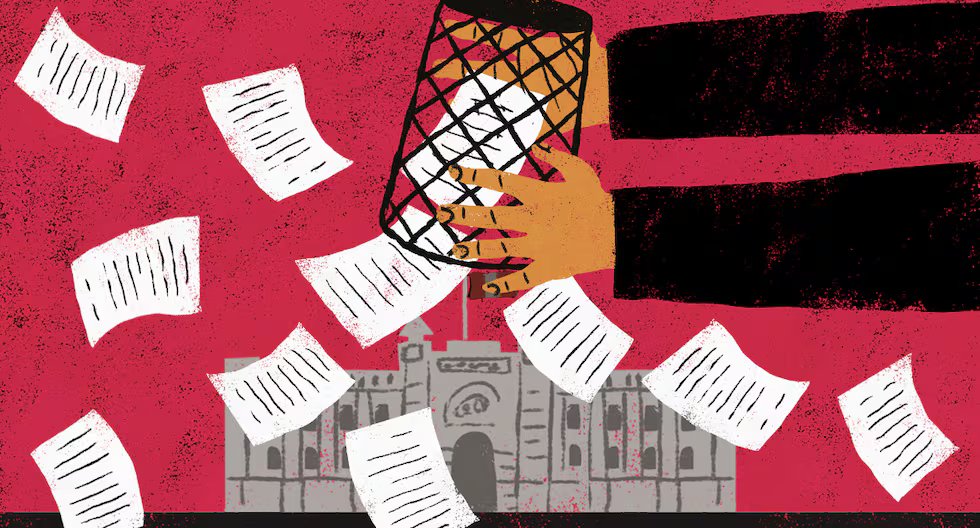
By majority, the Economy Commission of the Chamber of Deputies, chaired by José Marcelo Salazar ( Ahora Nación ), ruled against granting powers to the Executive to legislate for 120 days in eight matters.
The non-binding advisory report was approved this Wednesday by 9 votes in favor and 5 against, with two abstentions, and will be sent to the Constitution Commission, in charge of the final ruling.
The document – which El Comercio had access to – was released at the end of the week a day after President Keiko Fujimori asked Congress to speed up the processing of her project and questioned the rejection of the Government’s request by six commissions.
Their debate, as El Comercio had anticipated, began this Monday, September 14. However, in the end it was decided to postpone its vote until this Wednesday the 16th. If approved, there will be seven working groups that will have opposed the granting of powers requested by the Council of Ministers.
For now, the left made up of Good Government, Together for Peru, Partido Cívico Obras and Ahora Nación has the greatest weight in the Economy Commission with 12 votes. Meanwhile, Fuerza Popular and Renovación Popular barely have eight.

The document concludes by not granting legislative powers to the Executive.
—Approach and study—
The Economy Commission argued that it is not feasible to grant powers in any of the 16 points examined in the report.
He specified that the requests present specific insufficiencies in support, delimitation or regulatory articulation.
“The unfavorable opinion is based on the content and relevance of the requested authorizations, according to the individual examination developed,” the document states.
Among the matters analyzed and questioned are the voluntary formalization of micro and small businesses; the Law to Promote the Innovative Entrepreneurship Ecosystem; and the enabling of financial transfers from regional and local governments and public entities.
Likewise, the proposal to create a Private Fund for the Development of Artisanal Fishing was evaluated, as well as measures on financial inclusion and education, savings accounts for children under 12 years of age and environmental remediation.
Also, allowing the investor to assume studies, land and interferences was examined; facilitate contractual execution; delegation of execution functions to the project; governance of ProInversión.
He did the same on the point of simplification, automatic approval/positive silence and exemption from requirements for permits/titles and interferences in prioritized projects of the National Infrastructure Plan
Sources from El Comercio indicated that the ruling party is preparing a minority report to submit to the vote.
—What commissions have opposed?—
So far, the denial of powers has occurred in at least six committees.
These are Energy and Mines; Infrastructure, Housing and Transportation; Production; Work and Science. This Thursday the Justice Department was added, chaired by legislator Catherin Palomino (Together for Peru), linked to the coup plotter Pedro Castillo.
At the other extreme, the Environment and Defense commissions considered it viable to grant the powers to the Government of President Keiko Fujimori.
The last group to oppose was the Justice Commission, which presented an advisory report that concluded that granting legislative powers to the Executive was not viable.
In the document, which this newspaper had access to, it is maintained that the content of the proposal “did not comply with the constitutional requirement of specifying the matters to be regulated.”
“For the above reasons, this commission considers the delegation of legislative powers to be non-viable with respect to the issues included in matters related to criminal regulations, criminal procedure, criminal execution, police, citizen security, internal order, penitentiary and immigration for not complying with the requirement of material precision imposed by article 104 of the Constitution,” the content concluded.
He did not delve into the merits of the case and only submitted to the general document of the request for powers. That is, the commission omitted to analyze the explanatory statement, a situation that was alerted to in the middle of the session.