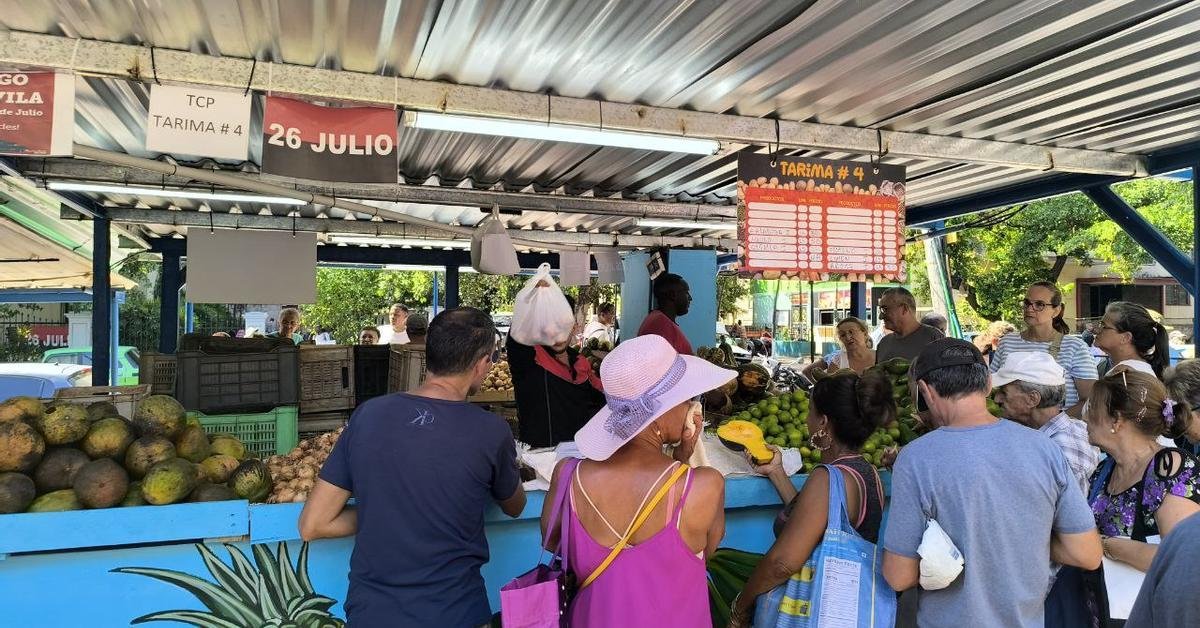
Madrid/The worsening of the economic situation in Cuba has already reached official data, which reflects a rebound in inflation in March. After months of very content, the consumer price index (CPI) has reached 2.19%, while the cost of living is 13.42% higher than a year ago. Furthermore, this last month the sectors that became most expensive are those that have the most impact on the lives of citizens: transportation, restaurants and hotels – which in practice involve prepared food – and food.
The gasoline shortage has left transportation prices skyrocketing in just one month. The worst is intercity transport, with 31.5% more than in February, followed by intercity taxis (17.5%). Transfers within the same city are not far behind, with increases of 17% in various vehicles and 12% in taxis. Thus, the not inconsiderable 6% that the motorcycle transfer increased pales. The spectacular increases have led to this sector being 4.4% more expensive than in February and 18% compared to March 2025.
The sectors related to food also became more expensive this month, with values of 2.66% and 3.66%, although the worst is in the comparison with last March. Restaurants and hotels cost 23.75% more, mainly due to the increase in snacks, lunches and beer among others; while food and non-alcoholic beverages increased by 16.65%. Housing services is another sector that is growing at breakneck speed, with 16.79% more.
In the food section, dairy products are the products whose price rose significantly this last month, with both liquid milk and cheese rising above 8%, or even yogurt, which reaches 10%.
In the food section, dairy products are the products whose price rose significantly this last month, with both liquid milk and cheese rising by over 8%, or even yogurt, which reaches 10%.
On the other hand, the rise in prices in a sector as sensitive as Education stands out, which is 17% more expensive than a year ago, a very difficult increase to assume in a country in which public schools have been the flag of the Revolution. The increase in the price of all the school materials needed for her is putting that situation in check.
The only sector that offers relief, despite the sustained increase in taxes, is alcoholic beverages and tobacco, precisely in products that are harmful to health and, in addition, threaten the health system. In the last year, smoking and drinking are almost 13% cheaper for Cubans.
Cuba’s gross domestic product (GDP) contracted around 5% last year, bringing the national economy to a cumulative drop of more than 15% since 2020, according to the Center for Studies of the Cuban Economy (Ceec).
According to the most recent data from American economist Steve Hanke, who frequently provides estimates of the economies – including the informal market – of different countries, Cuba closes its top five countries with the highest inflation, reaching 48.9% year-on-year. In addition, the Cuban national currency has depreciated 31% against the dollar in the last year. Only Venezuela, North Korea, Iran and Libya are in a worse situation.