DEREK ACHONG
Senior Reporter
An amendment to the Interception of Communications Act, giving law enforcement officers the authority to listen in, record and utilise telephone communications between prisoners and their lawyers, has been declared unconstitutional.
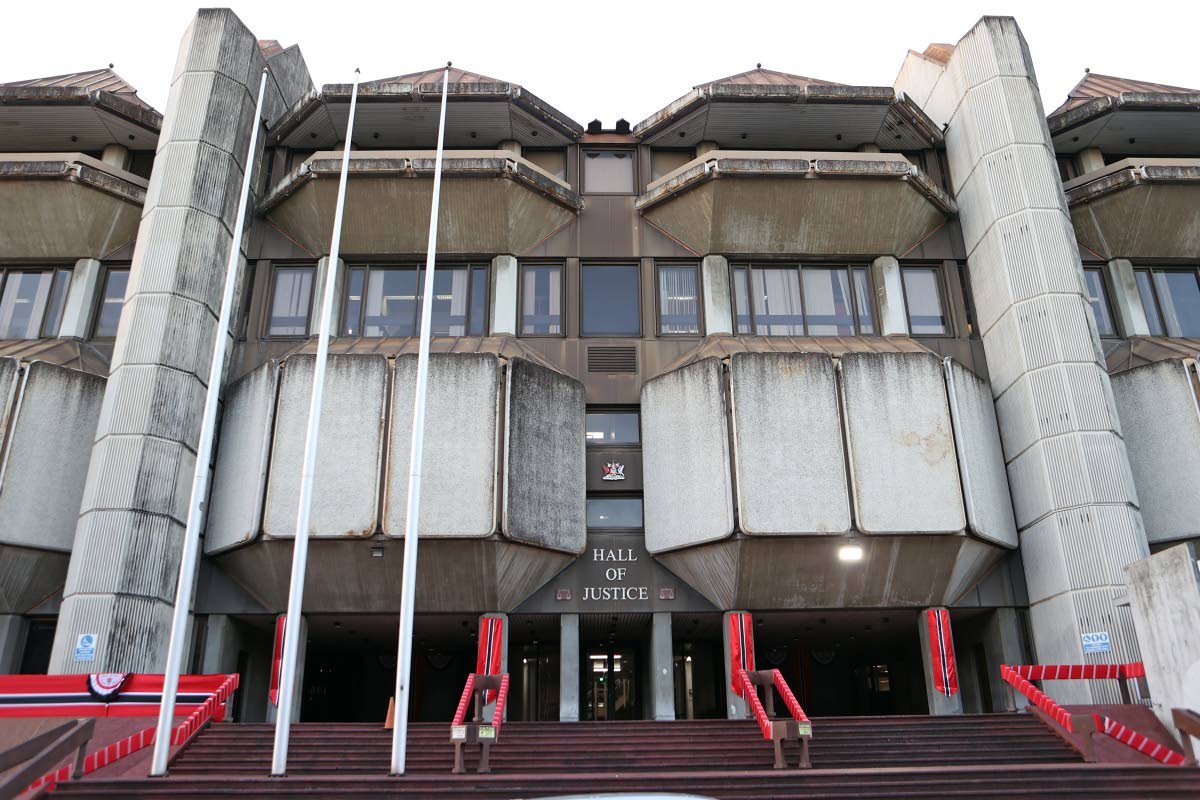
On Friday, High Court Judge Robin Mohammed struck down the 2020 amendment as he upheld a legal challenge from Lyndon Charles, one of two men awaiting retrial for the murder of businesswoman Vindra Naipaul-Coolman.
In the lawsuit, Charles’ lawyers, led by Senior Counsel Anand Ramlogan, of Freedom Law Chambers, contended that the legislation, which only applies legal professional privilege to conversations using approved communication devices and at designated areas within the country’s prisons, was unlawful.
Charles’ lawyers pointed out that the exceptions were not provided for as there was no official designation after the legislation was proclaimed.
In his judgment, Justice Mohammed rejected arguments from the State that legal professional privilege could not extend to conversations which prisoners unlawfully conduct using prohibited cellphones.
“While this Court agrees that legal professional privilege cannot be used as a shield to protect criminal conduct, the Defendant’s proposition that the Claimant cannot reasonably expect to attach privilege to conversations facilitated by illegal cellular phones is unsustainable,” Justice Mohammed said.
However, he noted that privilege would cease to apply to such conversations if criminal conduct or plans are discussed.
“The Claimant has quite clearly asserted in both his pleadings and his submissions that his case is not on the basis that inmates should have unlimited and undeterred recourse to cell phones, nor is it his case that there should not be decisive action taken to put an end to inmates’ ‘putting out hits’ on prison officers,” he said.
Ruling that the legislative provisions breached prisoners’ constitutional right to retain and communicate with an attorney of their choosing, Justice Mohammed said that it (the legislation) clearly disincentivised candid communication between them and their lawyers.
He said that a safe space is integral to foster open dialogue between attorneys and their clients, and such could not be achieved with all communication being monitored.
“Prisoners often wish to speak to their attorneys on highly sensitive matters including inter alia the circumstances of their arrest and detention, possible mistreatment and breaches of their rights by prison officers, and the receipt of any threats,” he said.
“It cannot reasonably be said that prisoners would generally demonstrate forthrightness in disclosing any implicating conduct of prison officers, where their communications remain subject to the control of the State,” he added.
Justice Mohammed also found that the legislation breached Charles’ constitutional rights to respect to private and family life, to a fair hearing, and protection of the law.
He found that the infringements of the legislation on prisoners’ rights were not reasonably justifiable in a society that has proper respect for the rights and freedom of the individual.
While he found that the legislation had a legitimate aim in preventing burgeoning criminality within the country’s prisons, Justice Mohammed suggested that a less intrusive measure could have been used, such as allowing independent counsel to determine whether legal privilege applied to intercepted communications before disclosing such.
Justice Mohammed also found that the legislation was not properly passed by Parliament as it required a three-fifths majority in both houses but only received such in the Senate.
He pointed out that while former attorney general Faris Al-Rawi, SC, claimed that the majority was not required as the legislation did not infringe citizens’ constitutional rights, his ruling in the case opposed such a suggestion.
“As a result, the Interception of Communications (Amendment) Act 2020 is illegal, null, void, and of no effect,” Justice Mohammed said.
Justice Mohammed issued a series of declarations over the illegality and unconstitutionality of the legislation but did not order any monetary compensation as such was not sought by Charles’ lawyers in the case.
He ordered the State to pay Charles’ legal costs and granted a 42-day stay to give the State time to consider and file an appeal.
Charles was also represented by Kent Samlal, Renuka Rambhajan, Jayanti Lutchmedial, Ganesh Saroop, Natasha Bisram, and Vishaal Siewsaran.
The Office of the Attorney General was represented by Gilbert Peterson, SC, Rishi Dass, SC, and Rachel Wright.
About Charles
Charles was jointly charged with 11 men from Diego Martin for murdering Naipaul-Coolman.
The former Xtra Food chief executive was abducted from her Chaguanas home on December 19, 2006.
A $122,000 ransom was paid by her family, but she was not released and her body was never found.
Shervon and Devon Peters, their brother Anthony Gloster, Joel Fraser, Ronald Armstrong, brothers Keida and Jameel Garcia, Marlon Trimmingham, his brother Earl, Charles, Allan “Scanny” Martin and Antonio Charles were eventually charged with the crime
During the trial before former High Court Judge and current Appellate Judge Malcolm Holdip and a 12-member jury, State prosecutors contended that the Naipaul-Coolman was held captive in a house in Upper La Puerta, Diego Martin, before she was killed and dismembered.
Throughout the trial, defence attorneys pointed out multiple inconsistencies in the evidence.
They questioned the mental health of the State’s main witness Keon Gloster, who claimed that he was coerced by police into implicating the accused men. They also contended that a gun linked to the kidnapping crime scene was planted in one of the accused men’s homes.
When the trial was at an advanced stage, Martin and two fellow prisoners at the Port-of-Spain State Prison staged a daring escape during which a police officer was murdered. Martin was shot and killed by police in a shootout at the Port-of-Spain General Hospital.
Fraser was freed before the jury considered the case as Justice Holdip upheld a no-case submission alleging that there was insufficient evidence linking him to the crime.
The trial ended in 2016 with the jury acquitting eight of the men and ordering a retrial for Earl Trimmingham and Charles.
In his case before Justice Mohammed, Charles claimed that he would occasionally use cell phones provided by unnamed prison officers to contact his lawyers. He claimed that the unlawful practice facilitated by the officers was especially vital during the COVID-19 pandemic when face-to-face meetings between prisoners and lawyers were not permitted.
Charles’ former co-accused pursued malicious prosecution claims after being freed and were awarded over $20 million in compensation between them after obtaining default judgments against the State.
The Office of the Attorney General sought to overturn the outcome as it claimed that the cases were not properly defended because the court filings purportedly “disappeared” after being served.
The attempt was rejected by both the Court of Appeal and the United Kingdom-based Privy Council, meaning that the men are now set to receive the compensation.