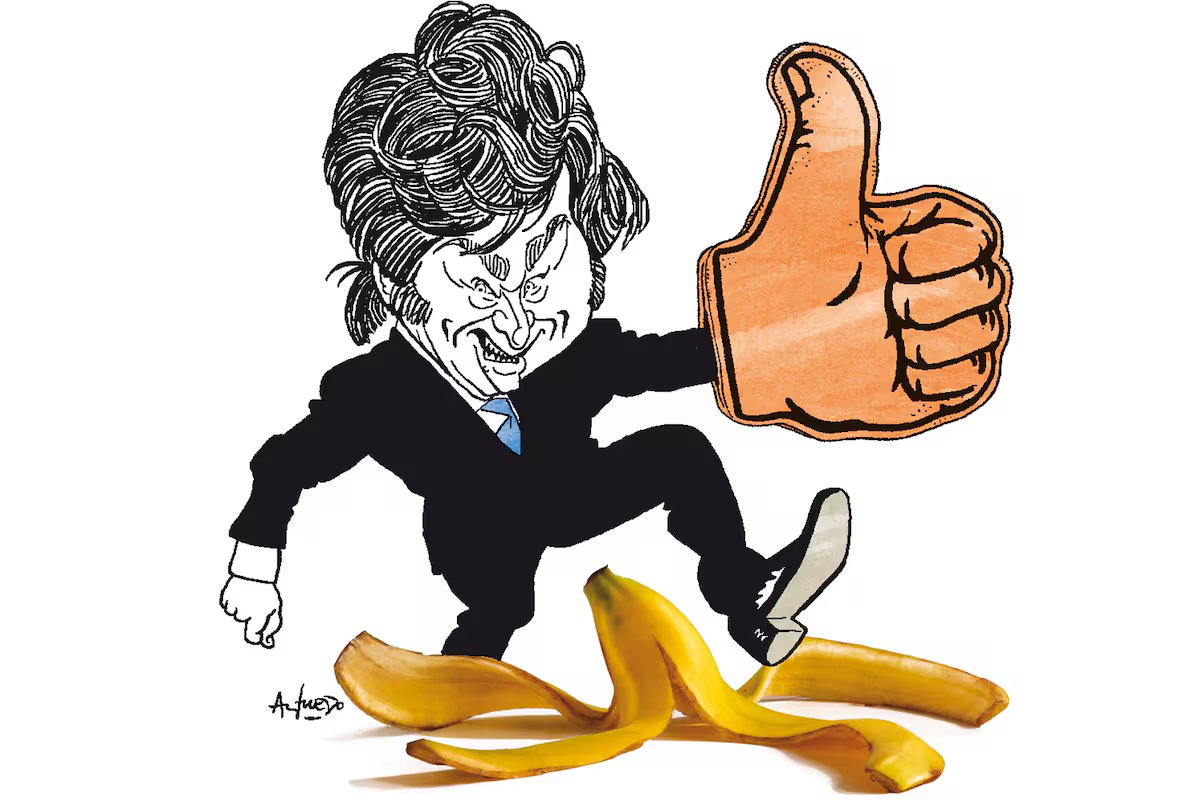
This Thursday it was learned that the May inflation was 2.1%the lowest since September 2025, and lower than what the market had anticipated. A day earlier, on Wednesday, the rating agency S&P raised the Argentine debt rating and unleashed hours of euphoria in the Argentine market: The country risk reached 441 basis points, the lowest value so far in the libertarian administration, and shares rose 6.4 percent. These are days of good financial news, which, however, the Government is failing to capitalize on. The Adorni affair dominates the public agenda with the same power with which it widens the rift in the cabinet.
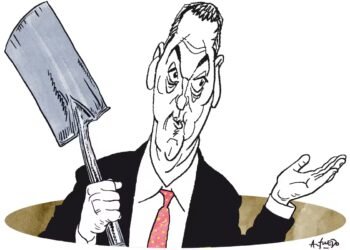
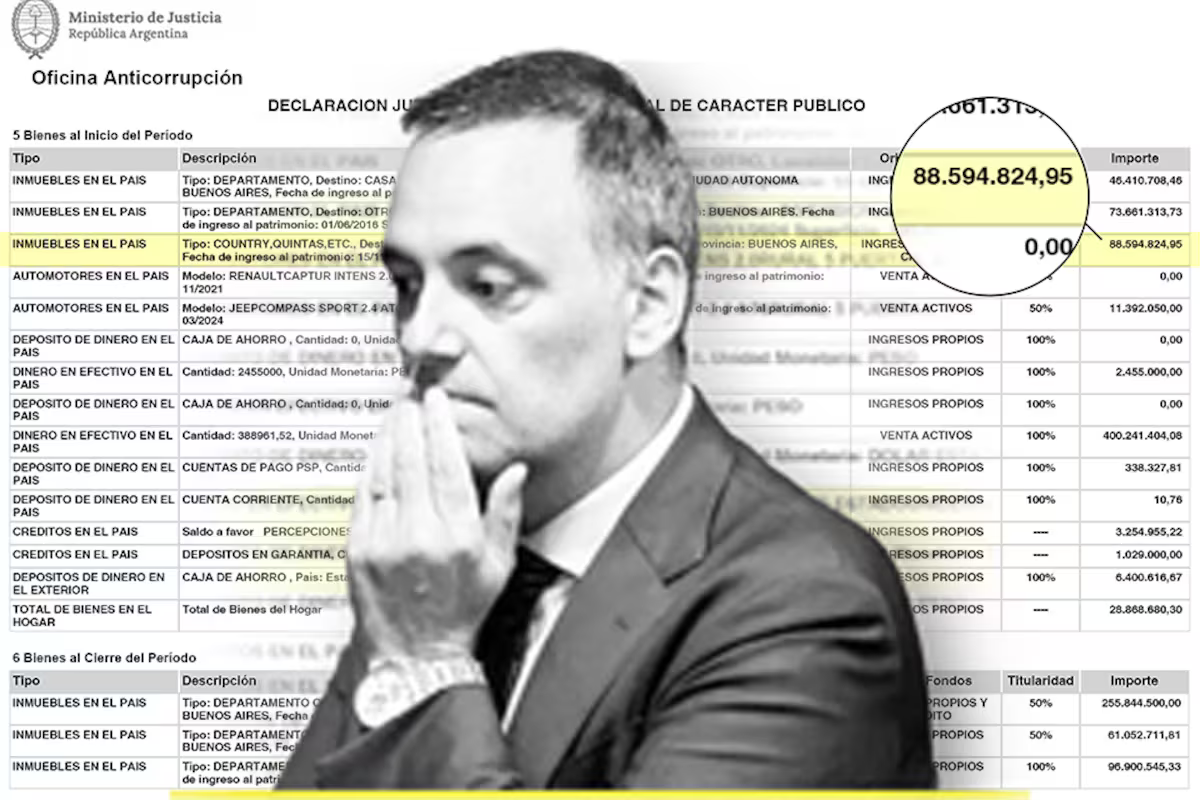
The problem is that, although the Casa Rosada accumulates victories to show, it cannot afford to neglect flanks at this time. He Adorni affair has already proven that management scandals have a political cost in an administration that built a good part of its capital on the promise of transparency. It makes no sense to relativize the amount of Adorni’s economic inconsistency with other cases of corruption. For the libertarian story it is devastating. And the margin for setbacks is shrinking: the opposition is already processing each movement of the Government with an eye on 2027, while the economy – despite the macroeconomic balances achieved – still does not translate into tangible relief for the majority of Argentines.
Consumption remains stagnant (it stopped falling, according to consensus, but it is not improving) and the macro still cannot be considered stabilized. Without going any further, the economic team already assumes that June will close in the red: it will be the fourth time this has happened in 30 months. Since January 2024, only in June and December of that year, and in December 2025, the public accounts accumulated both primary deficits – the result between income and expenses – and financial deficits, what remains after paying interest on the debt. Several factors come together to explain the result: the payment of bonuses to retirees and the higher cost of energy in the winter are two big keys. This month, the Treasury is facing the transfer of some $300,000 million to Enarsa to pay for the ships that bring imported liquefied natural gas, and another $500,000 million to Cammesa as energy subsidies. As in the Adorni family, the Kirchnerist heritage becomes chewing gum.

But at this point in the Government, the argument may begin to lose elasticity. It was Minister Luis Caputo himself who announced that there is not much room left to continue adjusting expenses. And the engines that strongly drive tax revenues have not finished turning on. Mining, oil and gas and agriculture are gaining traction, but they are not yet compensating for the rest of the sectors that are still lagging behind.
The Hidrovía business is a big fish business. Nobody quits without putting up a thorough fight.
The idea that banks can oxygenate the mortgage business with the support of Anses is not taking off either. The conversations continue, yes, but they advance in circles. The underlying problem is known in the cabinet, although few say it out loud: the Sustainability Guarantee Fund –valued at a not inconsiderable US$80,000 million– is the responsibility of Finance, but falls under the orbit of Anses, which is under the umbrella of the Ministry of Human Capital. And Minister Sandra Pettovello is not convinced. There is good harmony between her and the economic team, but it does not necessarily translate into an agreement on what to do with the FGS money.
In the provinces, meanwhile, governors closely monitor cases of companies in crisis. It is not lost on anyone that, in an electoral sense, the opposition could use some case as a witness as the campaign heats up. In Entre Ríos, the restructuring of the company Granja Tres Arroyos keeps Rogelio Frigerio’s management alert. The governor knows that he has an astute contender in front of him, such as Guillermo Michel, the former head of Customs under Sergio Massa. The crisis of the poultry company has almost become a state issue. The climate in the province is already heated due to the pension reform that the Frigerio government seeks to support to reverse the structural imbalance of the Entre Ríos Retirement and Pension Fund.
But it’s not just the macro that doesn’t clear up. The libertarian administration also has open fronts in the privatization processes. The tender for the Hidrovía, the main river corridor in Argentina, through which nearly 80% of agroindustrial exports pass, continues to generate controversy. The Belgian DEME, which came second in the process carried out by the National Administration of Ports and Navigation (Anpyn) and lost to the consortium formed by Jan de Nul-Servimagnus, does not lower its arms. As far as he could know THE NATIONplanned to present a private initiative to the Government at this time, within the framework of the Base Law and Decree 713/2024, to force a new bidding process under conditions that, in its opinion, would have allowed it to offer a more competitive rate than the one enabled by the specifications. In a letter sent last week to Minister Luis Caputo, DEME assured that it could provide the dredging service with a rate 17.4% lower than that established as the floor in the current process. The Hidrovía business is a big fish business. Nobody quits without putting up a thorough fight..
Marcelo Manera – LA NACION
But he is not the only one. The fight to enable competition in the foot-and-mouth vaccine business continues. Although it was one of the first battles of the Ministry of Deregulation headed by Federico Sturzenegger, it still has not finished claiming victory. The Government’s bet now is to incorporate a third player: the Colombian laboratory Vecol. It is expected that Senasa will approve Vecol’s vaccine in these weeks to join that of the national laboratory Tecnovax – which was authorized last February, although it considered that its vaccine is effective for six months and not 12, as contemplated in Brazil – and the until now market leader, Biogenesis Bagó, where the Bagó laboratory and the businessman Hugo Sigman are partners.
In the new geopolitical map drawn by tech world analysts, Bahía Blanca appears as the city furthest from the range of Chinese missiles
Meanwhile, in the stock market the process of consolidating agents – Alycs, in financial jargon – that has been anticipated for months seems to have finally begun. Balanz, one of the main companies in the market, announced this week the acquisition of Grupo del Plata, and would now be about to announce the incorporation of Zofingen, while Banco Valo is negotiating to incorporate two operators. The logic is clear: scale or irrelevance. The retail investment business has grown strongly in recent years, but profitability requires critical mass and small players have less and less margin to survive alone. The bet of companies like Balanz and Valo is to eventually be able to have enough volume to open their capital to the Stock Market. In the financial sector they are watching the move carefully. “Balanz is a very important player in the placement of international corporate and provincial bonds; they are managing more than US$15,000 million,” says a man from the financial system with a very good reading of the market. There are many Alycs left over and the concentration phase begins; Of the 300 that currently exist, there should be 40 left in Argentina, at most. The market was oversized by the “cash with liquid” business. In Brazil and Mexico there are 50 brokers for capital markets several times larger than the Argentine one,” he explains.
No less convulsed is the situation of the banking chambers. After the departure of Banco Nación from Abappra, the chamber that brings together public banks, the Province proposed a renewal of names in the executive management. With the endorsement of the Board of Directors, the departure of the experienced Marcelo Mazzón was decided and a consulting firm was hired to find his replacement. The new executive director will be defined in the coming weeks. It is a coveted position, given the role that provincial public banks play in financing regional economies, just as governors have their sights set on the upcoming electoral cycle.
Although all the Argentine noise seems to be minor for businessman Peter Thiel, co-founder of PayPal and one of the most influential investors in Silicon Valley, who has just settled in Argentina. He believes that there is a much greater threat in the United States. Those who participated in meetings with the enigmatic Thiel not only assert that part of the reason for settling in Argentina is his admiration for Milei, with whom he shares a good part of the libertarian worldview, but also something more concrete: security. In the new geopolitical map drawn by tech world analysts, Bahía Blanca appears as the city furthest from the range of Chinese missiles. At a time when geographical diversification of risk is common among large global capitals, Argentina is beginning to appear in conversations that would previously have seemed unlikely.