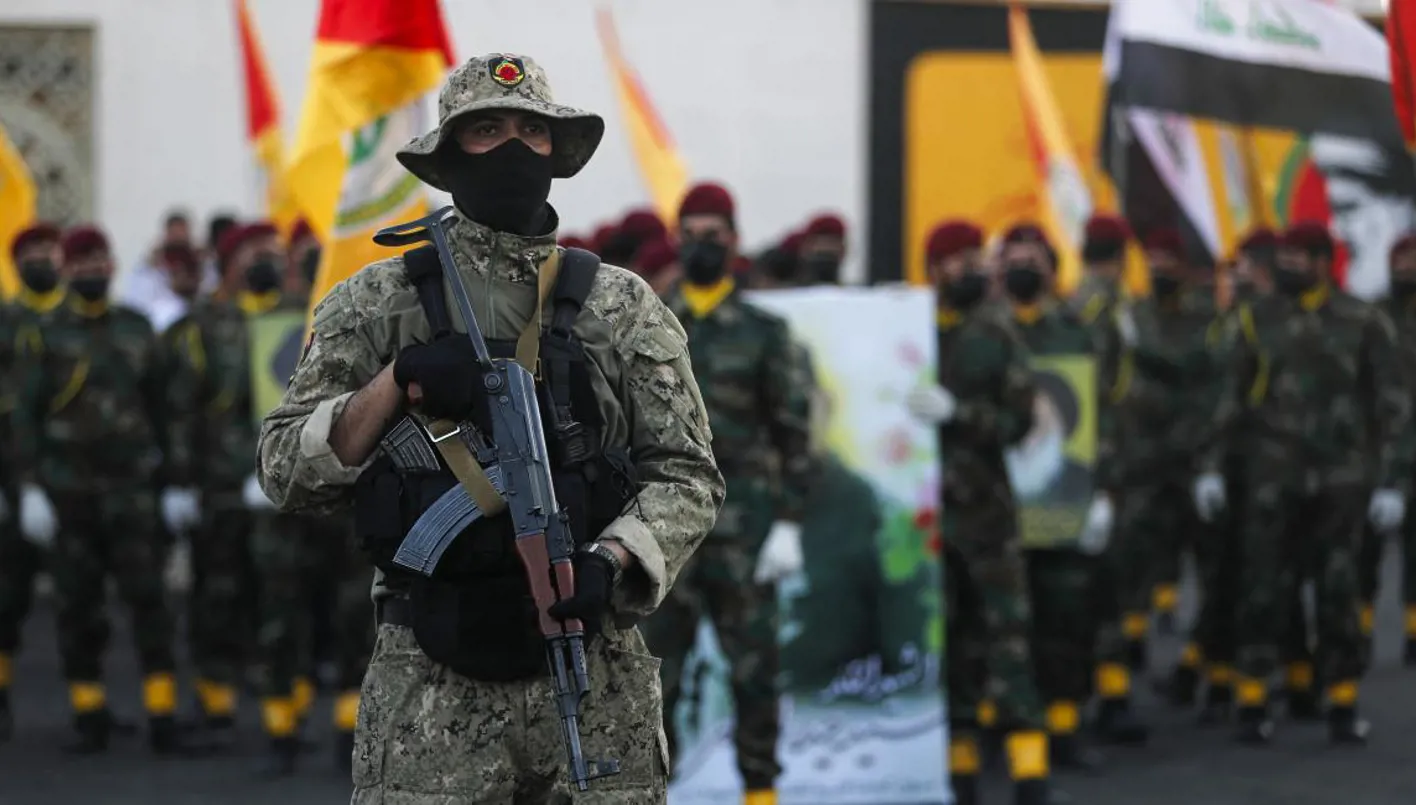
The issue of confiscating weapons in the hands of the state returns to the forefront of the Iraqi political and security scene again, after a series of statements and announcements that spoke of the willingness of some armed factions to surrender their weapons or reorganize their security situation within official frameworks, in a step that the government described as part of efforts to consolidate state authority and enhance internal stability.
However, these developments raised broad questions about the seriousness of the announced measures, and whether they represent a real shift in the course of the relationship between the state and the armed factions, or fall within the framework of political and media messages that do not necessarily reflect the reality on the ground.
Factional differences
These questions gain special importance in light of the different positions within the factions themselves. While prominent parties, including the Peace Brigades led by… Muqtada Al-Sadr andAsaib Ahl al-Haq Led by Qais Khazali And the Imam Ali Brigades, led by them Cub Al-ZaidiOther factions continue to support the steps to regulate weapons or hand them over within state arrangements, the most prominent of which are: Hezbollah Brigades Led by Abu Hussein Al-Hamidawi and the movement The Prophets Led by Akram al-Kaabi, the Sayyid al-Shuhada Brigades, led by Abu Alaa al-Wala’i, adhere to different positions regarding this file, which reflects the continued division over the nature and future of weapons outside official institutions.
Observers believe that the test of seriousness is not related to the statements alone, but rather to the extent to which they are translated into practical, measurable measures, which include inventorying weapons stores, ending armed manifestations outside the framework of security institutions, and subjecting all armed formations to the authority of the state and the applicable laws. The success of any project of this kind requires broad political consensus and a government will capable of dealing with the security and political complexities associated with this file, which for years has been one of the most sensitive files in the country. Iraq.
“Iraq: Weapon Control Test”… A special file from “An-Nahar”
The issue of confiscating weapons in the hands of the state returns to the forefront of the Iraqi scene…
No tangible transformation
Military affairs expert Major General Ahmed Al-Dulaimi told Al-Nahar that the current talk about restricting weapons to the state still “revolves within the framework of political and media statements and announcements more than reflects a tangible practical change on the ground, and field indicators are still insufficient to talk about real progress in this complex issue.”
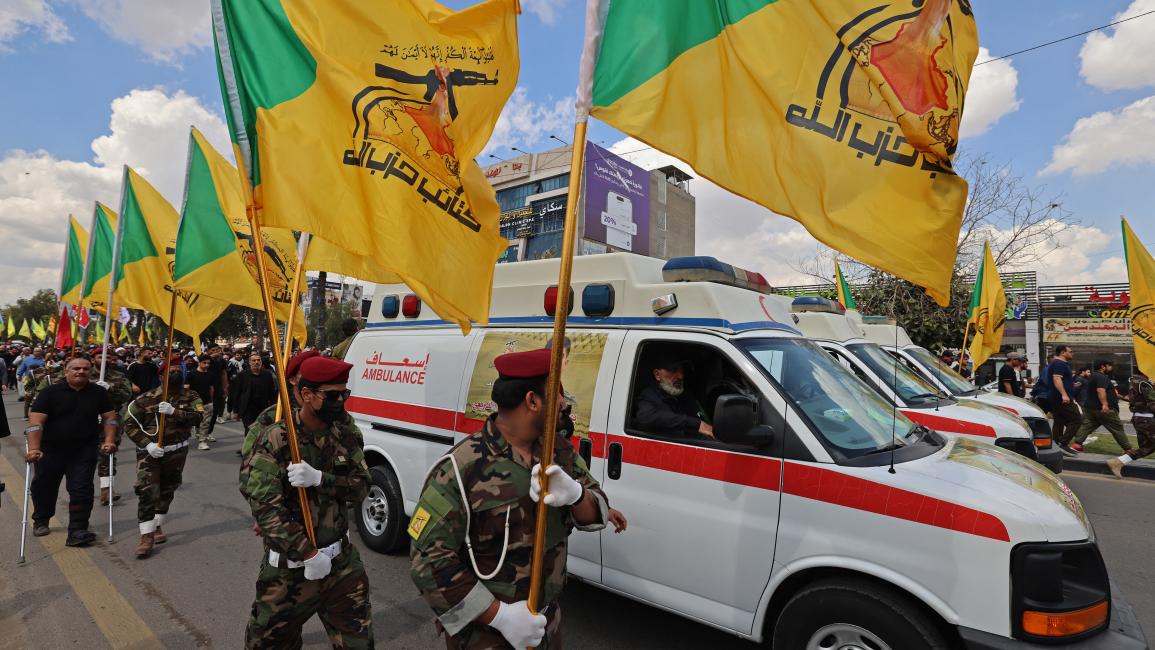
Members of the Hezbollah Brigades in Baghdad, April 8, 2026. (AFP)
Al-Dulaimi explains that any serious evaluation of the success of the arms control project must be based on clear executive procedures, such as dismantling armed structures outside official institutions, restricting weapons stores, and subjecting all armed actors to the authority of the state and the law. “Such steps have not yet appeared in a way that would allow it to be said that the file has entered the stage of actual resolution,” adding: “The international community and regional powers, along with the Iraqi political parties, are closely following this file and have their own indicators and data about the extent of progress achieved, and judging the outcome.” The seriousness of any step is not determined through media statements, but rather through field facts and measurable results.”
He confirms that the continuation of the controversy over the surrender of weapons and the differing positions of the armed factions reflect that the issue still faces major political and security challenges, and that reaching the stage of complete arms control requires a unified political will and firm executive decisions that go beyond the media nature towards actual implementation, and public opinion is waiting for concrete measures that prove that the state has become the only body that has a monopoly on weapons and the use of force in accordance with the constitution and the law.
While the government confirms that it is moving forward with steps to restrict weapons into the hands of the state, specialists believe that it is still too early to judge the success of these efforts, especially since the experiences of past years witnessed similar announcements and initiatives that did not lead to decisive results. Therefore, the most important question remains: Do the current movements represent the beginning of a new phase in which the armed forces move towards full integration within state institutions, or are they merely formal measures linked to temporary political and regional circumstances that will not lead to a fundamental change in the equation of weapons and influence inside Iraq?
Political and media discourse
For his part, the Iraqi politician Mathal Al-Alusi told Al-Nahar that what is currently being proposed regarding handing over weapons and confining them to the hands of the state “is still closer to political and media discourse than to a real implementation project, and the Iraqi citizen has not yet seen any fundamental change on the ground that could indicate the start of an actual treatment of the arms file outside the framework of the state,” stressing that the criterion of success is not measured by the number of statements or statements issued, but rather by the state’s ability to completely impose its sovereignty, end all manifestations of weapons that are not subject to official institutions, and the continued presence of forces. An armed woman refuses to give up her weapons or determine for herself the conditions for dealing with this file. This raises serious questions about the possibility of implementing the announced plans and procedures.
Al-Alusi, a former member of the Iraqi parliament, adds: “Today the state faces a test related to its prestige and its ability to monopolize force in accordance with the constitution, and that the continued gap between statements and reality may lead to further skepticism about the ability of institutions to implement their pledges.” He continued: “If there is a real will to confine arms to the state, then this must include everyone without exception and with unified standards. As for talking about handing over the weapons of some parties in exchange for the remaining weapons of other parties, it will not convince the internal and external parties, but rather will reinforce the impression that what is happening is still happening.” Within the framework of political messages rather than a strategic transformation in the structure of the Iraqi state.”