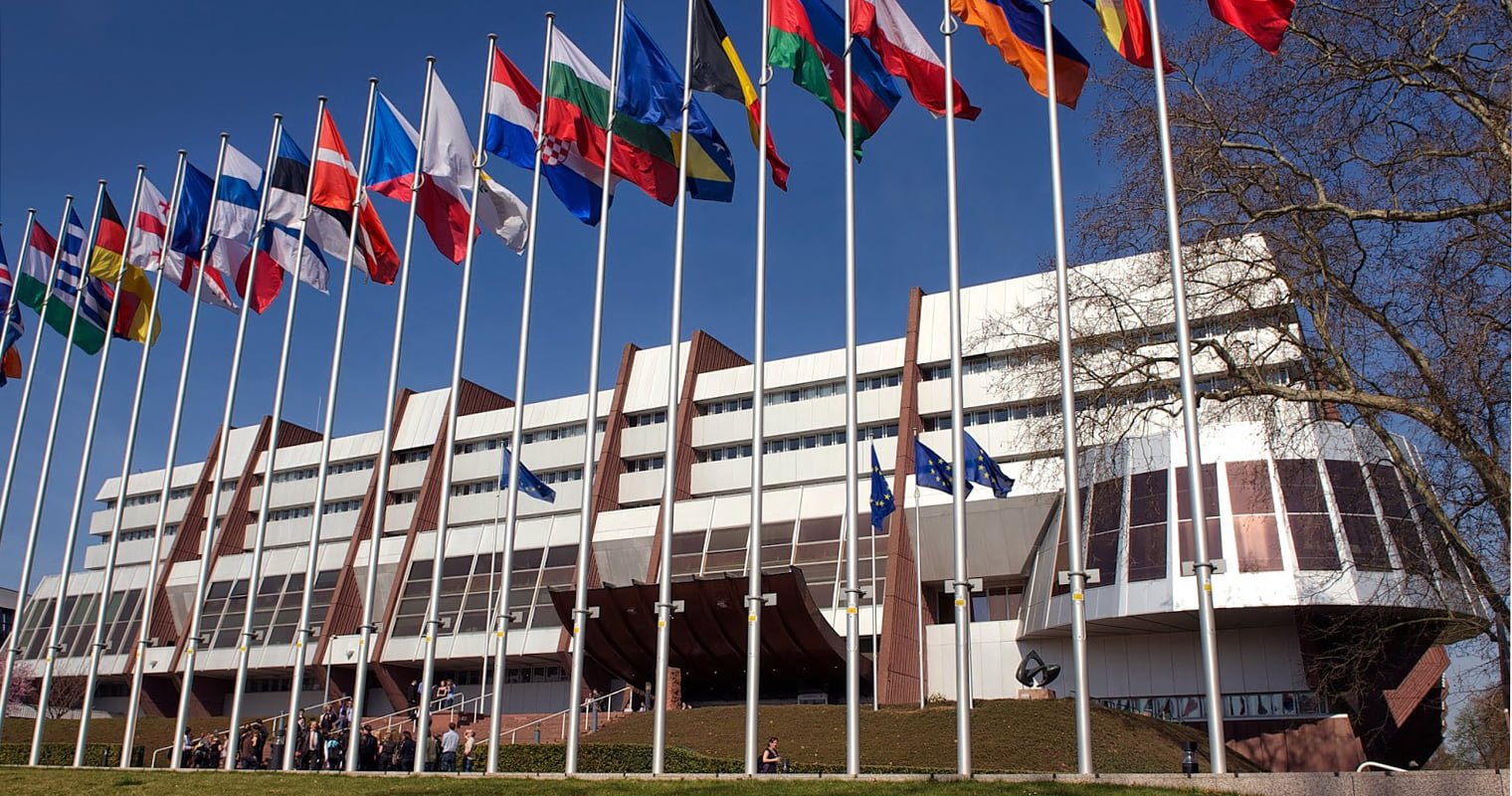
The Committee of Ministers of the Council of Europe (CoE) reiterated its “unequivocal support” for Georgia’s sovereignty and territorial integrity, condemned Russia’s actions in Georgia’s occupied Abkhazia and Tskhinvali regions, and called on Moscow to reverse those moves in its 13th decision on the Conflict in Georgia adopted on May 6.
The decision welcomes the 2023 Reykjavík Declaration, adopted at the 4th Summit of CoE Heads of State and Government, which calls on Russia “to comply with its international obligations and to withdraw immediately, completely and unconditionally its forces from Georgia,” and “reasserts the Council of Europe member States’ unwavering support for Georgia’s sovereignty, independence and territorial integrity, within its internationally recognised borders.”
More than 17 years after the August 2008 war, Russia “continues to impede the peaceful conflict resolution process,” the decision said, citing Russia’s “illegal military presence,” “increased military exercises and infrastructure reinforcements,” the installation of fences in the Chorchana/Tsnelisi area, and “steps toward de facto annexation of Georgia’s Abkhazia and Tskhinvali regions.”
The Committee also referred to Moscow’s 2025 decision to introduce a simplified procedure for granting Russian citizenship to residents of the two regions, saying all actions by Russia intended to alter the status of Georgia’s regions “have no legal effect and further aggravate the situation on the ground.”
The document expressed concern over “hampering the activities of international organisations operating on the ground and restricting the confidence-building efforts,” and called on Russia to “stop and reverse this illegal process” and comply with its obligations under the EU-mediated August 12, 2008 ceasefire agreement, including withdrawing forces from Abkhazia and the Tskhinvali region/South Ossetia and allowing the establishment of international security mechanisms on the ground.
The decision welcomed a series of judgments by the European Court of Human Rights (ECtHR), which established Russia’s responsibility, “as the State exercising effective control over those regions,” for grave human rights violations committed after the 2008 war, including “killing, torture, ill-treatment and arbitrary detention of Georgian civilians and military personnel,” the “looting and burning of Georgian homes,” “inhuman treatment of Georgians targeted as an ethnic group,” and depriving IDPs and refugees of the right to return to their homes.
The decision said it “deeply regretted” that, despite repeated calls, Russia continues to install “razor and barbed wire fences and other artificial obstacles along the dividing line,” separating families and communities and impeding conflict resolution efforts.
The Committee expressed “grave” and “profound” concern over restrictions on crossing opportunities at “crossing points” in Abkhazia and the Tskhinvali region. It said the human rights situation in both regions “has been further deteriorating.”
It also voiced concern over impunity in the deaths of ethnic Georgians David Basharuli, Giga Otkhozoria, Archil Tatunashvili, Tamaz Ginturi, Vitali (Temur) Karbaia, and Irakli Kvaratskhelia.
The document raised “particular concern” over “the continued discrimination of Georgians on the grounds of ethnicity” in both regions, particularly in the Gali and Akhalgori districts. It cited “further restrictions to the freedom of movement, residence rights, the right to work and property rights in cases of forced registration as foreign residents or demands to change surnames and ethnic identity, as well as the restriction of their right to education in the native language and preventing their access to religious sites or graveyards and grazing and farming lands.”
The Committee further expressed concern over a decision by Abkhazia’s de facto parliament restricting inheritance rights for individuals deemed to have fought against the region’s self-proclaimed independence during the 1992–1993 war. It also expressed “deep concern” over the demolition of Georgian IDPs’ homes in the Tskhinvali region/South Ossetia.
The decision additionally raised concerns over “obliteration and alteration of Georgian features” of Georgian cultural heritage monuments, the continued deprivation of IDPs’ and refugees’ right to voluntary, safe, and dignified return, and “continued arbitrary detentions of local inhabitants along the dividing line.”
The Committee expressed grave concern over the detention of Georgian citizens, including Kristine Takalandze, Giorgi Mosiashvili, and Irakli Bebua, noting that some cases, such as that of Genadi Bestaev, resulted in death.
It also strongly condemned a decision in Abkhazia allowing for the death penalty under certain circumstances in cases related to the so-called “export, import and/or transit of drugs.”
The Committee reaffirmed its support for Georgia’s peace initiatives and underlined “the necessity to immediately and unconditionally resume” the Incident Prevention and Response Mechanism (IPRM) meetings in Gali, which have been suspended since 2018.
Among other recommendations, the Committee reiterated calls on Russia as the state exercising effective control, to ensure conditions for the “voluntary, safe and dignified return of all IDPs and refugees,” end ethnic discrimination, remove obstacles to ending impunity in cases involving murdered ethnic Georgians, cease policies leading to human rights violations, remove restrictions on freedom of movement, “cease arbitrary detentions of persons, including in the context of so-called ‘illegal border crossings’ and to re-open ‘crossing points’.”
It also called on Russia to “immediately release” Kristine Takalandze, Shalva Khizanishvili, and all other “illegal detainees,” end “violations of the right to education” in Georgian-language schools and preschools, and prevent “further deterioration of monuments” belonging to the cultural heritage throughout Georgia’s regions.
The Committee further called on Russia to grant immediate and unrestricted access to Council of Europe bodies to Abkhazia and the Tskhinvali region/South Ossetia, execute ECtHR judgments, and cooperate with the International Criminal Court.
Also Read: