Lead Editor – Politics
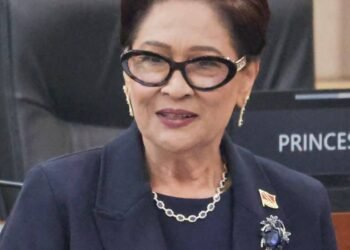
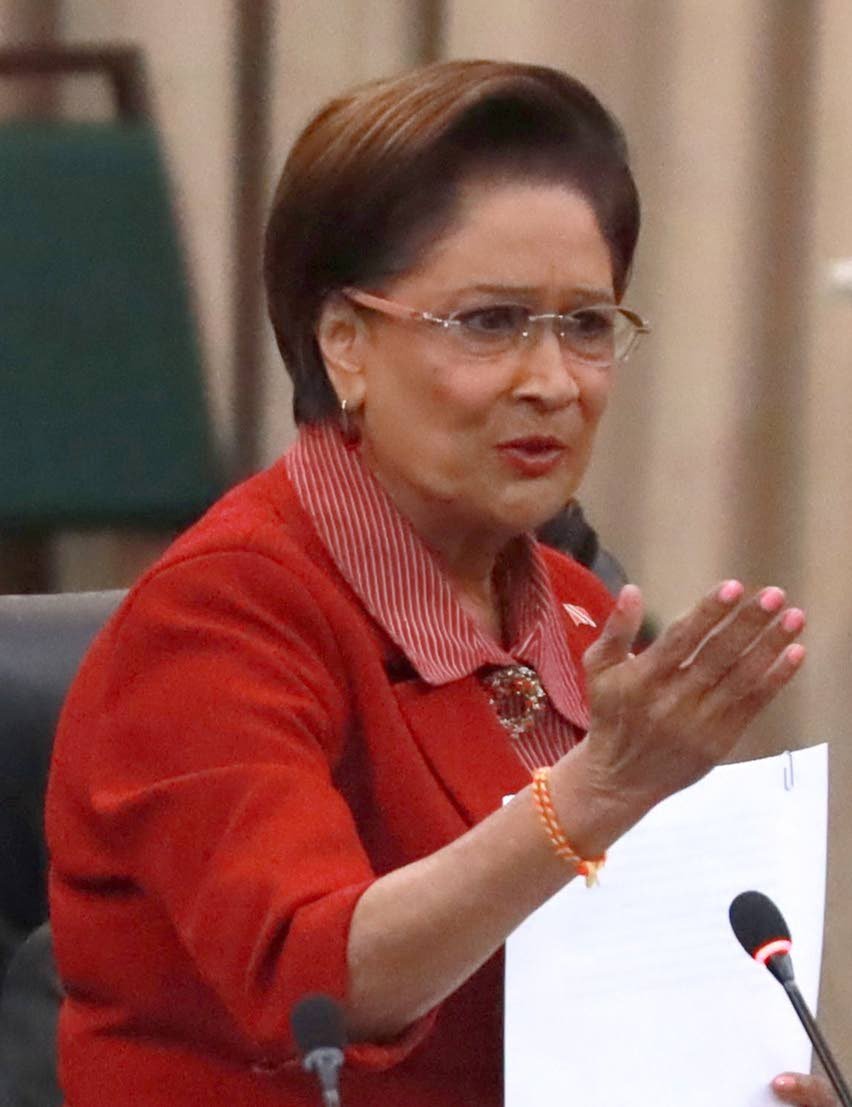
Prime Minister Kamla Persad-Bissessar has condemned the nine Independent Senators who voted against the Special Operations Bill, describing them as “satanic” and declaring that her Government will no longer accept amendments from the Independent bench on any legislation.
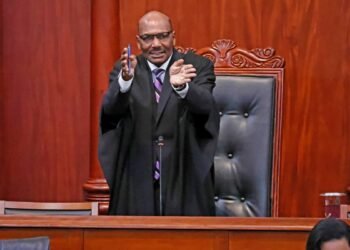
Persad-Bissessar made the remarks in response to questions from Guardian Media after the bill’s narrow passage in the Senate yesterday morning, where a 15-15 deadlock was broken by Senate President Wade Mark’s casting vote.
All 15 Government senators supported the legislation, while the six Opposition senators and nine Independent senators voted against it.
Asked for her reaction to the Independent bench’s unanimous rejection of the bill, Persad-Bissessar accused the senators of siding with criminals.
“That was expected from that group of scumbags,” the Prime Minister said.
“They voted against helping dying children with the expanded Children’s Life Fund Bill, so no one expected better from them.”
She intensified her criticism, calling the senators “satanic” for opposing the crime-fighting legislation.
“They are satanic to vote to protect drug traffickers who poison our children, to protect rapists who rape mothers and daughters in their beds, to protect violent criminals who rob and beat our elderly,” she said.
“Those demons basically told the criminals to go rape, rob and murder with their vote.”
The Prime Minister also dismissed amendments proposed by Independent Senators during the committee stage and indicated that the Government would take a tougher stance toward the Independent bench in future.
“If they want to write legislation, they should fight elections to earn a seat in Parliament. Going forward, we will not take a single amendment from that bench on any bill,” Persad-Bissessar said.
During the committee stage, Independent Senators proposed several amendments, none of which were accepted by Government.
Independent Senator Anthony Vieira sought a definition of the term “special operations” and raised concerns about the Prime Minister’s role in appointing Heads of Special Operations.
The amendments followed concerns expressed by Independent Senators throughout the debate regarding safeguards, oversight mechanisms and the scope of powers granted under the legislation.
Independent Senator Michael de la Bastide said he could not support the bill because it placed what he viewed as state of emergency-type powers in the hands of the Executive without sufficient judicial oversight.
He also raised concerns about the potential for political influence in the use of the legislation, particularly after Persad-Bissessar indicated that special operations would be permitted in Government-controlled constituencies and local government districts, as well as Tobago, but not in People’s National Movement-controlled areas whose representatives opposed them.
Vieira, while acknowledging improvements over the Government’s failed Zones of Special Operations (ZOSO) Bill, identified several outstanding concerns.
These included the absence of maximum time limits for closed areas and curfews, provisions relating to detention without charge and what he considered inadequate parliamentary oversight of special operations.
He also questioned why a written recommendation from the Commissioner of Police was not required before a closed area could be declared and called for quarterly reports to Parliament on the use of the legislation.
Independent Senator Dr Desiree Murray raised concerns about the absence of a mandatory requirement for police officers to wear body cameras during special operations.
The bill instead provides for the use of recording devices “where practicable” and in accordance with directions issued by the Commissioner of Police.
Murray also questioned the removal of the social and community development component contained in the previous ZOSO legislation and expressed concerns about the absence of a constitutional override clause.
Despite those objections, Persad-Bissessar said the Senate vote demonstrated that the Independent bench ultimately could not prevent the Government from passing the bill.
“They were relegated to uselessness in the Parliament yesterday, to only bray and then have no effect on the legislation,” she said.
“That will be their role going forward, to bray and be ignored. My Government will not buy votes from anyone.”
The Special Operations Bill required only a simple majority to pass.
The legislation divides Trinidad and Tobago into seven policing districts and establishes a framework for special operations within those districts. It also allows for the declaration of “closed areas”, where enhanced security measures, including curfews, checkpoints, cordons, entry and exit controls and certain search powers, may be implemented.
The Government had previously attempted to introduce Zones of Special Operations legislation, but that bill failed in the Senate in January after it did not secure the three-fifths majority required for passage.
Eight Independent Senators and all six Opposition senators voted against that measure, while one Independent senator abstained.
The Special Operations Bill was subsequently redrafted to require only a simple majority. It passed in the House of Representatives last week before reaching the Senate, where yesterday morning’s vote ended in a 15-15 tie.
Mark ultimately exercised his casting vote in favour of the legislation, ensuring its passage.
Asked for her overall assessment of the outcome, Persad-Bissessar said she was pleased with the result.
“The vote went well. The Government voted for the bill and Satan’s helpers voted against it,” she said.
Persad-Bissessar had also criticised the Independent Senators for their lack of support for the ZOSO Bill in January. At the time, she labelled them as “nine bootlickers” and alleged that two of them had sought personal favours in exchange for support of the bill, although she has never named them.