Civil society organizations letter to Amnesty International on the September 16 Declaration: Clarify the context of the victims

Home

Express Newspaper
25/09/2026 15:24
A number of civil society organizations through a public letter have asked Amnesty International to clarify the statement on the sentence of Thaci and others, arguing that it does not fully present the context of the victims of the war in Kosovo. They demand that the declaration also mention the crimes committed by the Serbian forces and the need for accountability for these crimes. This is for the purpose of providing sufficient information, so that even people without knowledge about the war can correctly understand what happened in Kosovo..
“We know that a judgment in a particular case can give courage to victims awaiting justice in other cases. However, the distinction between this broader hope and the concrete responsibility examined in these proceedings must be clear. Without this distinction, readers unfamiliar with the conflict may associate the victims of the war in Kosovo in general with the crimes addressed in this particular judgment,” the letter says.
Full letter:
Letter to Amnesty International regarding the request for clarification of Amnesty International’s statement on the verdict against Thaçi and others
Dear Ms. Major and colleagues of Amnesty International,
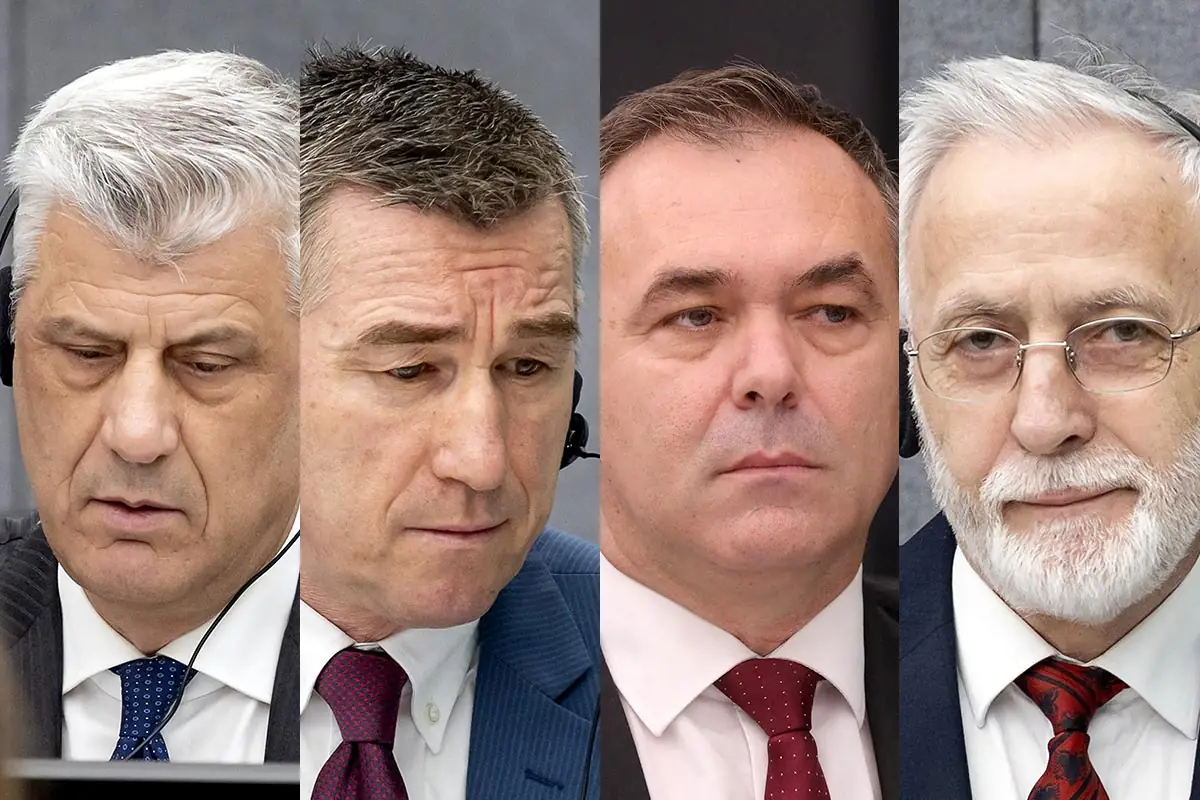
We, the undersigned civil society organizations of Kosovo, address you to express our concern regarding the way in which Amnesty International’s statement of September 16, 2026, regarding the first-instance verdict against Hashim Thaçi, Kadri Vesel, Rexhep Selim and Jakup Krasniqi, was formulated.
Our concern is particularly related to the reference to sentences that “give hope to thousands of victims of the war in Kosovo”, which is followed by information that focuses entirely on the judicial proceedings against these four persons. While the statement refers to the wider suffering of war victims in Kosovo, it does not contain any context regarding the crimes committed by Serbian forces in Kosovo. In our view, this creates an incomplete representation of the wider story to which the statement refers.
We recognize that a verdict in a particular case can give courage to victims who await justice in other cases. However, the distinction between this broader hope and the concrete liability examined in these proceedings must be clear. Without this distinction, readers unfamiliar with the conflict may associate the victims of the war in Kosovo in general with the crimes addressed in this particular judgment.
Including crime-specific figures in the background section does not sufficiently address this concern. These figures describe the scope of the court case; they do not explain the wider context of victimization during the war and do not distinguish between the different perpetrators responsible. Likewise, the references to acquittals of crimes against humanity and the possibility of appeal, while necessary, address the procedural outcome and not this lack of context.
The Kosovo Memory Book database, compiled jointly by the Humanitarian Law Center and the Humanitarian Law Center Kosovo, had recorded, as of 7 November 2014, a total of 13,517 people killed or missing in connection with the war in Kosovo during the period 1 January 1998 – 31 December 2000: 10,792 Albanians, 2,197 Serbs and 528 Roma, Bosniaks and members of other communities. The data includes civilians and members of the armed forces. These figures document the losses during the conflict and the period after it; they do not determine the liability attributable to the four defendants and do not include the totality of the damages suffered by the survivors.
Additionally, according to data collected by the same organizations, Serb forces killed 6,872 Albanian civilians in Kosovo between March 20 and June 14, 1999. This documented rate of civilian killings provides essential context when referring to the broader population of war victims in Kosovo and their ongoing demands for justice. Twenty-seven years later, no senior VJ or MUP commander has been prosecuted in Serbia for operations during which thousands of civilians were killed, despite thousands of facts established in ICTY judgments regarding the actions of VJ and MUP units and their links to command structures led by generals who were eventually convicted.
We do not expect a single judgment statement to describe the entire history of the war. However, when Amnesty International expressly refers to the wider population of war victims in Kosovo, it must provide sufficient context to present that story responsibly. The absence of any reference to the crimes committed by the Serbian forces leaves out the experiences of their victims, even though the statement relies on the suffering of the victims of Kosovo as a whole.
Accuracy is important for both individual responsibility and public understanding. Responsibility must remain attached to authors, works and concrete findings. The wider story of the conflict should not be conveyed through a single judicial process, and justice for victims whose cases are outside this process should remain visible.
Therefore, we ask Amnesty International to revise the statement to make a clear distinction between the victims included in the Thaçi et al. and the wider population of war victims in Kosovo. We also ask that it include a brief context that acknowledges the crimes committed by Serbian forces and the continued need for accountability for these crimes. If the reference to thousands of victims is intended to convey the broader hope that criminal liability can bring, this should be clearly stated.
Our request stems from a commitment to truth, justice and reparation for all victims, regardless of the ethnicity or identity of those responsible. We support fair judicial processes, respect for the right to appeal, and public communication that accurately presents both judicial findings and the historical context in which they were made.
We would welcome a written response explaining how Amnesty International intends to address these concerns.
Signatory civil society organizations:
- Prishtina Institute for Political Studies (PIPS)
- Kosovo Law Institute (KLI)
- Council for the Defense of Human Rights and Freedoms (CDHRF)
- Kosovo Democratic Institute / Transparency International Kosovo
- Kosovo Advocacy and Development Center (KADC)
- FOL Movement
- Center for Information, Criticism and Action (QIKA)
- The Kosovar Organization for Talent and Education (TOKA)
- Schüler Helpen Leben Kosova
- Fourth Wave
- Ramadan Ilazi – Head of Research at Kosovo Center for Security Studies (KCSS)
- Network of NGOs AVONET
- YES NGO