While individual leaders have voiced strong disapproval of the launch, the group has struggled to present a united front against the growing militarization of their waters.
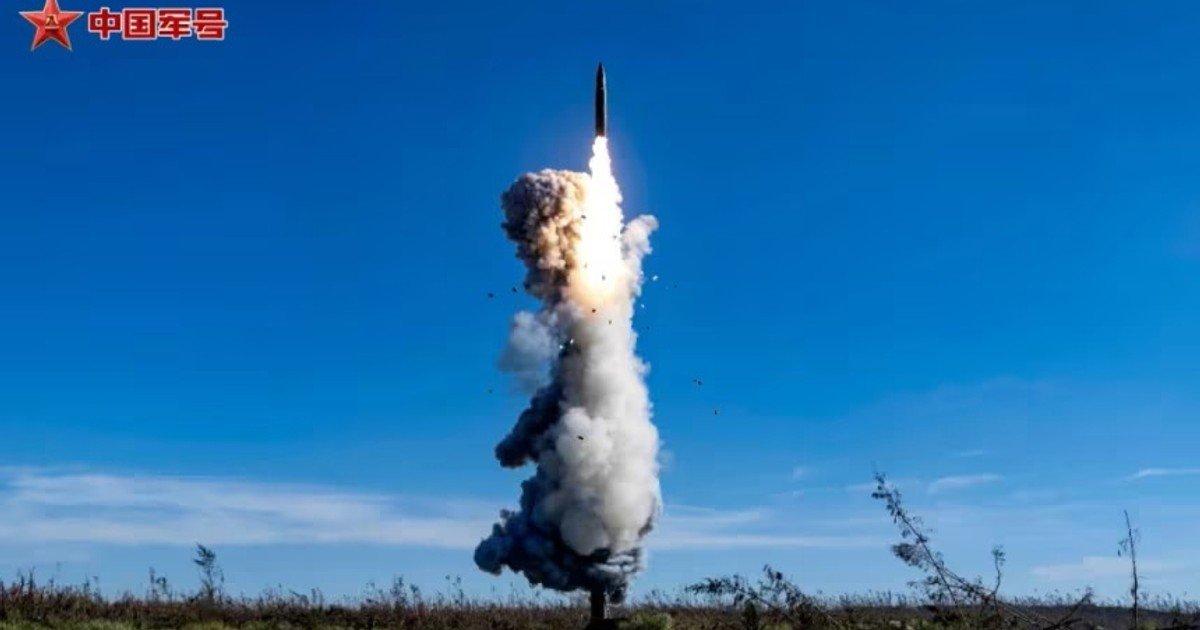
The July test involved a nuclear-capable missile fired shortly after Fiji and Australia finalized a major defense agreement, signaling a significant escalation in regional military activity.
A controversial launch in contested waters
The missile test has drawn sharp criticism from several Pacific neighbors who feel the move undermines regional stability.
Reuters reported that Papua New Guinea’s Foreign Minister Justin Tkatchenko expressed his frustration on the sidelines of a recent meeting, stating that the test was “totally inappropriate“.
Although Beijing provided advance notice of the launch, it did not provide specific details on where the missile would land.
Tkatchenko noted that while China is a close ally, this specific action “doesn’t help at all” in fostering a peaceful environment.
In response to the backlash, Chinese Foreign Ministry spokesperson Mao Ning defended the event, asserting it was conducted safely and asking that other countries “not over-interpret the matter“.
Challenges to regional unity and peace goals
Despite a 2025 commitment to safeguard the region through the Ocean of Peace Declaration, Pacific nations are finding it difficult to maintain a collective stance.
During a recent high-level meeting in Suva, foreign ministers were unable to reach a consensus on a joint statement to condemn the test.
Reports indicate that countries like Kiribati and Nauru, which have recently deepened their diplomatic ties with Beijing, did not support the proposed wording of the condemnation.
New Zealand Foreign Minister Winston Peters pointed toward outside influence as the cause for this deadlock, revealing the deep political divisions currently facing these small island nations.
Balancing security needs with sovereignty
The region remains caught in a difficult position as it balances the benefits of security partnerships with the desire to avoid being caught in a major-power rivalry.
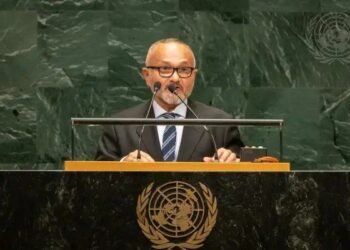
Fiji’s Foreign Minister Sakiasi Ditoka explained that governments face an unavoidable tension between wanting to be “free of all these war-making paraphernalia” and recognizing that certain security capabilities are necessary for safety.
While some nations seek deeper engagement with the United States for protection, others fear that a proliferation of security deals could leave them with little control over how their own waters and infrastructure are used.
Leaders are expected to revisit these concerns regarding regional unity and the missile test when they meet in Palau in three weeks.
China doubles nuclear arsenal amid loss of key mineral
The recent ballistic missile test highlights a rapid expansion of China’s nuclear capabilities, with its arsenal recently doubling to over 600 warheads.
Projections suggest this number could exceed 1,000 by 2030, though researchers question if this goal is attainable following a major export ban from the Democratic Republic of Congo (DRC).
Recent, investigators have alleged that China secretly sourced uranium, (the essential fuel for these nuclear weapons) as a hidden by-product within cobalt shipments from the DRC.
While the Chinese mining firm CMOC denies these claims, stating that their products “comply with all applicable local regulations” and contain no excessive uranium, scientists argue that China’s known domestic production does not account for its staggering growth.
With the DRC now officially banning the export of copper and cobalt concentrates to encourage local processing, this alleged secret supply chain faces a significant disruption.