In the youngest city in Ukraine, built immediately after the nuclear disaster to accommodate the victims and their families
Of Svitlana Dukhovych
«Most of the inhabitants of Slavutych are, in one way or another, linked to the word “Chernobyl”: many remember those events and still carry the wounds of the tragedy. Among our parishioners there are people who participated in the liquidation of the accident at the Chernobyl nuclear power plant, who suffered its consequences or who were evacuated and found a new home here. Some continue to work at the plant today. They carry with them the wounds of forty years ago, which should have healed, but with the start of the large-scale war, new wounds were reopened”: thus begins Don Yuriy Lohaza, parish priest of the Greek-Catholic community of Slavutych.
Slavutych is the youngest city in Ukraine. It was built after the Chernobyl accident to house the evacuated workers of the power plant, as well as the inhabitants of nearby Pripyat, just 2 kilometers from the power plant, and other surrounding villages, which have been considered a mandatory evacuation zone since the time of the tragedy. Don Yuriy explains that the power plant still remains the main place of work for the inhabitants of Slavutych today. During the large-scale war, reaching it became much more difficult, because there are no longer direct connections as in the past, when the train was also available.
The commemoration of the fortieth anniversary of the accident is an opportunity to remember the heroic gesture of those who, by putting out the flames, prevented an even greater catastrophe and saved the entire continent from worse consequences. Events related to the war once again showed the courage and tenacity of the inhabitants of Slavutych. The town, located less than 20 kilometers from the border with Belarus, was surrounded by the Russian military on the first day of the war, February 24; the following day the Chernobyl power plant was also occupied. On March 31, the Russian army left the power plant and retreated from the north of the country and from Slavutych. Throughout the period of occupation, the young Greek Catholic priest remained in the city, continuing to offer spiritual support to the faithful, encouraging the population and helping in the distribution of food and basic necessities.
“We experienced difficult moments,” says Don Yuriy. «And now we still live with apprehension because of these military actions that affect all of Ukraine, but which we feel closely here. Without a doubt, many people have left the city in search of safer places, both within Ukraine and abroad. Many of our parishioners, many families have left. At the same time, however, new people have arrived in the city. They came from areas close to the fighting. There are also those who come from Enerhodar, now under occupation. They worked at the Zaporizhzhia power plant and now they live here.”
The parish priest underlines that the large-scale Russian invasion brought new wounds to the inhabitants of Slavutych, because many of them were part of the military team responsible for protecting the Chernobyl power plant. «Some were captured by the Russians – he says – the majority have already been freed, but there are still people whose return we await. Unfortunately, some died in captivity, tortured or killed in transit. For those who already bore wounds, this invasion has opened new wounds, which today hurt and are extremely heavy.”
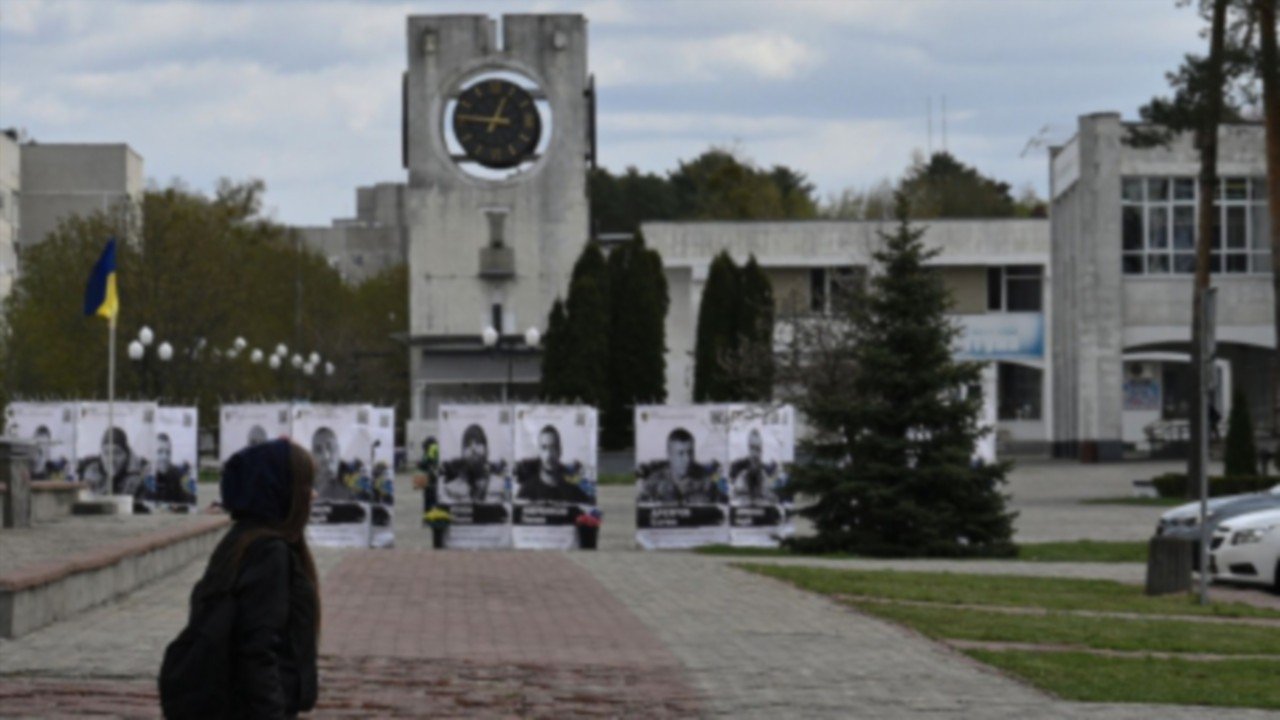
According to Don Yuriy, the wounds of loss are the most painful. «We have suffered many losses. Even in our small church we celebrated the funerals of over eighty soldiers. And we understand how much pain there is in families: how many children have been orphaned, how many women have become widows, how many mothers have buried their children. The priest’s task is not only to comfort or support, but sometimes simply to be close: to listen, to embrace. For many people this is a priceless gift.”
The causes of the Chernobyl tragedy have been analyzed from many points of view, but Fr Yuriy offers a pastoral perspective. «First of all, we are called to live honestly and carry out our duties with dignity. The Chernobyl catastrophe does not only concern the technical aspect, but above all the state of the human heart. Every decision has consequences, and everyone is responsible before their superiors and before God. At the same time, the settlement of the accident was a true act of heroism, a gesture of love towards others, as Christ teaches. People who risked their lives worked to limit the consequences of the catastrophe. Many of them have left us, many are buried here, in our city. Others still carry the consequences: in the body and in the heart. The house and material goods can be rebuilt, but health and life cannot. This is what weighs most.”
Among those who have suffered the consequences of the worst technological catastrophe in history is Ivanna, now 67 years old, a parishioner of the Greek-Catholic community of Slavutych. «The city was beautiful. The excellent infrastructure, many young people – he recalls -. There were the forest, the mushrooms, the berries, the houses. The river allowed the inhabitants to navigate to Kyiv. Everyone had their own job and in our free time we walked with the children and enjoyed the flowers that grew everywhere.” In 1986 Ivanna’s life changed radically. At the time of the tragedy he was working in a shop and, during renovation work, he was selling vegetables on the street. Initially no one explained to the inhabitants what was happening. “The next day we were walking with the children and we saw the smoke from the reactor, but no one told us to hide or do anything,” he recalls. Only the following day was the evacuation announced, however it was announced that it would only last three days and advice not to bring too many things. Ivanna and her family initially moved to the Ternopil region, but when they attempted to return to Pripyat after three days, they encountered a barrier along the way and were told that returning would no longer be possible. Ivanna’s husband was sent to work at the Khmelnytskyi nuclear power plant. The woman remembers that the first time her husband left by car and stayed there for a few weeks, returning without a car, because everything had been seized – car, clothes, personal effects – since, subjected to radiological control, the levels were very high. The family received a new home only after some time. Ivanna’s husband resumed working at the Chernobyl plant in shifts: fifteen days at work, fifteen days at home. In 1990 he was given an apartment in Slavutych and the family moved there. Since then they have been living in Slavutych. Ivanna’s husband died five years ago, her son works at another nuclear power plant in Ukraine, and her daughter lives in Kyiv. «It’s hard to believe that forty years have already passed since the accident», says Ivanna. «I thought that after the catastrophe we would only live for a year or two at most, because it had been really difficult. But, as they say, for God nothing is impossible.”
The hardest thing for her today is seeing the losses caused by the war. «I go to church every day and our parish priest is also a chaplain. Military funerals are often held. Many young people lose their lives. Every time you think: ‘Lord, will this be the last funeral like this?'” says Ivanna. Sometimes, bodies of soldiers are also brought that are not recognizable and must be identified through DNA testing.
Ivanna’s strength lies in prayer. After her husband’s death and her children moving away for work, she went through very difficult times. He began to pray more, to read the psalms and the Word of God, to recite the rosary. «Prayer helps me a lot. I understood that we need to pray more, trust in God, and then it becomes easier”, he says. “Even when tears fall, prayer calms, especially when I read difficult news or hear the sounds of bombing in Slavutych.” Ivanna attends church every day and continues to pray, support the community and cultivate hope. “Thanks be to God, I am always with Him, I pray and continue to live.”