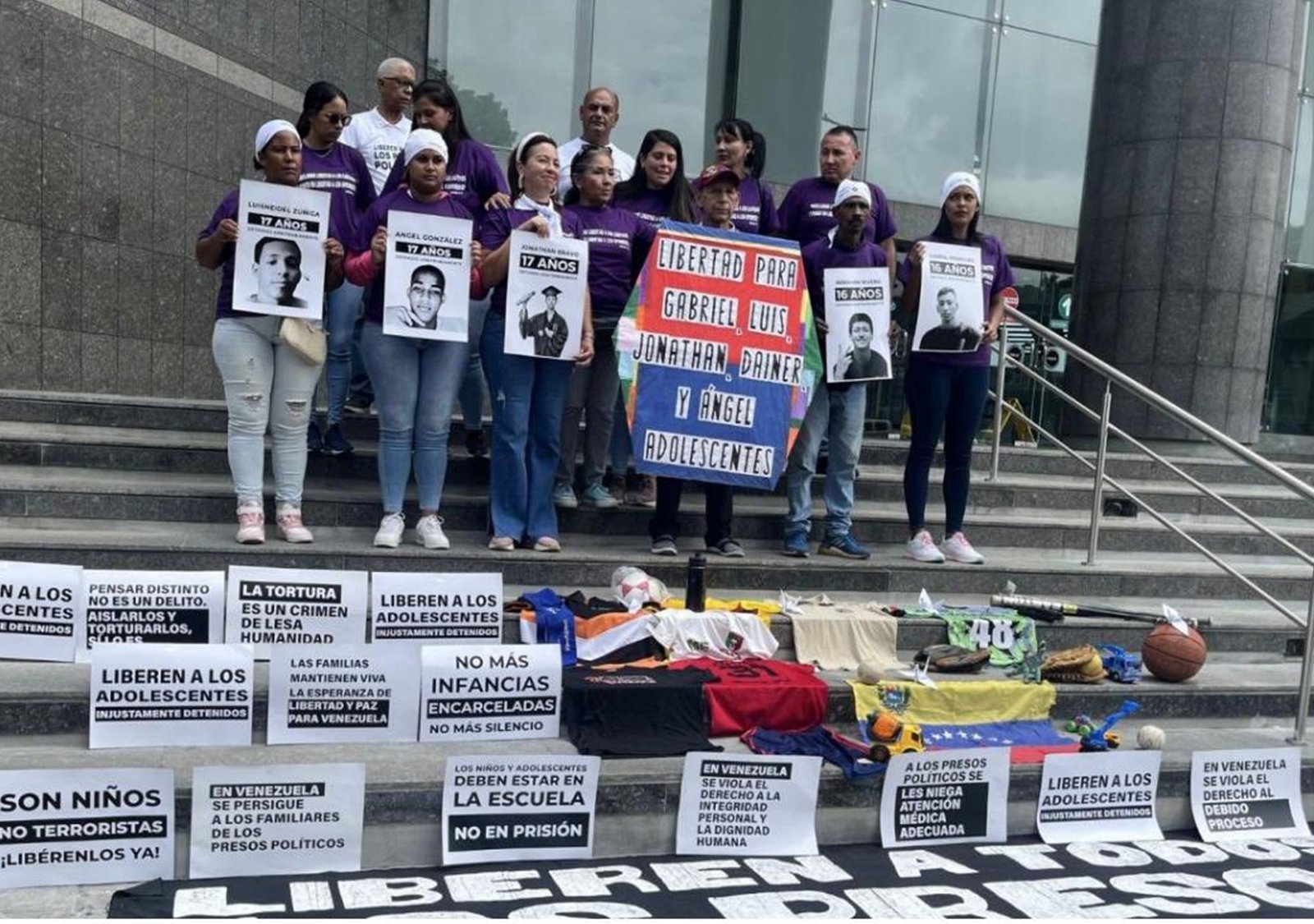
A total of 118 minors were charged between 2024 and 2025 in Venezuela for crimes established in the law against hatein a period marked by the post-election crisis after the proclaimed re-election of Nicolás Maduro as president, indicated Cecodap, an NGO dedicated to the protection of children in the country.
“It’s not just a number. They are adolescents who faced fear, anguish and uncertainty and the violence of a justice system that did not comply with the minimum guarantees provided for in the Lopnna. (Organic Law for the Protection of Children and Adolescents)”, the general coordinator of Cecodap, Carlos Trapani, stressed in his X account.
The activist’s statement comes after the president in charge of Venezuela, Delcy Rodríguez, requested last week the reform of the law against hate.
However, NGOs and political parties have rather demanded the repeal of the legal instrument, considering that it violates freedom of expression and is used to persecute opponents.
“If the law is going to be reformed, their rights must also be in the discussion,” Trapani said.
At least 927 people in Venezuela have been charged with “incitement to hate” since the law was passed in 2017, according to data released on Wednesday by the NGO Foro Penal, dedicated to the defense of political prisoners.
The Lopnna was approved in November 2017 by the Chavista National Constituent Assembly, installed that year in parallel to the majority opposition Parliament, after months of political crisis and massive anti-government protests in the country.
Its approval was made after an express request from then-President Maduro to put an end to the alleged messages of “hate” that according to the ruling party unleashed the wave of protests that shook the country between April and August of that year.
This legislation establishes penalties of up to 20 years in prison against so-called “hate crimes.”“and since then it has been criticized by human rights defenders and NGOs, such as Espacio Público, which in 2023 denounced that it has been used as an instrument “to persecute people for uncomfortable or critical expressions towards certain sectors of power.”