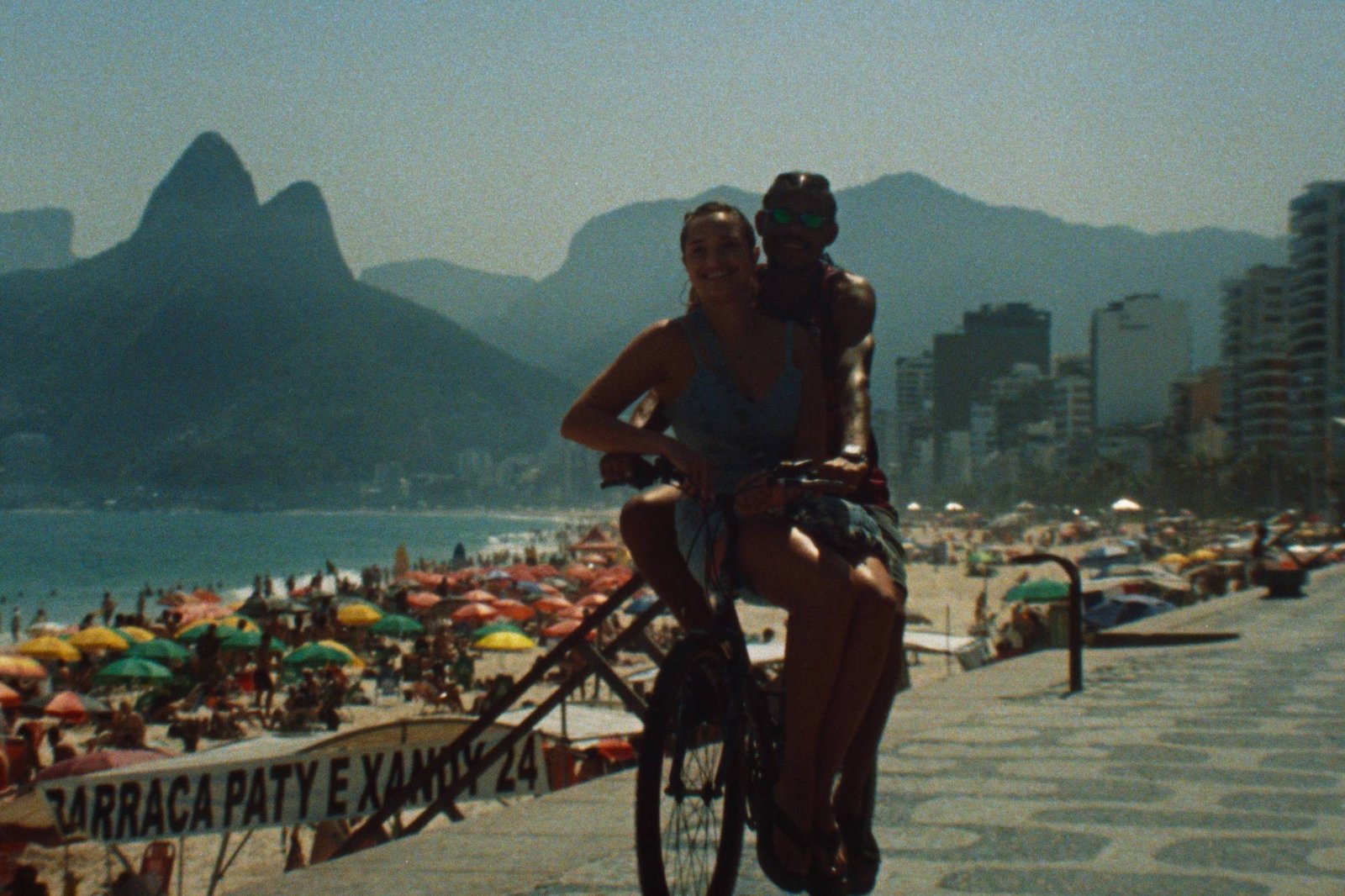
“Sunday Without God”, which premiered on Sunday Easteron April 5th, at streaming platform Brasil ParaleloBP, was born in Cidade de Deus — the famous Rio community that gave its name to the book by Paulo Linsin 1997, and at the film by Fernando Meirelles2002.
There, filmmaker Breno Moreira developed a project with amateur actors that ended up becoming BP’s second fiction feature. The platform is mainly known for documentaries that reflect the thoughts of ideological right.
“Domingo Sem Deus”, however, “is not a political film and has no partisan bias”, says Moreira. It may not be directly political, but it is, like its director, openly Catholic. “It’s a film about the search for virtues, responsibility, maturity”, says he, who became a religious practitioner about four years ago.
The film follows the trajectory of a young man from the outskirts, Walter, played by actor Wbliow, crossed by choices involving crime, emotional relationships and responsibility. He cycles through violence and attempts to reorganize his own life, until his girlfriend becomes pregnant and he decides to retire from drug trafficking.
With a cost of R$5 million, the project was born almost accidentally. Moreira did not belong to BP, but he was called to a meeting because the platform wanted to buy another project from him, a feature film about Our Lady of Aparecida.
“We (he and his partner, Igor Matos) refused to sell it because we believe that ‘Aparecida’ is a film that should go to the cinema.” At the meeting, however, Moreira presented other materials, including an unfinished short film made with students from a project of his in Cidade de Deus.
“When they saw those scenes, they asked if it would make a feature film. I immediately said yes, without knowing what awaited me.”
The company was looking for a short-term launch. “From then on, the project was developed and completed in around six months”, says the director.
Moreira, who has directed clips and documentaries on the independent scene, as well as a short film for the British magazine Dazed and Confused, says he didn’t know Brasil Paralelo well.
“I even had a certain prejudice, not knowing them.” But the relationship was a surprise. “They gave me absolute freedom. If the R$5 million were mine, there wouldn’t be anything different about the film,” he says.
The freedom was such that Moreira decided to make the film with his pet camera, which is a 16 mm — which obviously works with film. Film that needed to be revealed in Belgium. “There is no laboratory in Brazil anymore.”
“Film changes behavior on set. You think before you press,” he says. By spending more on film and development than he would have if he recorded digitally, Moreira had to save money in other areas.
He thus accumulated several roles in production. “I was the screenwriter, the camera operator, the editor and I also participated in the finalization.”
The Catholic experience appears in the script as a support structure, without it being made explicit to the viewer. “In the first part, I include the capital sins and, later, the search for cardinal virtues”, he states, explaining that this was used as an internal writing guide.
Moreira was born into a religious family, but was a non-practitioner. “My family had a strong Catholicism. IBGE“, he says. “We went to mass once a year.”
He started living his religion actively four years ago, after a period that he describes as difficult. “I was living a very distant life. I was living a very unhappy life.”
The change, according to him, occurred after a personal meeting. “The (actor) Juliano Cazarré helped me find myself again.” Cazarré, in fact, has been criticized by professional colleagues for his involvement with right-wing groups, such as Legendários.