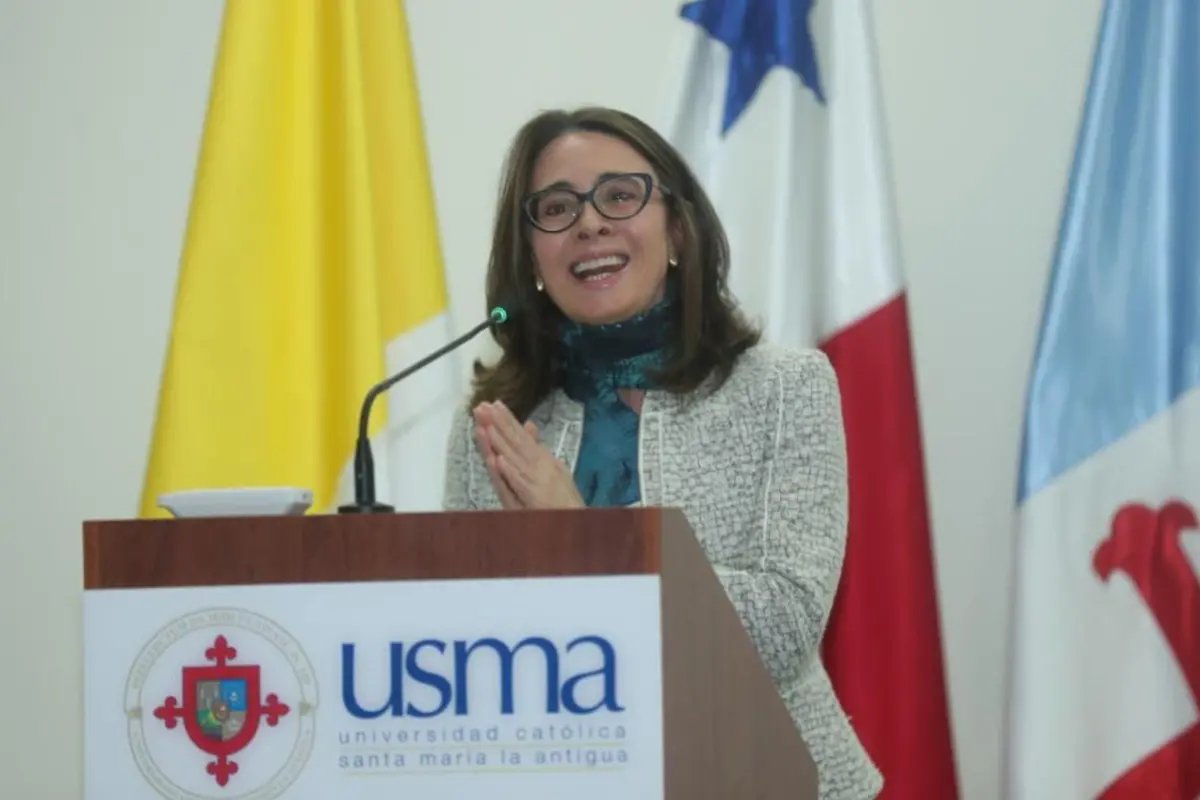
Freedom of expression and professional journalism face a critical moment in the face of the advance of processes of democratic deterioration, misinformation and the use of new technologies to attack the press, he warned this Monday, July 27. the Colombian jurist Catalina Botero during the conversation “Democracy and freedom of expression in the face of new threats”made in the Santa María La Antigua Catholic University (USMA).
The activity, organized by the National Council of Journalism and the Forum of Journalists for Freedom of Expression and Informationbrought together journalists, academics, students and representatives of international organizations to reflect on the challenges facing democracy in the region.
Botero, former special rapporteur for Freedom of Expression of the Organization of American States (OAS)maintained that, although historical problems such as violence against journalists, judicial harassment and the use of official advertising to reward or punish media persist, today these phenomena are connected by a common element: the weakening of democracy.
“The two initial symptoms of any authoritarian project that seeks to eliminate checks and balances in the exercise of political power are stigmatization and the attack on the press, along with the attempt to capture the judicial power”, he stated.
As he explained, Recent UNESCO reports show that since 2010 a global process of democratic degradation has acceleratedcharacterized by democratically elected governments that subsequently concentrate power, weaken institutions, and restrict fundamental freedoms.
The specialist pointed out that, where it is possible to control the Judiciary and silence the independent press, democracies end up weakening and citizens become “less free, poorer and suffer more.”
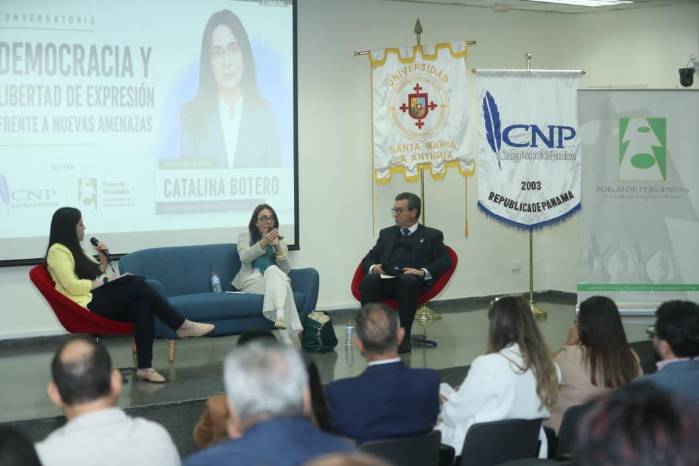
Catalina Botero during her intervention in the discussion “Democracy and freedom of expression in the face of new threats.”
“Social networks do not replace journalism”
During his speech, Botero questioned the idea that social networks can replace journalistic work.
“People sometimes seem to lose track of the importance of freedom of expression and serious journalism and believe that social networks are going to give them enough information to make informed, appropriate, reasonable and intelligent decisions. And that is not the case”, express.
He indicated that professional journalism plays an irreplaceable role by investigating, verifying information, consulting official sources and providing context before publishing, a task that – he assured – cannot be replaced by content from social networks or influencers.
“I don’t want to make decisions about influencers who, while they’re putting on makeup, tell me whether they think a candidate is good or bad. We need journalism to make informed decisions,” he emphasized.
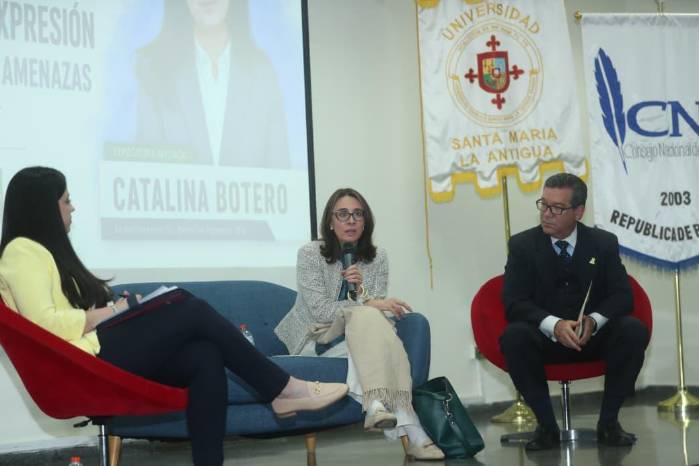
The conversation brought together journalists, academics and students from USMA.
Regulate digital platforms
One of the central topics of the conversation was the impact of technological platforms and artificial intelligence on freedom of expression.
Botero acknowledged that a few years ago he defended maintaining the Internet with as little regulation as possible due to its democratizing potential. However, he stated that his position has changed.
“Today I keep saying: regulate that. That’s a disaster,” he stated.
The expert explained that there are three major regulation models: the Chinese one, based on state control; the free market model dominated by large technology companies; and the European one, which – in his opinion – seeks to regulate without affecting freedom of expression.
Among the measures he proposed are forcing digital platforms to evaluate the impact of their algorithms, especially when they promote addictive content or amplify harassment campaigns.
Likewise, he proposed that technology companies and artificial intelligence systems financially compensate the media for using journalistic content to train their models.
“If we are left without the press and only with artificial intelligence systems trained with information that already exists, but without journalism that continues to produce it, we are going to make terrible decisions”, he warned.
He also asked to establish limits for the use of social networks by public officials.
He cited court rulings in Colombia that establish that authorities should not use their digital platforms to stigmatize journalists or spread false information, due to the enormous reach that these communication channels have.
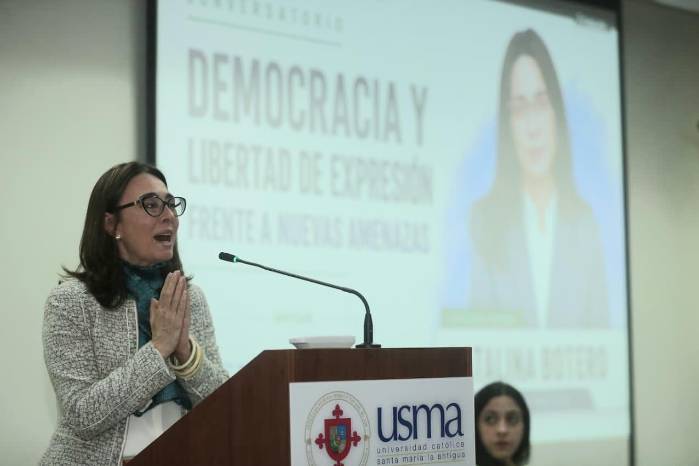
The forum addressed the challenges of democracy and freedom of expression.
Freedom of expression as a democratic pillar
During the conversation, Botero recalled that the OAS Declaration of Principles on Freedom of Expression, approved more than two decades ago, was based on a regional consensus according to which protecting freedom of expression also means protecting other fundamental rights.
“Freedom of expression is the cornerstone of any democratic society”tosigned.
He explained that, in accordance with inter-American standards, public officials are subject to a higher level of scrutiny and, therefore, should not resort to criminal law to respond to journalistic criticism.
On the other hand, he indicated that only in exceptional cases, when it is proven that false information was disseminated deliberately and without carrying out the necessary verifications, does civil liability apply.
Finally, he highlighted that the defense of democracy depends both on strong institutions and on judges, prosecutors and journalists willing to carry out their work independently.
“As long as there are people who want to defend the rights of other people and do not allow themselves to be intimidated, we more easily resist these authoritarian temptations.”, he concluded.