
Listen to this article
Estimated 3 minutes
The audio version of this article is generated by AI-based technology. Mispronunciations can occur. We are working with our partners to continually review and improve the results.
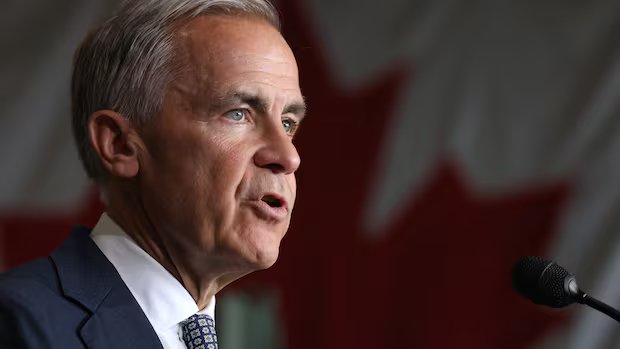
Prime Minister Mark Carney says he’s spoken to U.S. President Donald Trump after Monday’s tariffs announcement and that the two leaders have agreed to intensify trade discussions in the wake of the latest tariff threat from our southern neighbours.
“I spoke with President Trump earlier this morning. We agreed to intensify negotiations in the coming weeks and the team and myself look forward to doing that,” Carney said.
The prime minister said that intensification will happen “right away” but he did not provide insight into the specifics of how his government will respond to the latest tariff threat.
“We will look at all options in terms of how we would respond if [the new tariffs] do come into effect. That’s part of what we will be discussing with premiers,” he said.
On Monday evening, Trump announced that his administration will be imposing tariffs of 50 per cent on a wide range of Canadian exports in 30 days’ time.
The new tariffs are being imposed in response to what a senior administration official described as Canada’s retaliation against U.S. trade policy and its discrimination against U.S. motor vehicles, dairy and alcohol.
The White House has provided detail, in three presidential proclamations, for why each of those trade irritants are considered discriminatory to the U.S.
The alcohol irritant
The Canadian alcohol bans, where every province save Alberta and Saskatchewan has banned the sale of U.S. beer, wine and spirits, were imposed after Trump slapped earlier tariffs on the auto sector, steel, aluminum, softwood lumber and other things.
According to U.S. Census Bureau figures, the alcohol bans have resulted in a $360-million US drop in wine exports to Canada in 2025 from the previous year, along with a $150-million US drop in spirit exports.
“The Canadian provinces and territories have not instituted or maintained similar bans or restrictions on any other country since March 2025, thereby benefitting other countries at the expense of the United States,” the proclamation on alcohol said.
Carney said on Tuesday that the decision to remove U.S. booze from Canadian shelves was taken by the provinces in retaliation for the U.S. tariffs on key industries in their provinces, as well as threats to Canada’s sovereignty in general.
“The decision to change that, first and foremost, will be taken by the provinces themselves, each individually, and should only be taken, in my view, in part of an overall agreement, and that’s what we’ll work to accomplish,” he said.