Caribbean countries have gained no meaningful concessions from yielding to US demands, but a brief political opening in Washington could help them resist the toughest requests, a Cuban-born scholar has said.
Dr Jacqueline Laguardia-Martinez said Democratic majorities in Congress following this month’s midterm elections could raise the political cost of US actions abroad through hearings and investigations.
As a result, the foreign policy expert suggested Caribbean states seize that opportunity to “delay or dilute the most corrosive alignment demands” from Washington.
But she cautioned that “this window is fragile”, as US foreign policy does not change course quickly and whether American President Donald Trump would press ahead or be constrained by Congress remained “an open question”.
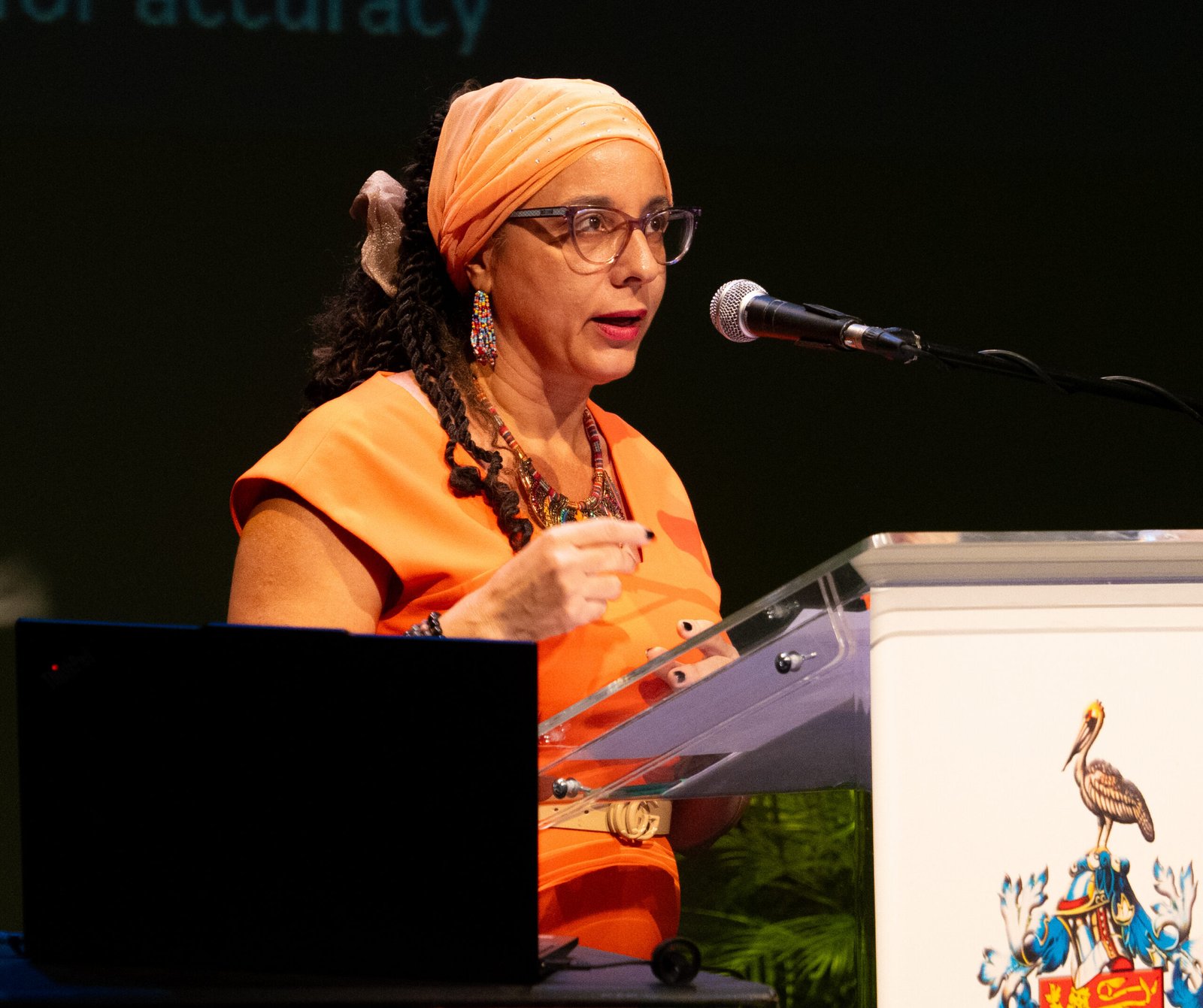
Laguardia-Martinez, a senior lecturer at the Institute of International Relations at The University of the West Indies (UWI), St Augustine Campus, was delivering the 21st Patrick Emmanuel Memorial Lecture at The UWI Cave Hill Campus on Thursday night. Her address was titled “The Shadow of the North, The Will of the Islands: US Engagement and the Shared Struggle for Caribbean Development”.
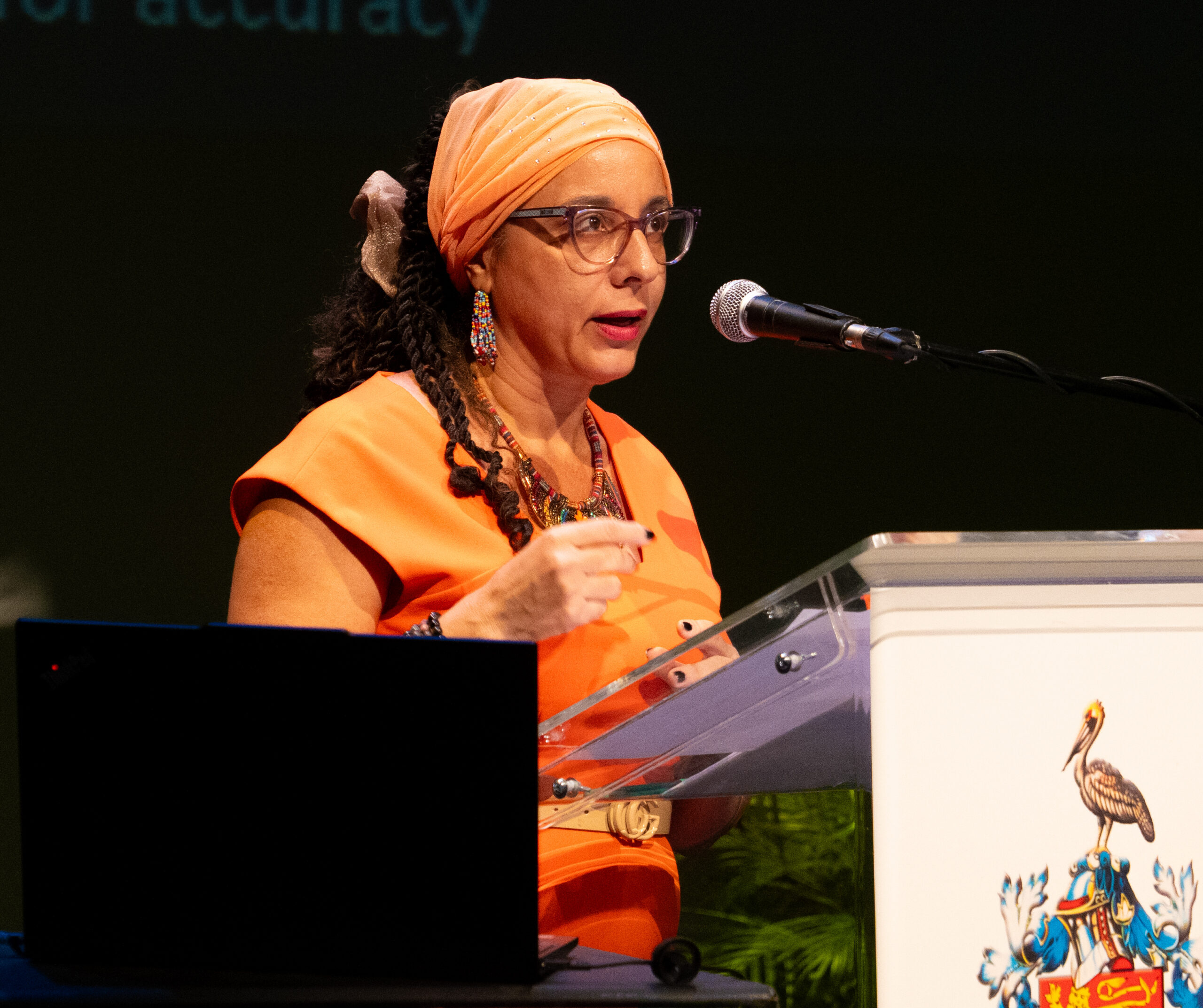
Dr Jacqueline Laguardia-Martinez. (Photo by: Cave Hill Campus, Marcomms)

Former Cave Hill Campus principal, emerita Professor Eudine Barriteau, was among those who took part in the discussion. (Photo by: Cave Hill Campus, Marcomms)
The senior lecturer noted that, in recent years, Washington had demanded that states accept deportees who were not citizens of the receiving countries, distance themselves from Cuba and join US-led security initiatives. The US had backed these requests with tariffs, frozen development funding, hefty visa bonds and military deployments.
“The Caribbean acquiescence on geopolitical, security, economic, and ideological matters has not translated into meaningful concession from the United States,” she asserted.
Laguardia-Martinez described current US policy as the “Donroe Doctrine”, the latest expression of Washington’s long-standing claim to influence in the hemisphere. She said the US had also pressed countries to end co-operation agreements with Havana and cited the Americas Counter-Cartel Coalition, which The Bahamas, Belize and Jamaica had joined.
Such pressure was “particularly effective against small states whose economies depend on tourism, remittance, and access to the US market”, she said.
Turning to Cuba, she said US measures, including an oil blockade and secondary sanctions, had caused widespread hardship. Citing Cuban government estimates, she pointed to prolonged power cuts, more than 100 000 patients on surgical waiting lists and just over 37 per cent decline in tourist arrivals during the first seven months of 2026.
Asked whether Havana was to blame for the crisis, Laguardia-Martinez said that was “not true”, but acknowledged domestic responsibility. She attributed the crisis to a combination of US pressure, domestic policy failures and the loss of Soviet backing, and said internal resistance had stalled economic reform since 2011.
The annual United Nations General Assembly vote on the US embargo against Cuba also exposed divisions within the Caribbean Community (CARICOM), she said. All 14 members had supported Cuba in 2025.
In October, however, Trinidad and Tobago became the only CARICOM member to vote against the resolution. Elsewhere in the bloc, several members abstained, others were absent and some maintained their support, she said.
Other examples she cited included the postponement of a CARICOM-Cuba summit scheduled for March in Havana and decisions by several Caribbean states to end or restructure Cuban medical co-operation.
To translate that opportunity into “substantive autonomy”, Laguardia-Martinez said the region needed “not passive observation, but the active construction of alternative partnerships and regional coordination mechanisms”.
She called for stronger ties with Africa, the Alliance of Small Island States and willing Latin American governments, including through university exchanges.
Citizens had a role to play too, she said, arguing that politicians were reluctant to take risks with the next election in mind. “We citizens, I believe, are too comfortable,” she added.
At the regional level, she urged CARICOM to extend its shared positions on climate change, reparations and the Bridgetown Initiative to hemispheric security, an issue on which member states were divided.
“For CARICOM and Caribbean small states in general, regionalism is not a choice. It’s a need. It’s a necessity,” she said. “Small states walking alone cannot walk that far.”
(CW)