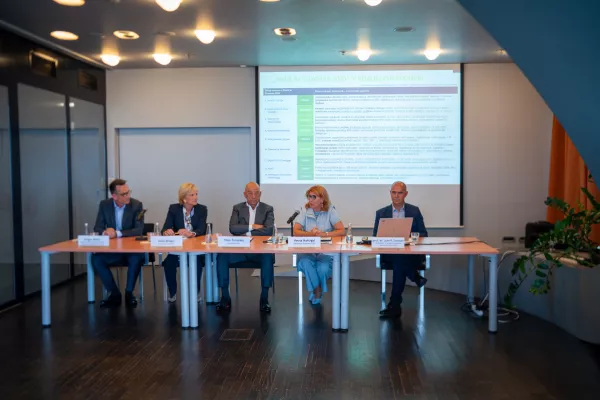
“The recent report by the Office for Macroeconomic Analysis and Development (Umar) on the quality of life in Slovenia confirms the high quality of life that we probably all want to maintain. At the same time, the report indicates and warns that such a future is not self-evident. At the Chamber of Commerce of Slovenia (GZS), like Umar, we have been pointing out two key challenges for a long time: insufficient productivity or added value, and the great demographic pressures of an aging population and a lack of labor force. This puts great pressure on the pension and health fund as well as on social security,” explained GZS president Tibor Šimonka at a press conference organized in the Slovenian economy center on the topic of the future development of Slovenia and the business environment.
According to him, economic growth and exports have been declining in recent years, foreign direct investments are decreasing, companies are investing less and less in new technologies and equipment, and international institutions are lowering their forecasts for this year’s economic growth. “If we want to have quality jobs, opportunities for young people, quality and accessible public services, adequate care for the elderly and vulnerable population groups, and more even development of the regions, then we need a strong, innovative and competitive economy that will create high added value,” Šimonka said. Therefore, in his opinion, the key question is whether we will be able to create such a business environment that will enable companies to transition from producers of some parts and subsystems to creators of finished products that are in demand on the global market, and attract new foreign investments.
Key development industries
Last year, in cooperation with businessmen, entrepreneurs and experts, the GZS prepared the program Made in Slovenia 2035, which includes development proposals for Slovenia. As explained by Jože P. Damijan, a full-time professor at the Ljubljana Faculty of Economics, who participated in the preparation of the development program, it presents the key fact that Slovenia must find a new development impulse, which must be based primarily on increasing productivity.
“Without productivity growth, there is no prosperity growth. If we want to increase productivity growth, we must also increase investment growth. The state must take on a decisive role as the defender of industrial policy by defining key strategic development industries,” Damijan said.
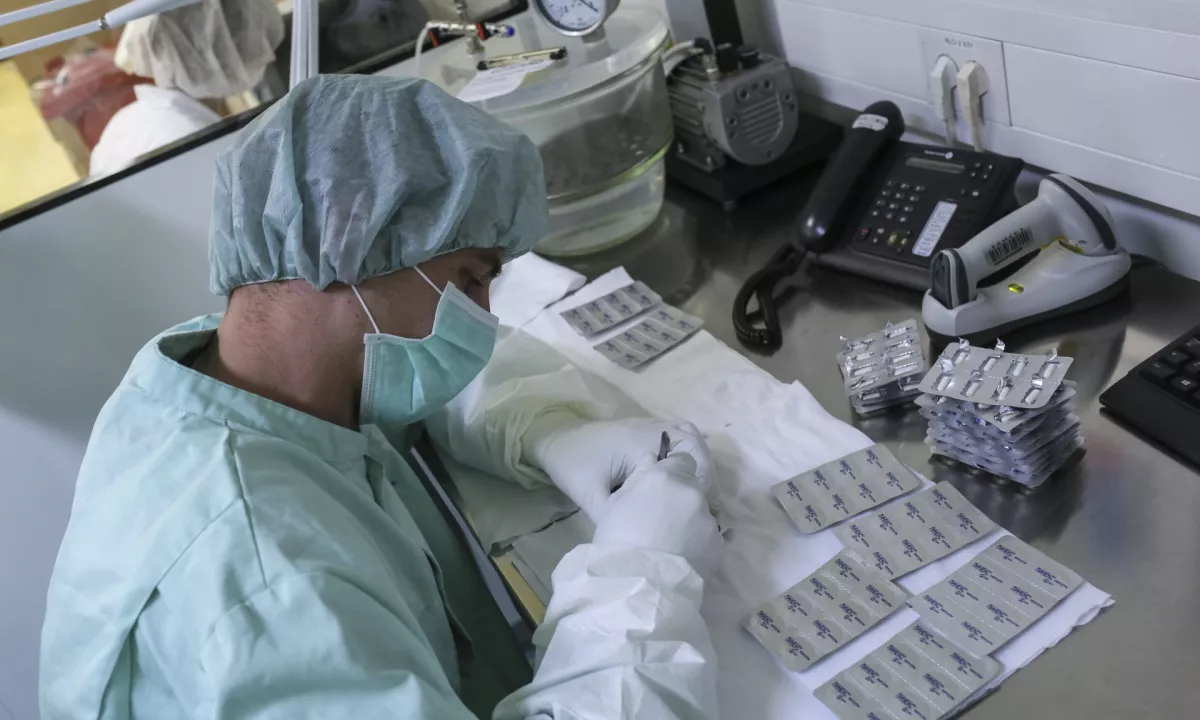
In the Made in Slovenia 2035 program, developing industries are defined on the basis of their growth. They range from pharmaceuticals, biotechnology, sustainable mobility, i.e. automotive industry, electrical industry, materials industry, agri-food to logistics and information and communication technology. “These are industries that currently create very high added value in Slovenia and have the potential to increase this high added value even faster,” explained Damijan.
Without investments, Damijan continued, it will not be possible to transform the economy. Within the eight strategic areas, companies are ready to invest around 1.9 billion euros annually, which by 2035 represents a total of over 19 billion euros.
“With this, even taking into account the multiplier, we can stimulate the growth of the Slovenian economy nominally by around half. This means that we can boost economic growth, for which the current forecasts are very low, by two percentage points,” said Damijan, who is convinced that the program prepared last year at the Chamber of Commerce and Industry should be part of Slovenia’s broader development paradigm. “It is crucial that we have a development strategy in which all stakeholders participate,” Damijan added.
According to the explanations of the director of Medex Aleša Mižigoj, companies need a good environment for successful development. “We don’t want constant changes, surprises around the corner, but predictability, first and foremost in terms of taxation. Due to the tax legislation, it is difficult to attract or even retain professional personnel who are key.”
Lowering administrative barriers
As the chief executive officer and president of Sandoz Slovenia, Gregor Makuc, said, they will invest one billion euros in Slovenia in the period from 2023 to 2028. “Such investments are not the result of coincidences, but deliberate decisions of our owner, the Swiss Sandoz. The advantages were very obvious and clear.” Tradition came first. Lek is a company that celebrates 80 years of existence this year. Another competitive advantage is represented by extremely high-quality personnel, the third is that Lek has always had extremely strong development and production capacities.
Like Mižigoeva, Makuc highlighted the importance of the predictability of the business and tax environment. “When you invest more than a billion euros in an environment, build factories that will produce and develop products for the next 15, 20 years, the predictability and stability of the environment are very important. Therefore, it is necessary to look at the system of taxation both at the level of companies and individuals, the relief of income tax scales and the like,” said Makuc, who is convinced that changes should take place predictably and above all in cooperation with the economy.
According to Makuc, it is very important to accelerate investments, for which administrative and administrative procedures must be accelerated and administrative burdens must be reduced.
They also rate the connection of the research sphere with the economy as very important. “At Lek, we are very proud to have concluded strategic cooperation agreements with all three public universities and also with all three key research institutes: the Jožef Stefan Institute, the National Institute of Biology and the Institute of Chemistry, which are among the leading research institutes in the world. This is an enormous advantage that is often forgotten in Slovenia. I always encourage colleagues from business to go to them and connect with them operationally and build and implement projects together,” said Makuc.