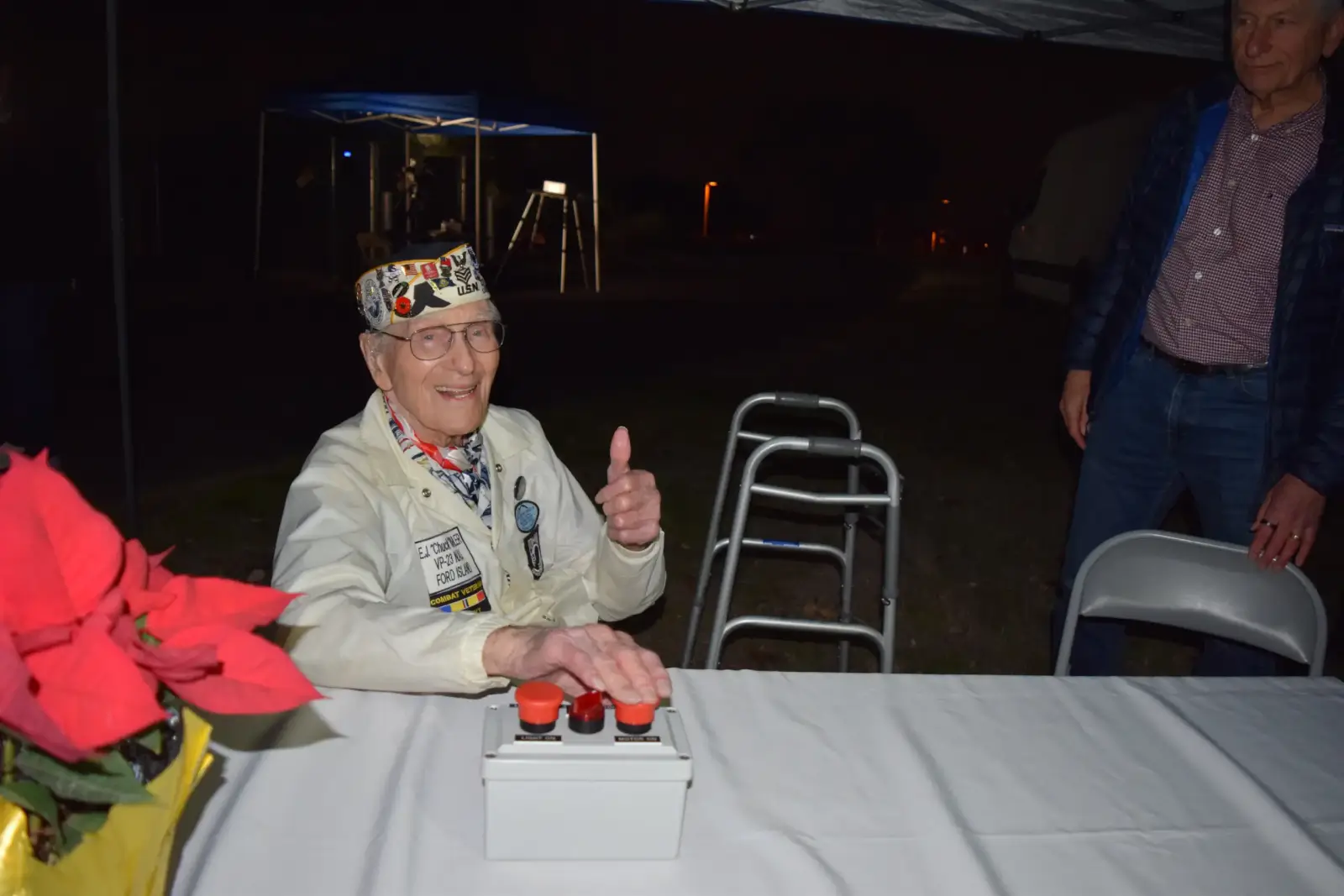
It’s been nearly 85 years since the attack on Pearl Harbor, but World War II Navy veteran and Pearl Harbor survivor Chuck Kohler is determined that the world remembers that harrowing day. Every year on Dec. 7, he leads a ceremony in memory of his fellow service members who died during the attack, and lights the beacon on Mount Diablo in California.
Though World War II had been raging since 1939, the United States had maintained neutrality as much as possible. The attack on Pearl Harbor in 1941 — as well as the immediate “attacks against US and British bases in the Philippines, Guam, Midway Island, Wake Island, Malaya, and Hong Kong” (The National World War II Museum) — finally thrust America into the war. President Franklin D. Roosevelt declared the date to be one that would “live in infamy.”
Thanks to the hard work of Kohler and organizations like the Pearl Harbor Survivors Association and the Sons and Daughters of Pearl Harbor Survivors, the day will not be soon forgotten.
Life during the Depression
Born to a poor farming family in northeastern Minnesota during the Depression, Kohler’s childhood was difficult.
“There was always more work to do than you could get done, he said, adding that life on a sharecropping farm was “always hard work.”
He went to school in a one-room schoolhouse, devoid of electricity and plumbing. For his eighth grade year, work on the farm kept him so occupied that he made a deal with the teacher: send assignments home with his younger siblings for Kohler to do at home. Even though he only attended roughly 60 days of school that year, he was still an honor student.
His father had promised he could go to high school, but when the time came, the family needed him at home.
“My work was of more value to him than he thought an education would be,” Kohler recalled of his father’s reasoning.
He decided he wanted a different life for himself than as a “dirt farmer.”
“There had to be something else for me, and I knew that it wouldn’t come to me — I had to go looking for it. So two months, I think, and one week after my 17th birthday, I found out that you could join the Navy at 17 if you could get your parents’ permission,” Kohler said.
“I’ve been my own, my, I’ve set my own course, blazed my own trails, and marched to the drumbeats within me ever since I was 17 years old,” he added proudly.
The attack on Pearl Harbor
After training in Illinois — farther than anyone in his family had been before — Kohler was asked what he wanted to do in the military. He had always been interested in airplanes; as a child, he would see a few a year when barnstormers, usually World War I veterans, would put on airshows. He said he “wanted to work with airplanes.”
Kohler departed on Oct. 14, 1941, for his new assignment: Pearl Harbor in Hawaii.
“When I got out there and reported to VP 23 stationed there on Ford Island right in the center of Pearl Harbor… I was so excited to be there, because it was such a peaceful, beautiful place… quiet and calm. Of course, that all changed on Dec. 7 of 1941,” Kohler said.
He was on duty that day.
“On that morning I was assigned the 0800 to 1200 security watch. So it happened on my watch — you can blame me if you want to,” he said.
He heard the first attacking plane coming in, initially thinking it was a friendly pilot, “wanting to do a little hot dog and have a little fun.”
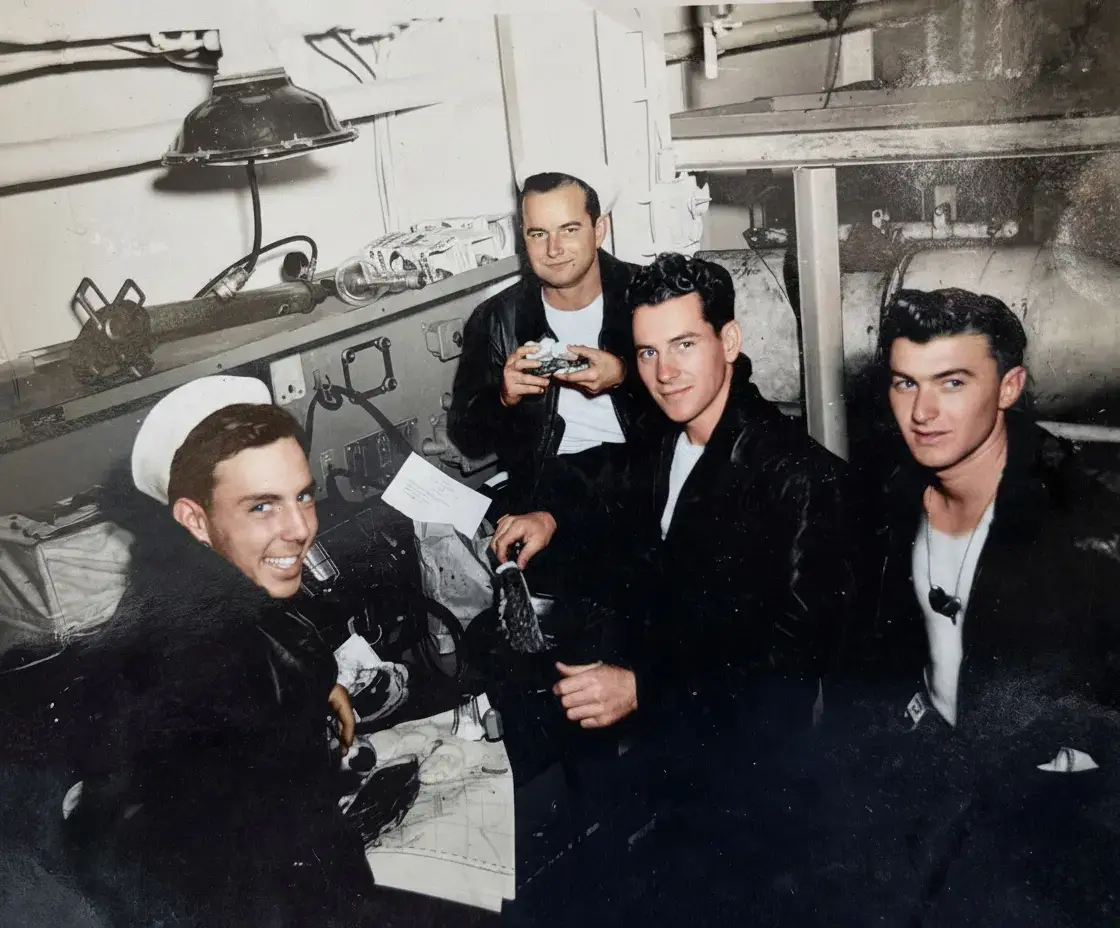
“Suddenly and simultaneously, there was a tremendous roar, bomb fragments, explosion debris, and window glass came crashing into the back of my head, ears, neck, and onto my shoulders. Something like that would kind of change your plans for the day, you know?”
“I looked up, and although it wasn’t fully daylight yet, I could see the outline of this airplane, and a steep, steep hard dive, and I’m seeing what’s looking like blinking or flashing lights on the front, hearing strange popping, buzzing, and whizzing sounds all about me, but I don’t recognize either them for what they were, you know — I’m only 17, never been to war before. A little later, somebody told me what I thought were blinking or flashing lights on an airplane was actually machine gun muzzle flashes, and those popping, buzzing, and whizzing sounds that I was hearing were those bullets striking and passing through a twin engine patrol bomber, the old PBY aircraft parked near to where I was standing, then ricocheting off the concrete apron on which it was parked, or off the steel hangar door right behind them.”
As the attacking plane pulled out of its dive, Kohler said it was only about 150 feet over his head, clearly showing “that big round red insignia there on the bottom of the wing.” Kohler followed several other service members, thinking they were being led to the ammo shack to grab weapons, but instead jumped into a construction ditch. Kohler was aghast.
“I don’t want to be in that ditch. We’re military men; we should be putting up a defense! We shouldn’t be here in this ditch. Besides, I know this is the beginning of that war that they’ve been talking about, we should have been better prepared for, and I’m from a proud family, and I know damn well that if I’m going to lose my life in this battle or any other battle of this war, I would want my family and my country to know that I died fighting, not hiding.”
He and others made a run for the ammo shack —against orders— and retrieved a .50 caliber machine gun and ammunition, mounted it onto a nearby aircraft, and began firing at the enemy.
“Believe you me, if you can get a couple of these [rounds] bouncing around inside that cockpit or passing through it with that pilot, you give him something else to think about, other than coming back machine gunning in your area a second time.”
The war and —finally— closure
The primary target of the Pearl Harbor attack was the U.S. Pacific Fleet. Of the nine battleships of the fleet, seven were moored on “Battleship Row” with an eighth —USS Pennsylvania— dry-docked. All eight took hits, and were damaged or sunk; though the USS Arizona remains underwater, it is the only one that serves as a monument to the Pearl Harbor attacks.
Other ships were also damaged or sunk in the attacks, including the battleship-turned-training-vessel, USS Utah, and USS Helena, a light cruiser with a 31-man crew that fought until the end. Of the 21 enemy aircraft that were downed, the Helena crew is recognized as responsible for six of them, according to the Department of Defense. Tragically, no one aboard the Helena survived.
The damaged American ships that “got shot up like they did” had lost power, and they were in no condition to treat casualties, explained Kohler. Since Ford Island didn’t have a hospital, the service members had to think quickly to save as many victims as they could.
“So they took the mattresses off our bunks in the barracks and put them on the tables in the mess hall, and that, like, became a triage center, and they would decide who they could help and which ones they couldn’t,” Kohler said. “And so there were the guys that they thought they could do something for, would be on one of those tables on one of our mattresses, and the guys that they knew there was no help—for the dead and those that were in the process of dying—were just kind of stacked up out somewhere out of the way, you know, because you couldn’t do anything else. There was just so many of them…”
There were over 3,500 U.S. service members and civilians wounded and killed in the Pearl Harbor attack.
Kohler would later be sent to the Marshall Islands. While the U.S. troops were never attacked there, he knew “we were always within the possibility”; he explained that “…on a clear day at low tide, we could see the tops of the palm trees on the islands where the Japanese were.”
After being in the middle of the firefight of Pearl Harbor that drew the United States into World War II, and then deploying to the Marshall Islands, Kohler’s time during the war came full circle at the end.
“I was deeply involved in the action that brought us into World War II, and my last military deal to be involved … in the Pacific was [when] I was in the party that… accepted the surrender of the Japanese troops. We got to haul down the Rising Sun flag and hoist the Stars and Stripes,” he said.
“…that gave me closure.”
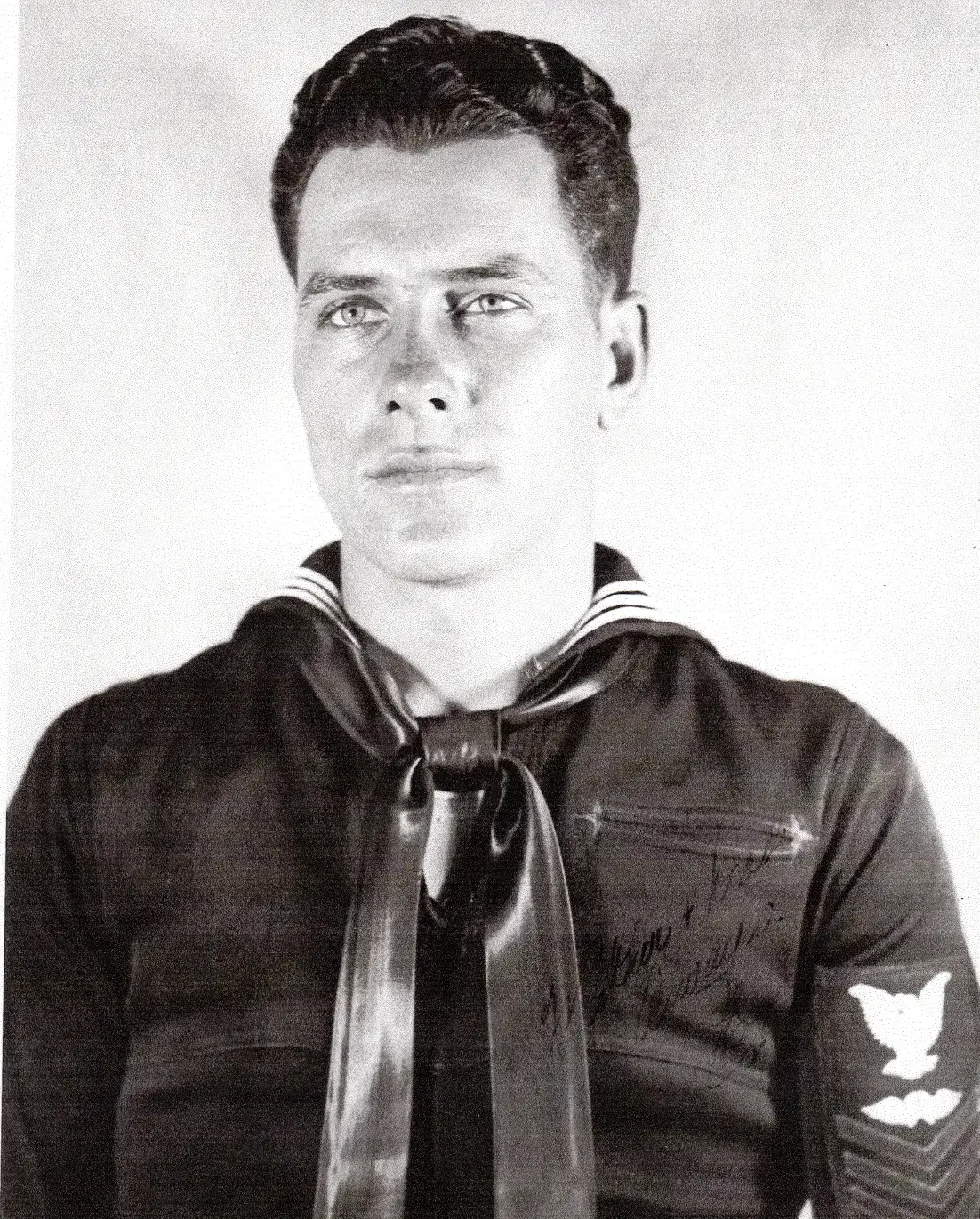
The beacon
In 1964, the Pearl Harbor Survivors Association decided to light the Mount Diablo beacon “to bring honor and remembrance to all those people who lost their lives at Pearl Harbor.” Admiral Chester Nimitz himself lit the beacon.
Now, Kohler leads the annual ceremony, first speaking to the attendees before pressing the button to light the beacon.
A California resident, Chuck is now the only survivor of the Dec. 7 attack living in the state.
“My mother used to tell me… “you know, you’re one in a million,” Kohler recalled.
“I think California has about 49 million people, and 1793199763 I’m one in 49 million,” he said of being the sole Pearl Harbor survivor in the Golden State.