
In Szeged, construction is progressing rapidly on the first European plant of BYD, the Chinese global leader in electric vehicles. During a joint site visit, Mayor László Botka and Chinese Ambassador Gong Tao emphasized the strategic importance of the project, which will be implemented without battery production, but with a focus on innovation and local workforce.
One of the central topics surrounding the major investment in the southeastern Hungarian city has been environmental protection from the very beginning. In a post on his social media page, the mayor of Szeged made it clear that
the project will be carried out in compliance with the strictest Hungarian and European environmental and health standards.
“For me as mayor, the health, safety, and peace of residents are the top priority,” said László Botka. To ease public concerns, he emphasized:
- No batteries will be produced in Szeged.
- No chemical activities will take place there.
- The production lines will be located several kilometers away from residential areas.
As an ecological offset, BYD will create large new green and recreational zones as part of the construction, the mayor added.
The BYD plant is expected to become the economic backbone of the region, Világgazdaság writes. The project is said to bring several thousand new, well-paid jobs, providing Szeged with long-term stability. So far, 960 employees have already been hired, 70% of whom are Hungarian—most of them from Szeged itself.
To meet long-term workforce demand, BYD is closely cooperating with the University of Szeged and the local vocational training center. Workers from Vojvodina (Serbia) are also expected. To facilitate commuting, a dedicated fast-track lane is planned at the Röszke border crossing.
Chinese Ambassador Gong Tao praised the cooperation in a post on the Chinese Embassy in Hungary’s social media page as a “successful model example.” He thanked Botka for his tireless support in deepening economic relations between China and Hungary. The goal, he said, is for Chinese companies to become deeply integrated into local communities and create real value for the population.
Production has already entered a decisive phase.
After test runs quietly began in January, preparations are now underway for full-scale mass production.
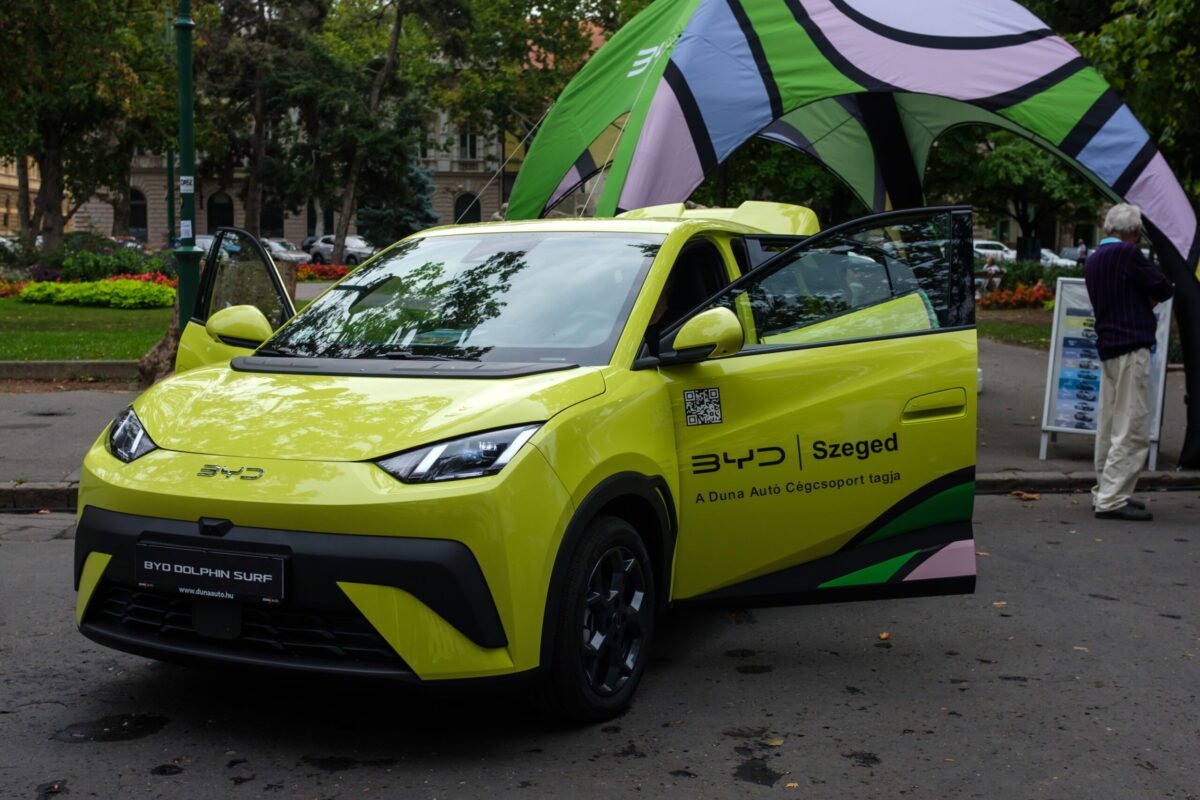
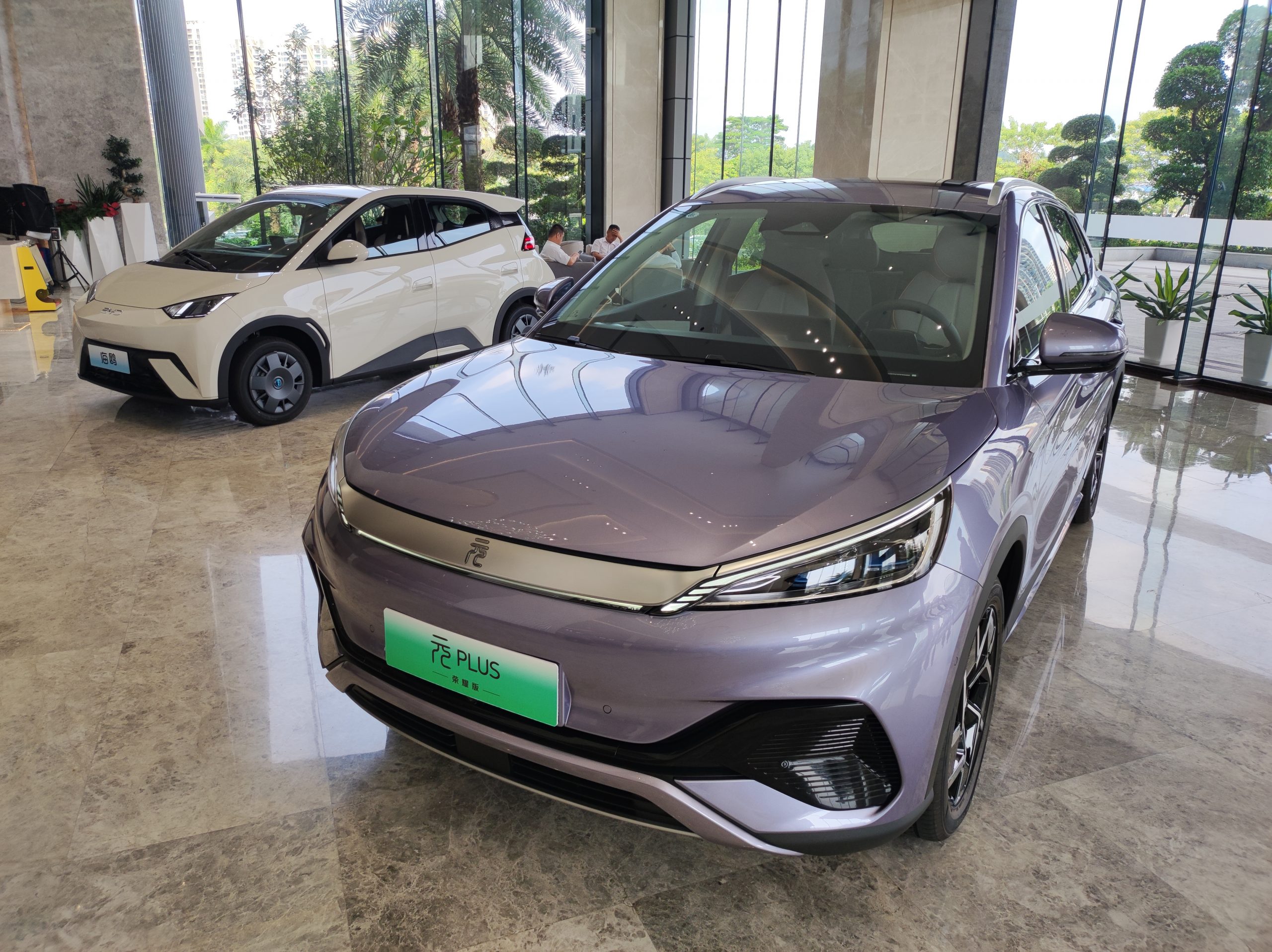
The first model to roll off the production line in Szeged will be the BYD Dolphin Surf. The decision on the 300-hectare site followed an intensive process. A total of 224 rounds of negotiations were held between the company leadership and the Hungarian Investment Promotion Agency (HIPA) before the location was officially confirmed.
Apart from battery production, BYD will carry out the entire manufacturing process onsite in Hungary.
Initial production capacity of 150,000 vehicles per year is expected to eventually double to up to 300,000 units, solidifying Szeged’s position as a central hub of the European automotive industry.
Via Világgazdaság, Featured image: MTI/Oláh Tamás