Achieving an adjustment close to 70 billion pesos, alleviating debt maturities and ensuring that spending does not once again exceed income are the tasks that the Government will have before it after issuing by decree the General Budget of the Nation for 2027. The authorization to spend is resolved, But the cleanup of the accounts will depend on measures whose content has yet to be known and on decisions that will require the support of Congress.
The announced economic rescue law will be the centerpiece of that effort. However, sources consulted warn that the margin to cut is limited and that moving payments to later years, although it reduces the immediate pressure, does not replace a permanent adjustment.
READ ALSO
“The issuance of the budget by decree does not change the magnitude of the fiscal challenge facing the country,” says Luis Fernando Mejía, president of Lumen Economic Intelligence. A good part of the resources, he explains, is committed to legal and constitutional obligations, such as pensions, territorial transfers and debt service.
This rigidity helps to understand why the Executive cannot solve everything through budget decisions.
“A multi-year fiscal plan is needed, with permanent measures to rationalize spending, reforms that reduce some of its rigidities and, given the magnitude of the imbalance, a discussion about additional sources of income,” says Mejía.
The first test will be to establish how much of the announced adjustment can be converted into concrete measures and how much it can overcome the legislative process.
Camilo Pérez, director of Economic Research and Market Analysis at Banco de Bogotá, explains that The objective set by the Government is to obtain fiscal savings of just over two points of the gross domestic product (GDP). With this, the deficit projected for 2027 in the budget scenario would go from 9.4 percent to a level close to 7 percent of GDP.
The result will depend on two moments: the proposals presented by the Executive and those finally approved by Congress. For now, Pérez foresees an effort focused mainly on spending, with possible measures on income.
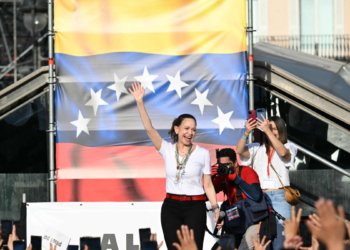
Analysts point to an effort concentrated mainly on spending, with measures on income. Photo:Supplied
Complicated decisions
The Fiscal Observatory of the Javeriana University places the announced cut at around 45 billion pesos and points out that its completion would allow reducing debt needs. However, he warns that the text of the initiative is not yet known nor how this effort would be distributed.
“An adjustment of that size will involve difficult decisions about spending, and its sustainability will also depend on citizens being able to understand why the cuts are required, where they will be made and how they will contribute to improving the fiscal situation,” he says.
The figure, therefore, will have to be accompanied by an explanation of the obligations that would be modified, the programs affected and the savings that each measure would produce, both in 2027 and in subsequent years.
Juan David Ballén, director of Economic Studies at Aval Asset Management, proposes that this review focus on the structure and quality of spending.
“I believe that the rescue law should focus on measures that structurally reduce spending and improve its quality: rationalize the size of the State, review funds, programs and transfers that do not demonstrate results, improve the targeting of subsidies and contain the growth of expenses,” he says.
READ ALSO

On the revenue side, it recommends strengthening the efficiency of the Dian, reviewing benefits and tax exemptions that do not generate sufficient economic or social results, and simplifying the system to facilitate compliance and improve effective collection.
They are proposals for debate, the scope of which will depend on the project presented by the Government. For Ballén, The opportunity lies in correcting the failures that have led the country to need recurring adjustments.
Move expirations
While this reform is defined, debt management offers a way to reduce the closest payment obligations.
Pérez describes a strategy of three exchanges for the close of the year. The objective is to collect securities with close maturities, including those in 2027, and exchange them “for securities of much longer duration,” so that the payments that have to be made next year can be “relieved.”
Andrés Langebaek, dean of Economic and Administrative Sciences at the Jorge Tadeo Lozano University, mentions a reprofile close to 19 billion pesos which would reduce the amortization needs of 2027, that is, the resources destined to return the capital of the debt.
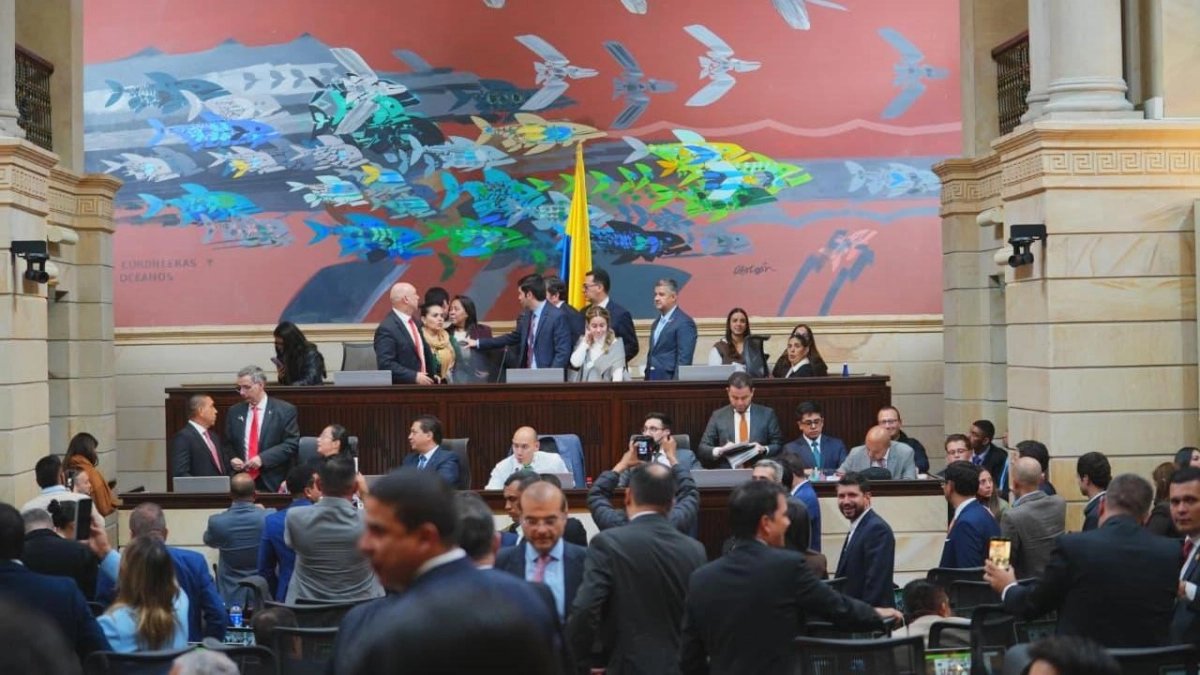
It is necessary a debt reprofiling close to 19 billion pesos. Photo:AFP
The relief must be distinguished from the tax savings sought by the bailout law. Changing due dates postpones payments, but does not eliminate obligations. Therefore, both amounts cannot be added automatically as if they corresponded to the same adjustment.
For Langebaek, the budget constitutes a maximum spending limit that can be modified. Debt operations and subsequent adjustment decisions would change 2027 resource needs.
The size of these needs leads the academic to propose an eventual agreement with the IMF.
“The fact of having the guarantee with the IMF allows the country to finally access resources at lower rates,” holds. Their argument is that such support could improve financing conditions with other lenders by offering a signal about the sustainability of public finances.
It also considers that a two or three-year program would allow the adjustment to be accompanied with spending reduction goals, advice and eventual disbursements subject to compliance with commitments, if any.
Precisely, on Friday the Government, through Vice President José Manuel Restrepo, committed to “eliminate all this excess public spending for this year and next year”, with an adjustment of almost 70 billion additional pesos to the 13.8 billion announced this week.
READ ALSO

Plan B
The legislative process also requires us to foresee what would happen if the approved adjustment turns out to be less than expected.
“If the law is delayed or loses force during the legislative process, the Government should have an alternative plan to contain spending and budget prioritization,” recommends Ballén.
The task will also have to extend beyond 2027. Ballén proposes a credible transition towards the fiscal rule, with verifiable intermediate goals, realistic assumptions and a clear commitment on debt as a proportion of GDP. He also warns that raising growth will be essential to stabilize it.
For Mejía, the objective is for the Government to present “a credible track record of deficit reduction and public debt stabilization.” The rescue law will have to show how much each measure saves, when it produces results and what part of that savings remains. If Congress reduces its scope, the Executive must specify how it will cover the difference.
Keeping track of the money, another key task
The effort to organize public finances also requires knowing what happens to the resources after they are transferred to funds, autonomous assets and trusts. The Fiscal Observatory of the Javeriana University warns that execution through these mechanisms is less visible to citizens, making it difficult to follow the path of the money and establish how it is used.
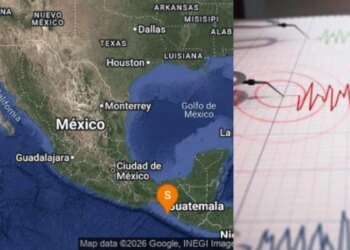
Analysts suggest carefully monitoring certain resources, such as those from the Earthquake. Photo:EL TIEMPO / iStock
“An important part of public resources is transferred to funds, autonomous assets, trusts and other vehicles whose execution is much less visible to citizens,” says the Observatory. Their concern points to an information gap that appears when resources go out of budget. and enter those management structures.
To close this gap, the academic center highlights the importance of having public and periodic reports on the balances and execution of these resources. Monitoring would allow us to know both the money that remains in the mechanisms and the progress of its use.and would provide more elements to examine spending decisions.
The attention to the earthquake makes this task especially relevant. According to the Observatory, a complete explanation is still needed about the resources allocated to the emergency and the new mechanisms created to manage them. Clarity must cover how much money will be allocated, how it will be executed and under what conditions it will be monitored.
This review is also connected with the proposal of Juan David Ballén, director of Economic Studies at Aval Asset Management, to examine funds, programs and transfers that do not demonstrate results. Knowing their balances, their execution and their effects would help to support which ones should be maintained, which require changes and where there are possibilities to improve the quality of spending.