Of Silvina Pérez
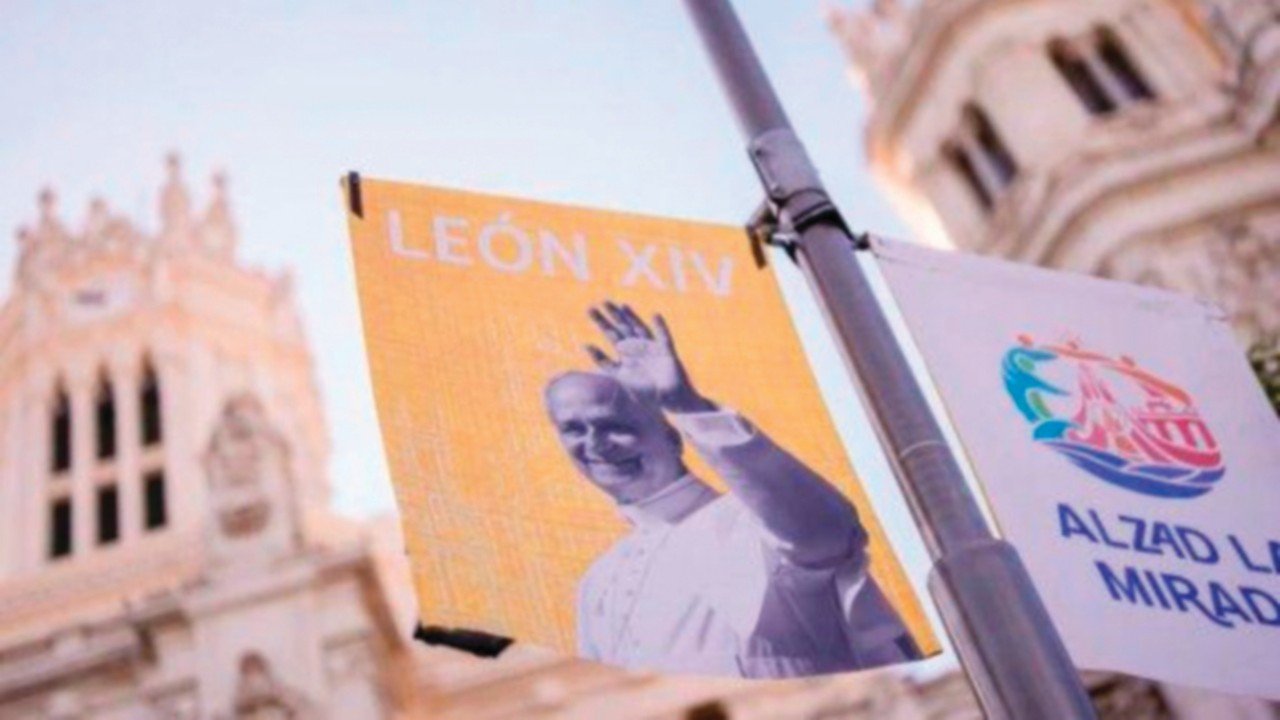
From the political and institutional center of Madrid, to the Atlantic borders of the Canary Islands, passing through Barcelona, Montserrat and the Sagrada Família. It will be an apostolic journey that passes through symbolic places of the civil, cultural and ecclesial life of Spain that Pope Leo XIV will make in the Iberian country from 6 to 12 June.
Over 2,500 kilometres, twelve speeches, five homilies and numerous meetings make up an itinerary which, despite the variety of stages, presents a clear pastoral unity. Young people, dialogue, evangelization, social fragility, migration and the dignity of the person constitute some of the underlying themes of the visit, which was presented this morning, Wednesday 3rd, by the director of the Holy See Press Office, Matteo Bruni, to accredited journalists.
The trip fits into the framework of the priorities that characterized the first months of the pontificate. Dialogue, communion and peace return as recurring themes of Leo XIV’s interventions, together with attention to the great transformations affecting contemporary society.
The visit will start on Saturday 6th in Madrid. After the welcome ceremony at the Royal Palace and the meeting with the country’s authorities, the Pope will give his first speech in front of representatives of the institutions, civil society and the diplomatic corps. An appointment that will mark the start of a journey in which the ecclesial and public dimensions will constantly intertwine.
In the afternoon Leone XIV will visit a social reality in the Lucero district. It is not without significance that the first pastoral meeting of the Pontiff on Spanish soil takes place through a structure committed to welcoming and accompanying vulnerable people. As observed by Cardinal José Cobo Cano, Archbishop of Madrid, the Pope will enter the country through the world of vulnerability and human peripheries. In the evening he will then preside over a prayer vigil with young people in the Plaza de Lima.
Sunday will be marked by the celebration of Corpus Domini and a meeting with representatives from the world of culture, art, economy and sport. A dialogue that follows the Church’s tradition of dealing with the different areas in which the life of contemporary societies takes shape.
Monday 8th was particularly intense. After the meeting with the President of the Spanish Government, Pedro Sánchez, Leo XIV will speak before Parliament and subsequently meet the Episcopal Conference. In a political and social context often characterized by strong polarizations, the presence of the Pontiff recalls the possibility of rediscovering a shared language based on the dignity of each person and the search for the common good.
On Tuesday 9th the Pope will reach Barcelona after meeting with the volunteers who collaborated in organizing the visit. In the Catalan city he will lead prayers in the Cathedral of the Holy Cross and Saint Eulalia and preside over a vigil with the faithful.
The next day he will visit the Brians 1 penitentiary center, before going to the Montserrat Abbey, one of the most representative places of Catalan spirituality. In the evening he will celebrate the Eucharist in the basilica of the Sagrada Família, a work that continues to testify to the fruitful dialogue between faith, art and the search for the transcendent.
The last part of the journey will take Leo XIV to the Canary Islands. In Gran Canaria the Pontiff will meet migrants in the port of Arguineguín, listening to their testimonies, and subsequently bishops, priests, religious people, seminarians and pastoral workers from the archipelago.
This stage also has particular relevance on an international level. In fact, the islands constitute one of the main gateways to Europe for thousands of people coming from West Africa and represent one of the frontiers where the challenges of human mobility, hospitality and solidarity manifest themselves most clearly. On Friday 12, in Tenerife, the Pope will meet the migrants welcomed in the center of Las Raíces and will preside over the final celebration of the journey before returning to Rome.
From institutions to the suburbs, from young people to prisoners, from the great places of the Christian tradition to the routes of contemporary migration, the trip to Spain presents itself as an itinerary in which the announcement of the Gospel is accompanied by the constant reminder of the dignity of the human person, the culture of encounter and the building of peace.