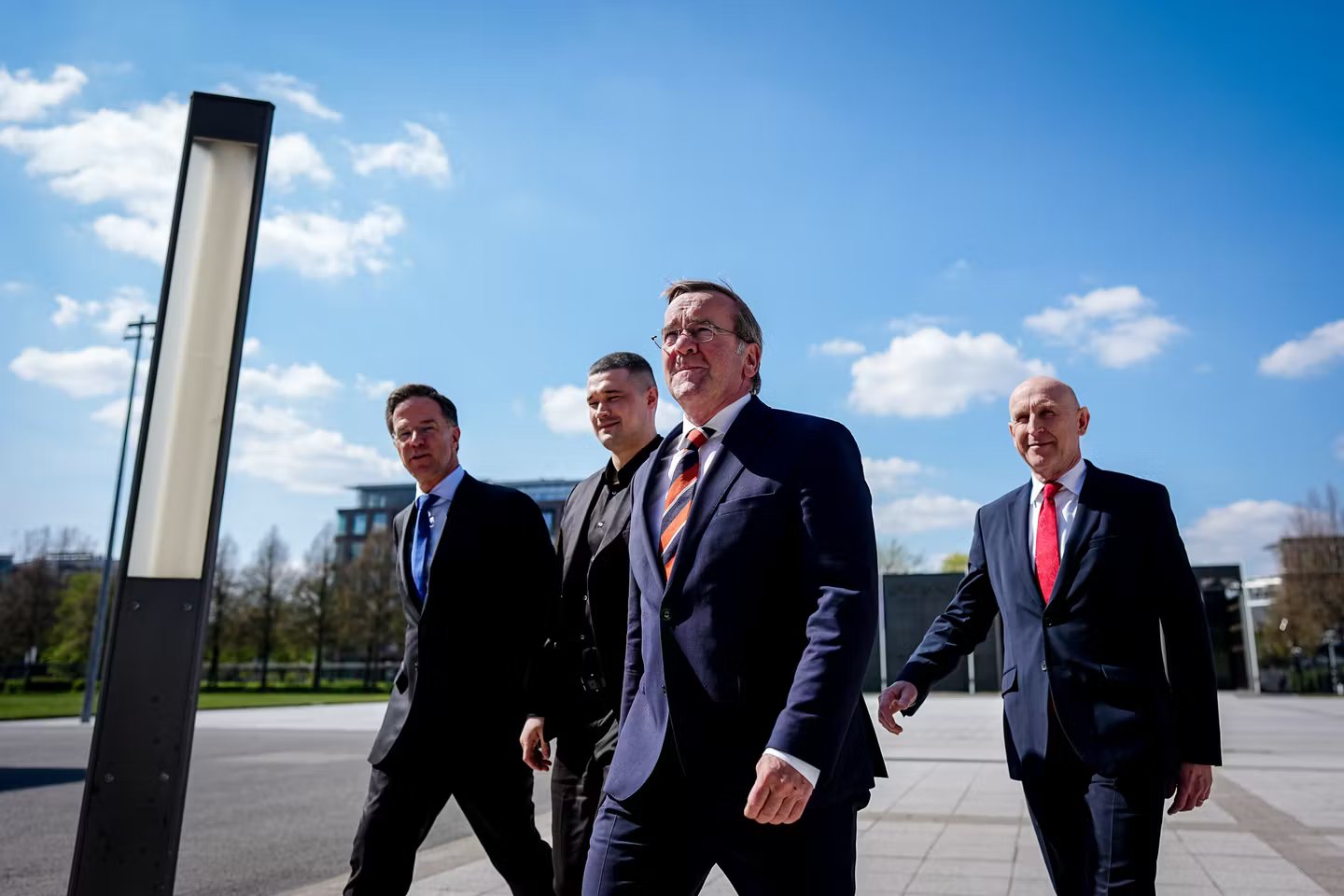
Even in Germany, it is considered an honor: For the past few months, Boris Pistorius, the defense minister, has had his own namesake in the German version of the latest Astérix comic book. In it, he plays a portly Roman centurion who obeys the orders of an authoritarian and corrupt governor, with only one line in the entire book: “At your orders!” The translator who chose this name insists there was no political intention, but simply found the physical resemblance between the original character – Nouvelopus [a pun on “new volume” in French] – and the minister “astonishing.” As for Pistorius himself, he said he was flattered: He is the first politician from across the Rhine to appear in the adventures of the Gallic warrior, whom Germans enjoy almost as much as the French.
In Berlin, the resemblance did not go unnoticed: For the past three years, Pistorius has been, in every poll, the most popular political figure in the country. He is the man who reconciled the country with its army – or at the very least, brought it closer to its armed forces. Former Social Democratic chancellor Olaf Scholz (SPD, center-left) chose him to lead the Defense Ministry in January 2023, and conservative Friedrich Merz (CDU, center-right) renewed his mandate when he became head of government in May 2025. Pistorius has become closely associated with the “Zeitenwende” (“turning point”) declared by Scholz in a historic speech on February 27, 2022, three days after the Russian invasion of Ukraine, which underlined the need for German rearmament in the face of new threats. A little more than three years after he took office, on Wednesday, April 22, Pistorius presented the Bundeswehr’s military strategy review – the first of its kind for Germany’s armed forces, whose strategic framework and planning had, until now, been based entirely on recommendations from the North Atlantic Treaty Organization (NATO).
You have 78.74% of this article left to read. The rest is for subscribers only.