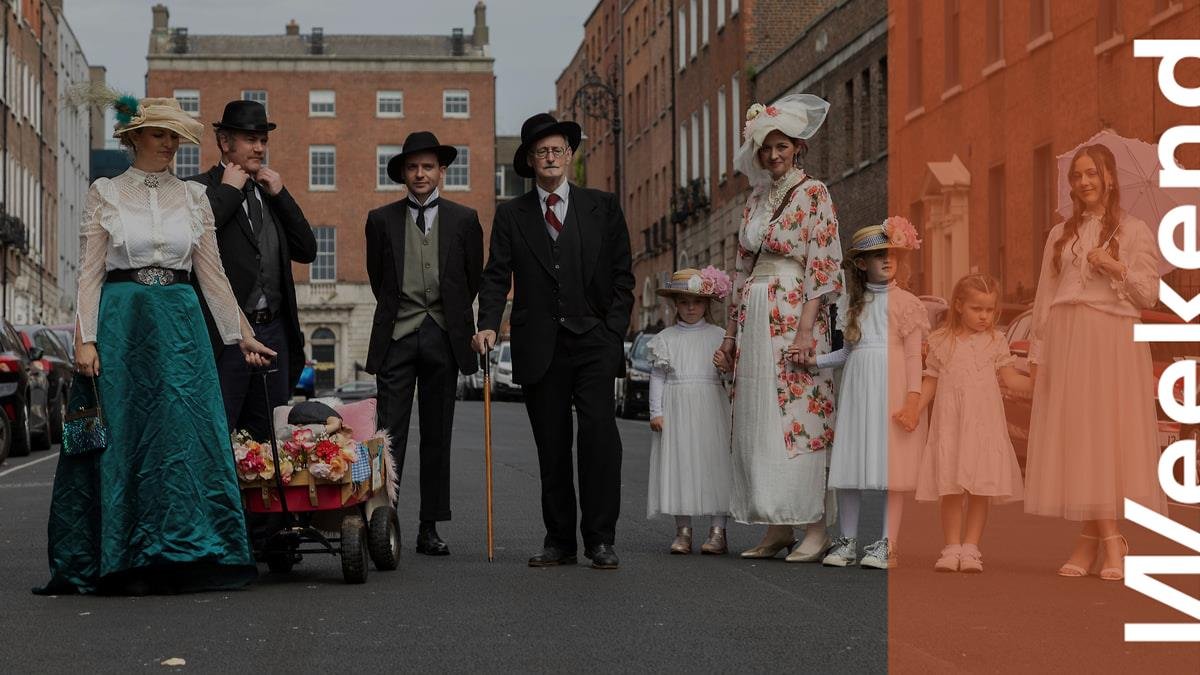
June 16 is another Bloomsday, the day on which James Joyce’s novel Ulysses takes place, where Dublin Jew Leopold Bloom travels through the city. At first only Dublin celebrated, then Ireland, and now almost the whole world. It is a day to honor the author (the writer met his wife and used the date as part of an autobiographical myth) – and to admire the power of literature.
Everything can be overestimated. But James Joyce’s influence on world culture is very difficult. Including because today’s world cannot be imagined without Ulysses and its heroes.
Over the past century, this novel has acquired many myths (which is ironic, given its mythological basis). However, this is far from the main thing. J. J.—as his friends called the future classic—was one of those who went through modern literature to the end. He started with impressionistic stories, continued with a modernist novel, threw a bridge into postmodernism – and ended it all with a text that, unfortunately, is almost impossible to read due to its extremely complex structure (word creation from dozens of languages, a play of associations, meanings and meanings understandable only to the author, a fundamentally new syntax) – “Finnegans Wake”. But at the core of his work, like Scylla, Ulysses rises.
The novel takes place over the course of 24 hours. Its main character, perhaps for the first time in European literature, was the local Jew Leopold Bloom (aka Odysseus). He is tormented by well-founded suspicions of his wife’s infidelity and lives through one day, gradually turning into night, in order to finally meet (and part with) the author’s alter ego, studious Stephen Dedalus (Telemachos). All this is crowned by the legendary monologue of the wife, Molly-Penelope, written in a stream-of-consciousness form that is as live as a river – one of the manifestos of feminism.
At the heart of Ulysses lies several of the deepest insights for its time (and not only for it). Let’s start with the greatness of the idea: the author created a novel rich in texture to the point of being an alternative to reality. There are so many details that sometimes you forget that this is a literary text; the little things that make up our everyday life are copied from reality itself. J. J. said that part of the text could serve as a guide to Dublin and that it would help rebuild the city if it was destroyed (the novel was completed in 1921, the First World War had ended only recently). Words preserve memory better than stone.
But away with heaviness! “Ulysses” is permeated with irony a little more than completely, and although the master himself treated the novel with due respect, he willingly commented on not entirely serious interpretations (another play with the surname “Joyce”). Irony, although often sad, always created a distance to look at everything a little from the outside.
Ulysses summed up literature. At least the literary experience that was known to its author – and it is enormous. In the novel you can find amazing pages: the transmission of music in words, a description of the birth of a child through the stages of development of the English literary language, a night mystery – and even an everyday catechism. The author once called one of his techniques “mimetic writing”: any thing should be described in a way unique to it.
The text is divided into episodes, each of which sets several formal super-tasks. Among them are not only compliance with the Homeric epic, but also their own symbolism, and most importantly, their own style.
While working on the text, the classic invented montage in literature and managed to parody advertising in the text – the first. For this (but not only) he was appreciated by Sergei Eisenstein, who dreamed of filming Ulysses.
The heroes of the novel are realistic to the point of naturalism: they eat, drink, wash, relieve their natural needs – and also hallucinate. So “Ulysses” can rightfully be called the epic of the human body (and consciousness).
Great – if not the greatest – form should not replace content. “Ulysses” is a literary text designed for ordinary readers with their experience, taste and preferences. And from this point of view, nothing prevents us from enjoying the text. And relate ourselves to the people described in the novel, who are concerned about the same problems as us. From loneliness to money.
“Ulysses” reminds us: every person and every day is important. The ritual of returning home can be likened to Odyssey, and we all are likened to ancient heroes. It is a pity that this highly humanistic pathos was missed by critics a century ago. As a result, J. J. expanded not only our understanding of literature, but also the world in which we live—and man’s place in it. I think he would be pleased with the result.