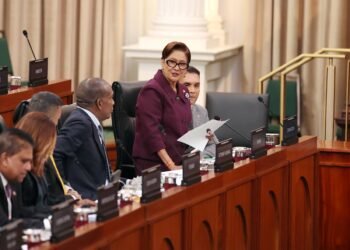
With the six-month State of Emergency (SoE) now officially over, Government returns to Parliament today with a revised Special Operations Bill, which Prime Minister Kamla Persad-Bissessar says only requires a simple majority for passage.
It must be recalled that Government’s first attempt to introduce the measure failed in January, when it could not secure the required three-fifths majority in the Senate. On that occasion, eight of the nine independent senators, along with all six Opposition People’s National Movement senators, voted against the bill.
Now, the administration is clearly signalling that with the latest amendments, it is confident of moving forward without needing to secure broader support, particularly from the Independent bench.
Among the bill’s most significant provisions is the creation of “closed areas,” defined as locations where violent crime, gang activity or illegal weapons threaten public safety and where ordinary law enforcement measures are considered insufficient.
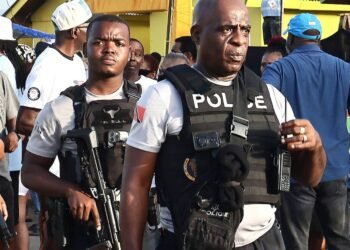
Within these designated areas, authorities would be empowered to establish cordons, barriers, roadblocks and curfews. People seeking to enter or leave could be required to obtain permits. Police officers involved in special operations would also be authorised to search persons, vehicles and premises without a warrant, where there is reasonable suspicion that an offence has been committed, is being committed or is about to be committed.
In effect, the legislation would allow the State, supported by the Defence Force, to impose stringent restrictions on selected communities in the interest of public safety.
Such powers inevitably raise concerns about civil liberties and the potential for abuse. Many citizens would regard them as draconian if they were not accompanied by meaningful safeguards.
However, one important protection contained in the bill is the provision allowing the President to revoke a closed-area declaration at any time. Parliament should use today’s debate to clarify whether that authority may be exercised independently or only on the advice of Cabinet.
The legislation also appears to reflect lessons learned from the recently concluded SoE. Clause 17 requires that anyone arrested or detained be promptly informed of the reasons for the detention and brought before a magistrate, who must determine whether reasonable grounds exist for continued custody.
A magistrate may authorise detention for up to 48 hours, after which the individual must appear before a High Court judge. The judge may either approve continued detention where justified in the interests of justice or order the person’s release.
These provisions strengthen due process protections and represent a notable improvement on the framework that governed the SoE. According to figures released by the Prime Minister, 334 of the 574 people detained between March and September were never charged with an offence.
The bill also guarantees detainees access to family members, attorneys and medical practitioners, as well as food, clothing and other necessities. These safeguards help balance the extraordinary powers proposed under the legislation.
Parliament’s task today, therefore, is to strike the right balance between public security and civil liberties. The Government must avoid repeating the mistake it made in January by dismissing legitimate concerns raised by the Opposition and independent senators. This is because laws that grant exceptional powers are most effective when they command broad parliamentary support and public confidence.