BAKU, Azerbaijan, August 20. An international
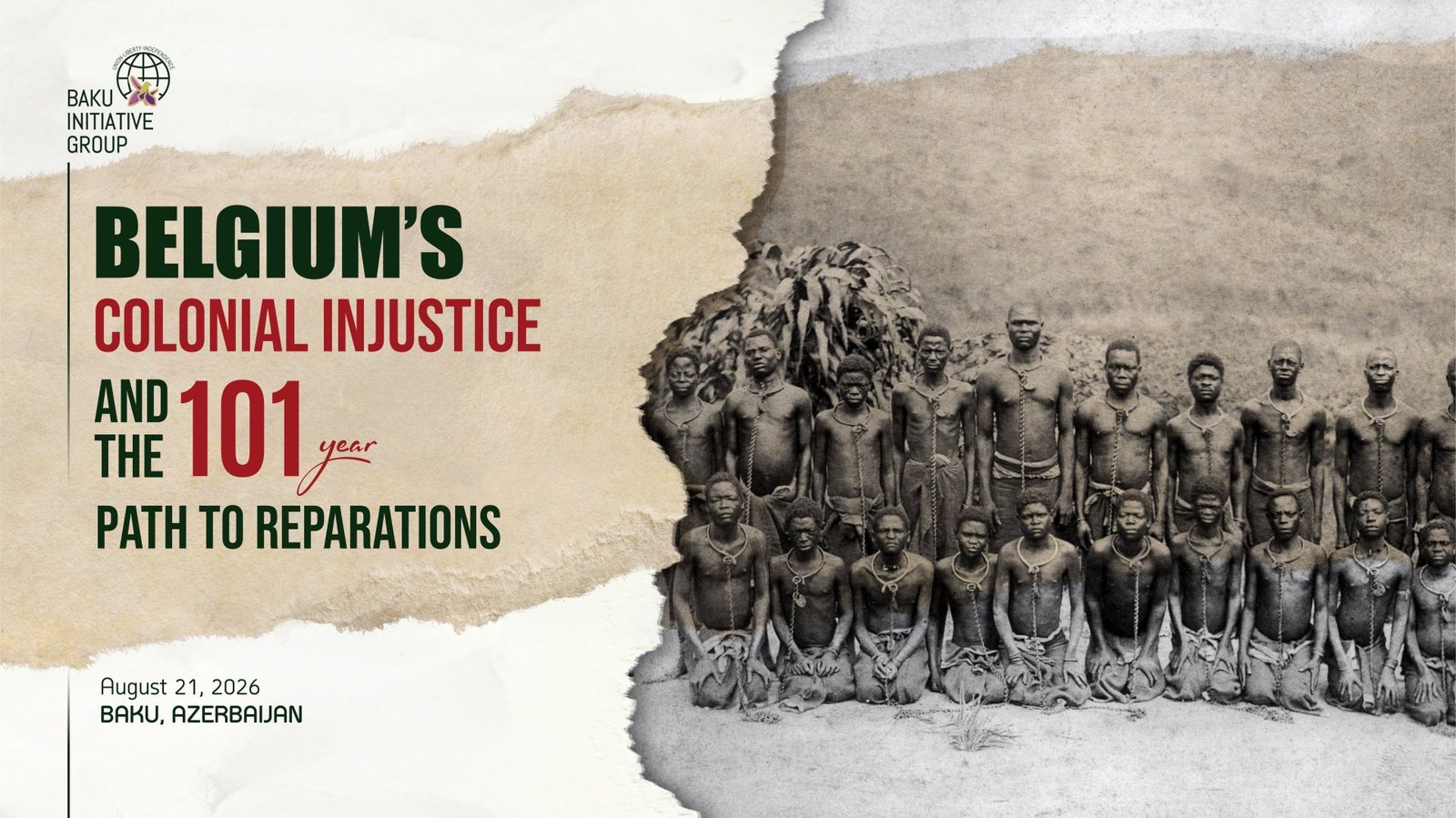
conference titled “Belgium’s colonial injustice and the 101-year
path to reparations” will be held in Baku on August 21, organized
by the Baku Initiative Group (BIG).
This was announced in a statement published by the Baku
Initiative Group (BIG).
According to BIG, the event will bring together officials from
former Belgian colonies, including the Democratic Republic of the
Congo (DRC), Rwanda, and Burundi, where Belgium is alleged to have
maintained neo-colonial influence, as well as representatives from
Morocco, South Africa, and the United Nations.
Participants will include the Ombudsman of the Democratic
Republic of the Congo, members of the Congolese Parliament,
Rwanda’s Ambassador to Türkiye and other diplomats, as well as UN
experts.
The conference will also be attended by specialists in
international law, historical justice and reparations, researchers,
human rights advocates, and other experts.
The attendees will discuss advancing within the UN framework,
including the Human Rights Council, the issue of Belgium issuing an
official apology and providing reparations for alleged crimes
committed against the peoples of the DRC, Rwanda, and Burundi
during the colonial period. They will also consider the development
of an international enforcement mechanism to monitor Belgium’s
implementation of reparations and restitution obligations in line
with the principles outlined in UN General Assembly Resolution
60/147.
The agenda will also focus on ensuring full and unrestricted
access to Belgium’s colonial archives, involving experts from
former colonial territories in relevant processes on an equal basis
with international specialists, and returning human remains and
other historical materials to their countries of origin.
UN General Assembly Resolution 60/147 outlines the rights of
victims to legal remedies and reparations. It identifies various
forms of reparations, including restitution, compensation,
rehabilitation, satisfaction (including recognition of harm and
official apologies), and guarantees of non-repetition.
According to the organizers, Belgium has not yet fulfilled these
obligations. They claim that Belgium has not issued an official
state apology for crimes committed during the colonial period in
the DRC, Rwanda, and Burundi, with officials instead expressing
“deep regret,” which does not create legal obligations.
BIG also declared that although 84,000 cultural heritage
artifacts have been inventoried, the repatriation process has been
delayed for decades. According to the group, inventory data remains
unavailable to the public, bilateral restitution agreements have
not been signed, and specialists from the DRC, Rwanda, and Burundi
still lack full access to Belgium’s colonial-era archives and
documents.
Experts cited by the organizers describe the situation as a
failure by Belgium to conduct a transparent examination of its
historical responsibility.