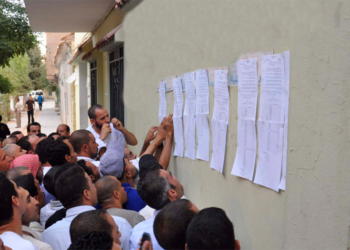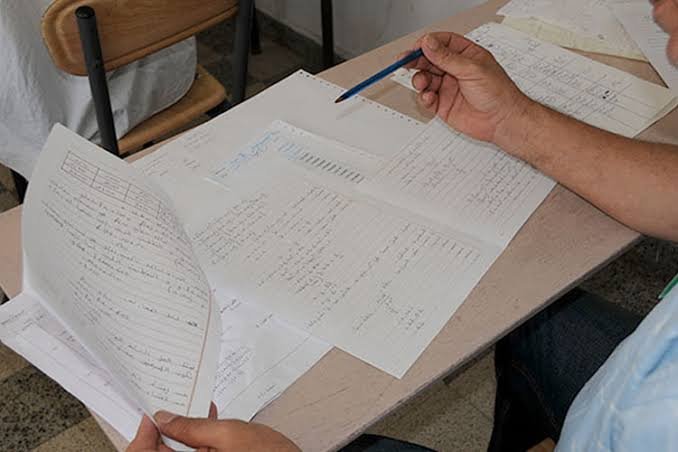
The marking stage of baccalaureate exams is considered one of the most sensitive stages in the national evaluation system, because it represents the link between the effort that the candidate has made throughout his years of study, and the result that will determine his university and professional future.
From this standpoint, grading is not just a technical process for distributing grades, but rather a moral obligation, educational responsibility, and national trust governed by law and framed by regulatory texts issued by the Ministry of National Education.
The Ministry of National Education, under the leadership of Dr. Mohamed Saghir Saadawi, has attached great importance to enhancing the credibility of national examinations by continuing to modernize management mechanisms, establishing a culture of digital governance, and devoting the principles of transparency, justice, and equal opportunities.
The organizational procedures adopted within the correction centers fall within a reform vision aimed at ensuring the protection of the rights of candidates, and strengthening the baccalaureate certificate as one of the most important national certificates.
The organization of school examinations in Algeria is based on National Education Directive Law No. 08-04 of January 23, 2008, amended and supplemented, which enshrines the principle of equality among learners and emphasizes the necessity of subjecting evaluation processes to objective and fair standards.
The various ministerial circulars and instructions regarding the organization of national examinations also frame the functioning of the procedure and marking centres, and precisely define the duties of all actors, ensuring integrity, confidentiality and discipline.
In this context, the work of the corrector professor is of exceptional importance, as he is entrusted with evaluating the answers of thousands of candidates according to the official scoring scale and the unified instructions approved by the subject committees.
There is no room in this task for individual efforts or personal assessments outside the pedagogical framework, because every point may determine the fate of a candidate, and every error in correction may result in a violation of one of the basic rights that the state guarantees to all its citizens.
In order to enhance confidence in the baccalaureate results, the Ministry of National Education adopted a number of regulatory measures, including unifying the marking methodology, holding coordination meetings for markers before starting work, subjecting marking processes to follow-up and monitoring, as well as adopting precise mechanisms to review grades and ensure the integrity of the collection and transfer processes, in a way that reduces the margin of error to the lowest possible level.
Among the instructions that the Ministry strictly emphasizes is the absolute prohibition of the use of mobile phones and photography inside correction halls.
This procedure is not only part of the regulatory measures, but is also supported by the legal principles related to protecting administrative documents and personal data and maintaining the confidentiality of national examinations. Answer papers are official documents that are not permitted to be photographed, circulated, or published outside the professional framework. Also, photographing correction halls, documents, or colleagues without a license constitutes a breach of the duty of confidentiality and professional confidentiality, and may result in administrative and disciplinary measures being taken in accordance with applicable legislation and regulation.
Also, Order No. 06-03 of July 15, 2006, which includes the general basic law for public employment, imposes on the public employee the duty to maintain professional secrecy and not to disclose information or documents that he has access to by virtue of his position, an obligation that applies directly to all workers in correction centers.
The importance of these measures increases in light of the widespread use of social media, the misuse of which may lead to leaking official documents, publishing inaccurate information, or compromising the credibility of national examinations.
Therefore, respecting the Ministry’s instructions not to photograph or publish represents a protection for the candidates, a preservation of the state’s prestige, and an enhancement of society’s confidence in educational institutions.
The success of the marking process is not limited to the technical aspect, but is also linked to the professional ethics of the correcting professor, including integrity, impartiality, accuracy, discipline, and respect for the rights of candidates. The professor who adheres to the rating scale, seeks objectivity, and maintains the confidentiality of documents contributes to consolidating the culture of quality and justice within the Algerian school.
The reforms initiated by the Ministry of National Education in recent years, most notably the digitization of many administrative services, strengthening governance, and developing mechanisms for organizing national examinations, reflect a real will to build a more efficient and transparent educational system, and confirm that maintaining the credibility of the baccalaureate certificate remains a collective responsibility shared by the Ministry, professors, administrators, and all actors in the sector.