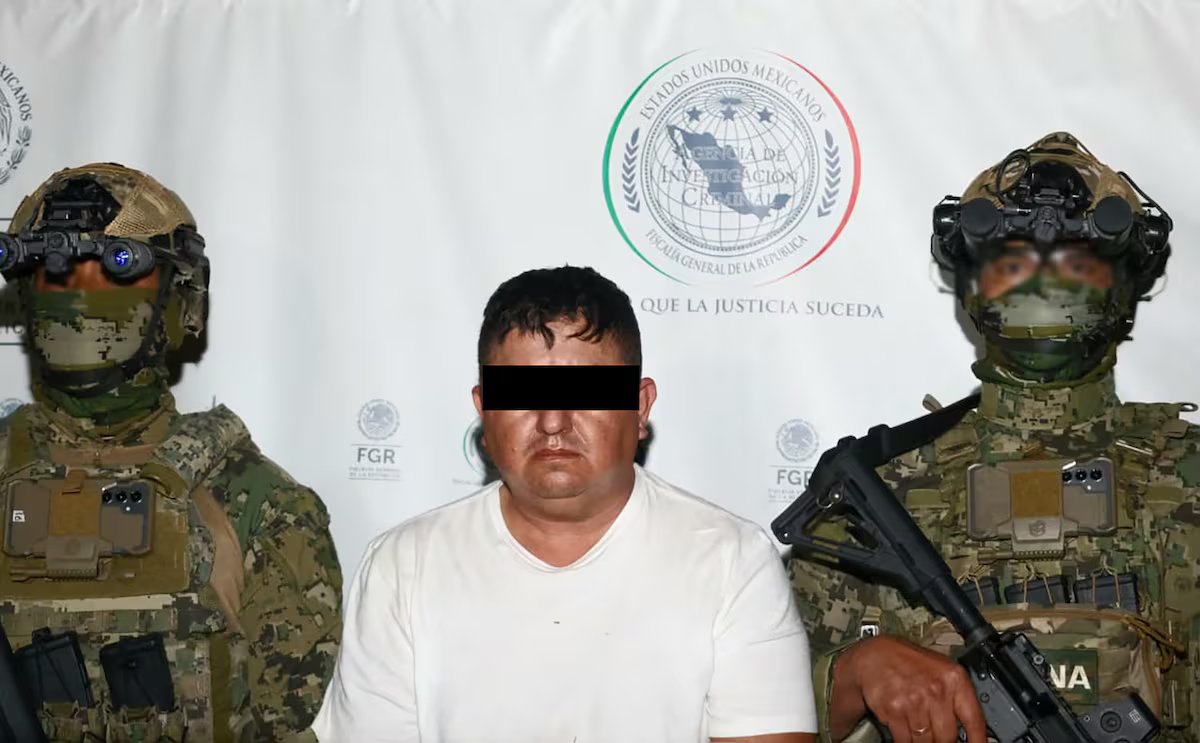
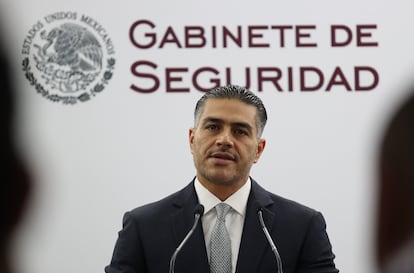
The details of the investigation that tightened the siege to Audias Flores, alias The Gardenerreveal intelligent planning and monitoring for months to capture one of the men who most likely to succeed Nemesio Oseguera Cervantes as leader of the Jalisco New Generation Cartel (CJNG). The Secretary of Federal Security, Omar García Harfuch, has detailed that the detainee not only headed the drug trafficking operation of the most powerful group in the country, but also directed a national extortion network, especially against cargo transporters on the main highways in Mexico. “This action was carried out within the framework of the current understanding with the Government of the United States and its different agencies. That is, the exchange of information signed with strict adherence to respect for our sovereignty and territorial jurisdiction is always welcome,” García Harfuch highlighted. The operation was quick, clean and without casualties, a surgical action that allowed Flores to be detained alive while he was trying to hide in a water pipe on the highway.
The Security Cabinet had been planning the coup since October 2024. The man in their sights, from the Mecho’s most trusted circle, had a provisional arrest warrant from the United States for extradition purposes for crimes of criminal association, against health and carrying weapons, while in Mexico he was wanted for homicide and “other investigations that are ongoing” by the Attorney General’s Office (FGR). The mission was to stop him before El Jardinero could strengthen his position within the cartel and consolidate himself as its boss, since intelligence reports indicated that, after the death of OsegueraFlores began a mobilization of personnel, weapons and resources to seize absolute power.
The Mexican authorities began to stalk one of the most important targets for the DEA with “systematic, discreet and sustained monitoring, based on field intelligence, cabinet and international cooperation” to corner him in El Mirador, in the interior of Nayarit, very close to the border with Jalisco, where the one of the main drug corridors of the CJNG and where El Jardinero had its own operations control area. It was not until three months later that researchers made the first relevant findings in El Trapiche, Nayarit—less than 60 kilometers from the Mirador—that confirmed a movement pattern and its operational links.
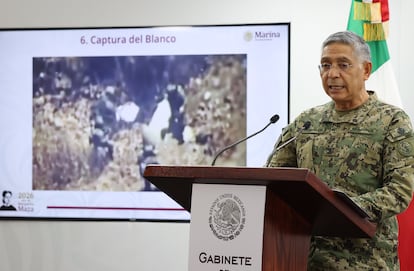
From there, the Security Cabinet began to analyze its access targets, they studied routes, entry and exit points, mapped the geography of the place and practiced terrain tactics. “This made it possible to anticipate possible scenarios of evasion and reaction of the target (…), also to understand not only where it was, but how it moved, with whom it interacted and under what security schemes it operated,” said Raymundo Pedro Morales, Secretary of the Navy.
It was not until last Saturday, 19 months later, that naval intelligence personnel were able to confirm the identity and location of the Jardinero, who was traveling in a suburban car from Santa María del Oro, Nayarit, 90 kilometers from where he was finally detained. That was the green light to start the final phase. A 48-hour follow-up by air began until the time to start the capture was clear. The sailors began to follow the vehicle, which, seeing itself surrounded, tried to find an escape route. “The conditions of the terrain did not lend themselves to its concealment, since it is a rugged terrain and difficult to access, also due to its physical condition,” Morales highlighted. In desperation, Flores got out of the car and tried to hide in a highway pipe, but he was trapped by the agents until the naval personnel descended from the helicopters to arrest him. He was transferred by plane in less than 30 minutes to Mexico City, to the Special Prosecutor’s Office for Organized Crime. The operation lasted a total of two hours. Not a single shot, not a drop of blood spilled.
Haruch has celebrated the security work as a milestone that reinforces trust in Mexican institutions. Not only in the fight against drug trafficking, since the Gardener coordinated air transport operations of cocaine, heroin, methamphetamines and other drugs to the United States. Also in the illegal marketing of hydrocarbons, kidnappings, homicides, arms trafficking, dispossession of property and, above all, the extortion network he ran. Audias Flores was the leader of a network of threats to transportation and fuel companies that he coordinated from the north of Jalisco to Nayarit, Sinaloa, Durango and Zacatecas, with control on roads that reached Bahía de Banderas and Nuevo Vallarta, Michoacán, Guerrero and mobility corridors in Tlaxcala with a connection to Puebla. It obliged each unit that traveled along its routes to report the data of the vehicle, the operator, its load capacity and final destination. Based on this data, he imposed a periodic payment rate in exchange for protection.
The simultaneous capture of the Güero Contra
The authorities did the same on the same day that El Jardinero fell. The Navy coordinated an operation almost simultaneously to also arrest César Alejandro ‘N’, alias El Güero Contrafinancial and logistics operator of the CJNG who was identified in early 2024. He was in charge of one of the group’s factions and managed the profits from the crimes to buy aircraft, ships, ranches and investments in tequila producers.
Investigators tracked down three of their homes in Ahualulco de Mercado, a few minutes from Rancho Izaguirre in Teuchitlán, Jalisco. More than two years later, investigators identified the exact house where the wife and children of Güero Contra lived, who went to visit them and when he left they followed in his footsteps. He was detained by the National Guard and a long gun with its magazine, cartridges, a thousand doses of methamphetamine and 60,000 pesos in cash were confiscated.