The partnership between Jamaica and Japan has grown steadily over the past several decades. At the heart of this relationship is the Japan International Cooperation Agency (JICA), which has worked with Jamaican institutions and communities to share knowledge, build capacity, and support sustainable development.
JICA is Japan’s government agency responsible for implementing Japan’s Official Development Assistance (ODA). Operating in more than 140 countries and regions, JICA supports sustainable development through technical cooperation, grant aid, concessional loans, and volunteer programmes. A defining feature of JICA’s approach is its support for country-led development, working with local stakeholders to build the capacity and institutions needed to sustain development efforts over the long term.
Development cooperation between Jamaica and Japan dates back several decades, including training opportunities provided to Jamaican professionals since the 1970s. Cooperation was further strengthened following the establishment of the JICA Jamaica office and the expansion of JICA’s cooperation programme in 1989. Since then, JICA has worked closely with Jamaican ministries, agencies, communities and development partners across a wide range of sectors, contributing to national development while strengthening the longstanding friendship between Jamaica and Japan.
One example of current cooperation is in the fisheries sector. JICA is working with the National Fisheries Authority (NFA) through the dispatch of a fisheries advisor to strengthen post-harvest management and quality control. By improving handling, storage and processing practices, the initiative seeks to reduce losses, enhance product quality and increase the value of fishery products. These efforts contribute to more sustainable livelihoods for fishers and coastal communities while supporting the development of Jamaica’s fisheries industry.
JICA is also supporting community policing initiatives in partnership with the Jamaica Constabulary Force (JCF). Drawing on lessons from Japan’s “Koban” (police post) system, where police officers maintain close relationships with residents and local businesses, the cooperation promotes trust building, community engagement, and proactive problem-solving. By strengthening collaboration among police officers, community leaders and residents, the initiative seeks to create safer neighbourhoods and more resilient communities.
In the agricultural sector, JICA has been working with the Rural Agricultural Development Authority (RADA) to promote the Smallholder Horticulture Empowerment and Promotion (SHEP) approach. At the heart of SHEP is the principle of “Grow to Sell” rather than “Grow and Sell”. Instead of producing crops first and then searching for buyers, farmers are encouraged to understand market demand before making production decisions. This market-oriented approach helps farmers improve profitability, strengthen market linkages, and build more resilient farming businesses.
Human resource development remains one of the cornerstones of JICA’s cooperation. Since JICA’s activities began in Jamaica, more than 700 Jamaican professionals and government officials have participated in training programmes under the Knowledge Co-Creation Program (KCCP). Covering a wide range of fields, including health, education, disaster risk reduction, agriculture and rural development, environmental management, water resource management, social security, public administration and community development, these programmes provide opportunities for participants to acquire practical knowledge, exchange experiences, and build professional networks that contribute to Jamaica’s development.
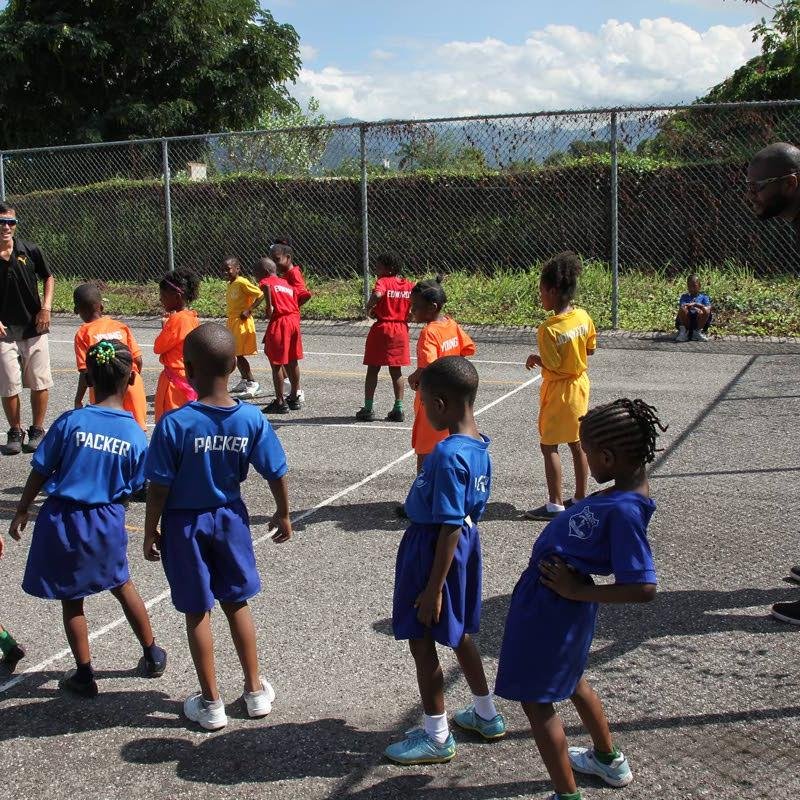
People-to-people exchange has also played an important role in the partnership between Jamaica and Japan. Since the launch of the volunteer programme in Jamaica in 1989, more than 450 Japanese volunteers have served across the island in areas such as education, agriculture, sports, community development and health. Beyond their technical contributions, these volunteers have fostered mutual understanding and lasting friendships between the people of the two countries.
DISASTER RISK REDUCTION
In recent years, disaster risk reduction has become an increasingly important area of cooperation. Jamaica’s exposure to hurricanes, floods and other natural hazards highlights the need for strong preparedness and response systems. The impacts of Hurricane Melissa in 2025 served as a reminder of the growing importance of disaster resilience in an era of climate change.
Recognising these challenges, JICA has partnered with the Office of Disaster Preparedness and Emergency Management (ODPEM) in implementing the Project for the Improvement of Emergency Communication System. Through this initiative, a nationwide digital communication network has been established to facilitate rapid and reliable communication among disaster management agencies, emergency responders and local communities. The project has strengthened Jamaica’s capacity to prepare for, respond to, and recover from emergencies and disasters.
JICA’s commitment to disaster resilience extends beyond Jamaica. As part of its longstanding cooperation with the Caribbean region, JICA has worked closely with CARICOM and regional institutions, including through the dispatch of a disaster risk reduction advisor to the Caribbean Disaster Emergency Management Agency (CDEMA). More recently, following the commencement of duties by a CARICOM resilience advisor, the Advisor visited Jamaica to exchange views with stakeholders and explore opportunities to further strengthen disaster preparedness, tourism resilience and sustainable development across the Caribbean.
Japan has learned many lessons from living with earthquakes, typhoons, floods and other natural disasters. One of the most important lessons Japan has learned is that resilience cannot be built through infrastructure alone. Effective institutions, community participation, disaster education, early warning systems and risk-informed planning are equally essential.
Looking ahead, these lessons may become increasingly relevant for Jamaica and the wider Caribbean. As climate-related hazards become more frequent and severe, the concept of ‘Build Back Better’ is gaining greater importance. Recovery should not simply restore what existed before a disaster, but create communities that are safer, stronger and more resilient than before. Through continued collaboration, knowledge sharing and capacity development, JICA hopes to contribute to Jamaica’s efforts to build resilience at the national, community and individual levels. Throughout these efforts, JICA works closely with the Planning Institute of Jamaica (PIOJ), government institutions and other development partners to ensure that its support is aligned with Jamaica’s national priorities and complements broader development initiatives.
Nearly half a century of cooperation has shown that lasting development is built not only through projects and infrastructure, but also through trust, mutual learning, and long-term partnerships. These principles will continue to guide the cooperation between Jamaica and Japan in the years ahead.
Atsushi Nakagawa is the resident representative, Japan International Cooperation Agency, Jamaica Office. Send feedback to columns@gleanerjm.com.