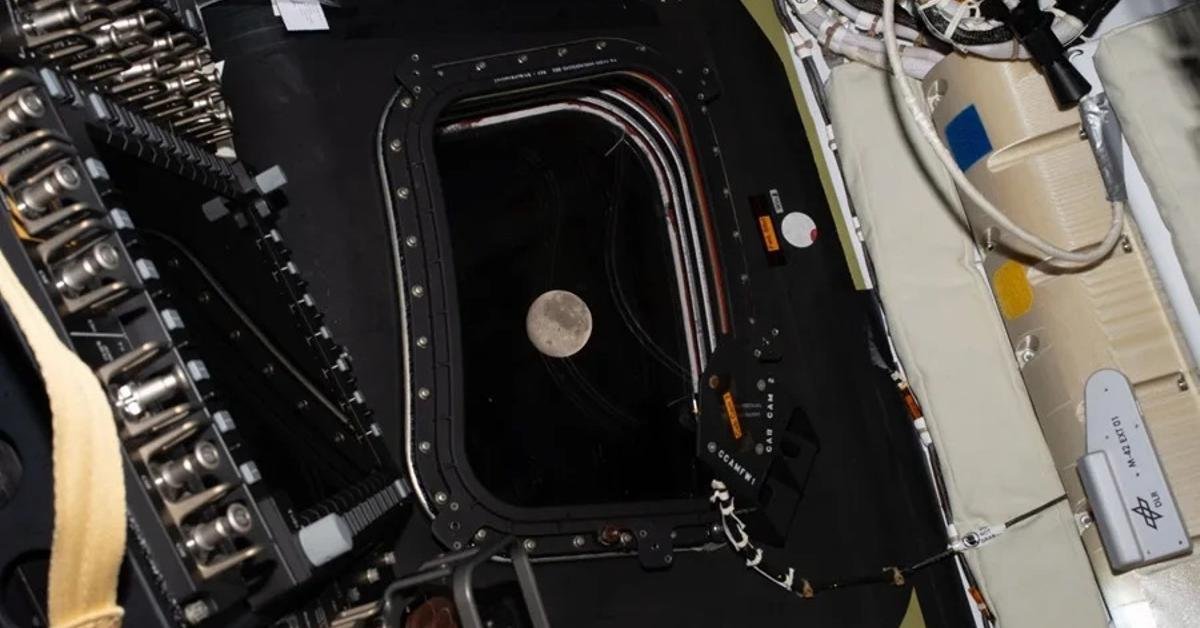
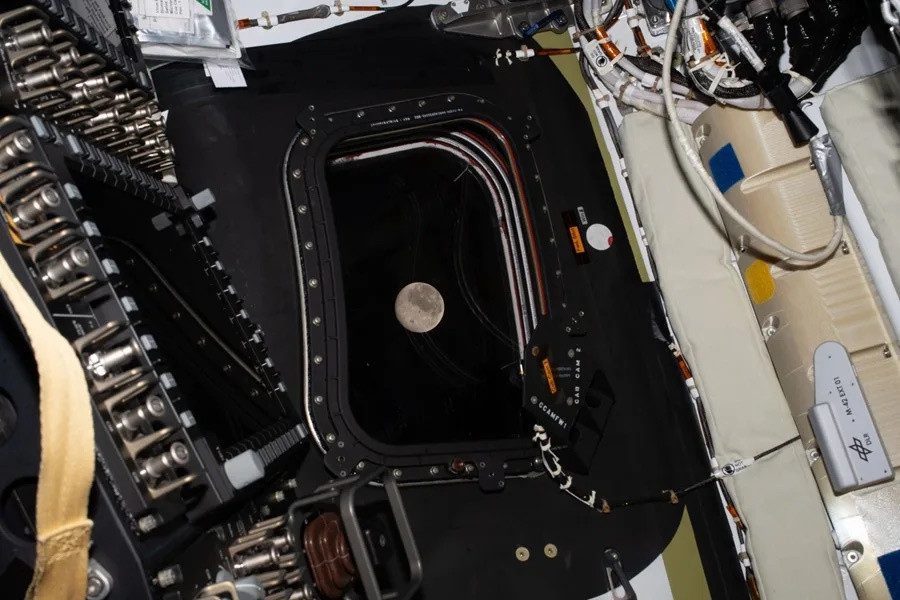
Miami/The four Artemis II astronauts entered the lunar orbit and they have begun a historic period of lunar observation around 2:45 p.m. Eastern Time of the United States, officially marking the return of man to the Moon since Apollo 17, launched in December 1972. The NASA mission, which will not land on the moon, will fly over the natural satellite aboard Orion, including today its hidden side, the part of the Moon that cannot be observed from Earth.
The crew, the most diverse to travel to the Moon, is made up of three Americans – Reid Wiseman, Christina Koch, who today became the first woman to reach the satellite, and Victor Glover, the first black man to do so –, and the Canadian Jeremy Hansen, the first foreign astronaut on a NASA lunar mission.
Arrival at the natural satellite occurs when the ship goes from being dominated by the Earth’s gravity to being attracted by the Moon with more intensity, NASA has explained. Today is a day full of milestones that include breaking the distance record from Earth established by Apollo 13 in 1970 and flying over the far side of the Moon.
Also, face a loss of communications for about 40 minutes on the far side of the Moon and reach the closest point to it
Also, facing a loss of communications for about 40 minutes in the hidden side of the Moon and reach the closest point to it as well as the maximum distance from Earth, in this case about 406,760 kilometers.
Astronauts have named a crater on the Moon seen by the human eye for the first time Carroll, in memory of the deceased wife of Commander Reid Wiseman. The crew hugged each other and all of them took a few moments to remember their deceased loved ones.
“Her name was Carroll, Reid’s (Wiseman) wife, Katie and Ellie’s mother; (the crater) is a bright spot on the Moon and we want to call it Carroll,” said Hansen, the person in charge of making the announcement. Wiseman tragically lost his wife to cancer in 2020.
Carroll Crater is located near Glushko Crater and can be observed from Earth. Wiseman’s daughters and family were in the gallery of Mission Control in Houston (Texas) when the tribute was held, according to NASA.
Just as the astronauts of the Apollo program had the opportunity to see exclusive solar eclipses in the 1970s, Artemis II will also have its own, a very long one, which will last about 53 minutes and cannot be observed from Earth.
Despite the delays suffered by the launch of Artemis II, which was finally scheduled for February after other delays of about two years, the mission has met the vast majority of its goals so far, according to NASA officials.
“Use the folding contingency urinals,” warned Gibbons, who communicated with the astronauts during their historic flight around the Moon
The agency warned the astronauts this Monday, however, not to use the toilet on board the Orion capsule, which has given them problems since the first day of the mission last Wednesday, April 1. “Use the folding contingency urinals,” warned Gibbons, who communicated with the astronauts during their historic flight around the Moon.
The space toilet, which cost $23 million, according to NASA, has caused problems from day one. Shortly after takeoff on April 1, the crew reported a malfunction in the urine collection system. NASA spokesman Gary Jordan then explained that “the toilet fan was reported to be stuck” and said that teams on the ground were developing instructions to clear that area and recover the system.
Hours later, mission control that day guided astronaut Christina Koch, the first woman to reach lunar orbit today, through a series of steps to correct the fault. The repair worked and he was informed from Houston that the toilet was ready for use again.
Still, the relief was short-lived. In the following days, NASA acknowledged that the system again had intermittent problems and that the crew had to continue resorting to alternative urine devices while the technical team tried to determine the exact cause.
“It’s a problem with the evacuation of toilet waste,” Artemis II flight director Judd Frieling said over the weekend. “And it looks like we probably have frozen urine in the vent line.”
Added to that failure was another even more uncomfortable episode: a strange smell coming from the hygiene compartment.
Added to that failure was another even more uncomfortable episode: a strange smell coming from the hygiene compartment. From mission communications, Koch alerted ground control on Saturday about “a kind of burnt heater smell” coming from the toilet on several occasions.
Koch herself later said that the exact origin could not be identified and that the incident was recorded as “an unknown odor.” Canadian astronaut Jeremy Hansen also described the episode from the spacecraft and said that, for him, it was “some kind of burning smell” concentrated in that area.
At a press conference Saturday, NASA spokeswoman Debbie Korth said teams on the ground evaluated power and heater data to see if there were any anomalies associated with the odor.
“We reviewed our power and heater data. Nothing seems anomalous,” he said, stressing that the problem did not represent a risk to the safety of the crew. In parallel, he also relativized the incident by remembering that space bathrooms tend to be complex and temperamental systems. “Space toilets and bathrooms are something that everyone can understand, they are always a challenge,” he said.
After achieving a flawless takeoff last Wednesday, April 1, from Cape Canaveral (Florida), the four astronauts reached the orbit of the Moon today on their sixth day of travel, which is scheduled to end on Friday with a dive into the Pacific Ocean, off the coast of San Diego (California).