The four astronauts of the Artemis II mission of NASA entered the Earth’s atmosphere this Friday after a ten day mission in which they orbited the Moon, making history after more than half a century without human presence on that natural satellite.
The crew now faces a free fall into the Pacific that exceeds 40,000 kilometers per hour (about 24,661 miles per hour)in which the spacecraft is exposed to temperatures estimated up to 2,760 degrees Celsius (5,000 Fahrenheit), a figure that NASA has been adjusting as it monitors the situation.
NASA has reported that so far all the maneuvers have gone “perfectly”, without any type of problem on the ship.
When the capsule is about 122 kilometers (400,000 feet) above Earth, while traveling at almost 35 times the speed of sound, there will be a six-minute communications interruption due to the formation of plasma around the capsule.
The descent is a litmus test of the ship’s heat shield, which will protect the crew, made up of astronauts. Reid Wiseman, Christina Koch, Victor Glover and Jeremy Hansen, of high temperatures.
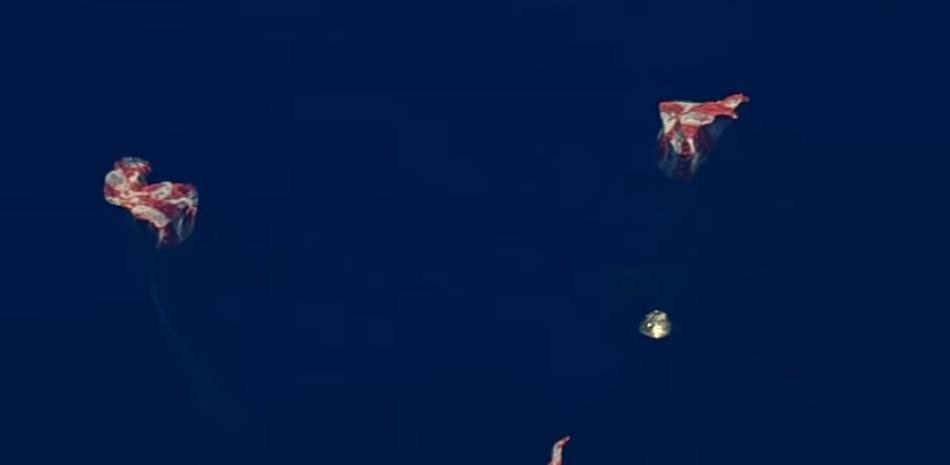
The crew will also feel that they weigh four times more due to the speed, which will be reduced with the deployment of several parachutes before reaching the Pacific Ocean, which is scheduled for 20:07 US Eastern Time (00:07 GMT on Saturday), near the coast of San Diego (California).
The four astronauts took off on April 1 from Cape Canaveral, in Florida, for a mission that orbited the natural satellite – without landing on the moon – and became the first manned mission to reach lunar orbit since 1972.
After having traveled more than 1.1 million kilometers (about 694,481 miles), Orion will splash down and be recovered by the US military. It will take 30 to 45 minutes to recover the astronauts.