Monday, May 4, 2026
    The GeoStrategic Consensus
    No Result
    View All Result
    • Login
    • HOME
    • AMERICAS
      • Argentina
      • Brazil
      • Canada
      • Chile
      • Colombia
      • Costa Rica
      • Cuba
      • Dominican Republic
      • Ecuador
      • El Salvador
      • Greenland
      • Guatemala
      • Honduras
      • Mexico
      • Nicaragua
      • Panama
      • Paraguay
      • Peru
      • United States
      • Uruguay
      • Venezuela
    • ASIA-PACIFIC
      • Australia
      • Brunei Darussalam
      • Cambodia
      • China
      • Federated States of Micronesia
      • Fiji
      • Indonesia
      • Japan
      • Kiribati
      • Laos
      • Malaysia
      • Marshall Islands
      • Mongolia
      • Myanmar
      • Nauru
      • New Zealand
      • North Korea
      • Palau
      • Papua New Guinea
      • Philippines
      • Samoa
      • Singapore
      • Solomon Islands
      • South Korea
      • Taiwan
      • Thailand
      • Timor-Leste
      • Tonga
      • Tuvalu
      • Vanuatu
      • Vietnam
    • CARICOM
      • CARICOM – Non-English
        • Haiti
        • Suriname
      • CARICOM Associates
        • Anguilla
        • Bermuda
        • British-Virgin-Islands
        • Cayman-Islands
        • Curacao
        • Turks-and-Caicos
      • CARICOM English
        • Antigua and Barbuda
        • Barbados
        • Belize
        • Dominica
        • Grenada
        • Guyana
        • Jamaica
        • Montserrat
        • Saint Kitts and Nevis
        • Saint Lucia
        • Saint Vincent and the Grenadines
        • The Bahamas
        • Trinidad and Tobago
    • EURASIA
      • Armenia
      • Azerbaijan
      • Balarus
      • Georgia
      • Kazakhstan
      • Kyrgyzstan
      • Moldova
      • Russia
      • Tajikistan
      • Turkmenistan
      • Ukraine
      • Uzbekistan
    • EUROPE
      • Albania
      • Andorra
      • Austria
      • Bosnia and Herzegovina
      • Bulgaria
      • Croatia
      • Cyprus
      • Czech Republic
      • Denmark
      • Estonia
      • Finland
      • France
      • Germany
      • Greece
      • Holy See
      • Hungary
      • Iceland
      • Ireland
      • Italy
      • Kosovo
      • Latvia
      • Liechtenstein
      • Lithuania
      • Luxembourg
      • Malta
      • Monaco
      • Montenegro
      • Netherlands
      • North Macedonia
      • Norway
      • Poland
      • Portugal
      • Romania
      • San Marino
      • Serbia
      • Slovakia
      • Slovenia
      • Spain
      • Sweden
      • Switzerland
      • United Kingdom
    • MIDDLE EAST AND NORTH AFRICA
      • Algeria
      • Bahrain
      • Egypt
      • Iran
      • Iraq
      • Israel
      • Jordan
      • Kuwait
      • Lebanon
      • Lybia
      • Morocco
      • Oman
      • Palestinian Territories
      • Qatar
      • Saudi Arabia
      • Syria
      • Tunisia
      • Turkey
      • United Arab Emirates
      • Western Sahara
      • Yemen
    • SOUTH ASIA
      • Afghanistan
      • Bangladesh
      • Bhutan
      • India
      • Maldives
      • Nepal
      • Pakistan
      • Sri Lanka
    • SUB-SAHARAN AFRICA
      • Angola
      • Benin
      • Botswana
      • Burkina Faso
      • Burundi
      • Cabo Verde
      • Cameroon
      • Central African Republic
      • Chad
      • Comoros
      • Cote d’Ivoire
      • Democratic Republic of the Congo
      • Djibouti
      • Equatorial Guinea
      • Eritrea
      • Eswatini
      • Ethiopia
      • Gabon
      • Gambia
      • Ghana
      • Guinea
      • Guinea Bissau
      • Kenya
      • Lesotho
      • Liberia
      • Madagascar
      • Malawi
      • Mali
      • Mauritania
      • Mauritius
      • Mozambique
      • Namibia
      • Niger
      • Nigeria
      • Republic of the Congo
      • Rwanda
      • Sao Tome and Principe
      • Senegal
      • Seychelles
      • Sierra Leone
      • Somalia
      • South Africa
      • South Sudan
      • Sudan
      • Tanzania
      • Togo
      • Uganda
      • Zambia
      • Zimbabwe
    • HOME
    • AMERICAS
      • Argentina
      • Brazil
      • Canada
      • Chile
      • Colombia
      • Costa Rica
      • Cuba
      • Dominican Republic
      • Ecuador
      • El Salvador
      • Greenland
      • Guatemala
      • Honduras
      • Mexico
      • Nicaragua
      • Panama
      • Paraguay
      • Peru
      • United States
      • Uruguay
      • Venezuela
    • ASIA-PACIFIC
      • Australia
      • Brunei Darussalam
      • Cambodia
      • China
      • Federated States of Micronesia
      • Fiji
      • Indonesia
      • Japan
      • Kiribati
      • Laos
      • Malaysia
      • Marshall Islands
      • Mongolia
      • Myanmar
      • Nauru
      • New Zealand
      • North Korea
      • Palau
      • Papua New Guinea
      • Philippines
      • Samoa
      • Singapore
      • Solomon Islands
      • South Korea
      • Taiwan
      • Thailand
      • Timor-Leste
      • Tonga
      • Tuvalu
      • Vanuatu
      • Vietnam
    • CARICOM
      • CARICOM – Non-English
        • Haiti
        • Suriname
      • CARICOM Associates
        • Anguilla
        • Bermuda
        • British-Virgin-Islands
        • Cayman-Islands
        • Curacao
        • Turks-and-Caicos
      • CARICOM English
        • Antigua and Barbuda
        • Barbados
        • Belize
        • Dominica
        • Grenada
        • Guyana
        • Jamaica
        • Montserrat
        • Saint Kitts and Nevis
        • Saint Lucia
        • Saint Vincent and the Grenadines
        • The Bahamas
        • Trinidad and Tobago
    • EURASIA
      • Armenia
      • Azerbaijan
      • Balarus
      • Georgia
      • Kazakhstan
      • Kyrgyzstan
      • Moldova
      • Russia
      • Tajikistan
      • Turkmenistan
      • Ukraine
      • Uzbekistan
    • EUROPE
      • Albania
      • Andorra
      • Austria
      • Bosnia and Herzegovina
      • Bulgaria
      • Croatia
      • Cyprus
      • Czech Republic
      • Denmark
      • Estonia
      • Finland
      • France
      • Germany
      • Greece
      • Holy See
      • Hungary
      • Iceland
      • Ireland
      • Italy
      • Kosovo
      • Latvia
      • Liechtenstein
      • Lithuania
      • Luxembourg
      • Malta
      • Monaco
      • Montenegro
      • Netherlands
      • North Macedonia
      • Norway
      • Poland
      • Portugal
      • Romania
      • San Marino
      • Serbia
      • Slovakia
      • Slovenia
      • Spain
      • Sweden
      • Switzerland
      • United Kingdom
    • MIDDLE EAST AND NORTH AFRICA
      • Algeria
      • Bahrain
      • Egypt
      • Iran
      • Iraq
      • Israel
      • Jordan
      • Kuwait
      • Lebanon
      • Lybia
      • Morocco
      • Oman
      • Palestinian Territories
      • Qatar
      • Saudi Arabia
      • Syria
      • Tunisia
      • Turkey
      • United Arab Emirates
      • Western Sahara
      • Yemen
    • SOUTH ASIA
      • Afghanistan
      • Bangladesh
      • Bhutan
      • India
      • Maldives
      • Nepal
      • Pakistan
      • Sri Lanka
    • SUB-SAHARAN AFRICA
      • Angola
      • Benin
      • Botswana
      • Burkina Faso
      • Burundi
      • Cabo Verde
      • Cameroon
      • Central African Republic
      • Chad
      • Comoros
      • Cote d’Ivoire
      • Democratic Republic of the Congo
      • Djibouti
      • Equatorial Guinea
      • Eritrea
      • Eswatini
      • Ethiopia
      • Gabon
      • Gambia
      • Ghana
      • Guinea
      • Guinea Bissau
      • Kenya
      • Lesotho
      • Liberia
      • Madagascar
      • Malawi
      • Mali
      • Mauritania
      • Mauritius
      • Mozambique
      • Namibia
      • Niger
      • Nigeria
      • Republic of the Congo
      • Rwanda
      • Sao Tome and Principe
      • Senegal
      • Seychelles
      • Sierra Leone
      • Somalia
      • South Africa
      • South Sudan
      • Sudan
      • Tanzania
      • Togo
      • Uganda
      • Zambia
      • Zimbabwe
    No Result
    View All Result
    Agentially
    No Result
    View All Result
    Home AMERICAS United States

    Artemis II could unlock a new understanding of the 5 hazards of space travel

    The Analyst by The Analyst
    April 11, 2026
    in United States
    Artemis II could unlock a new understanding of the 5 hazards of space travel


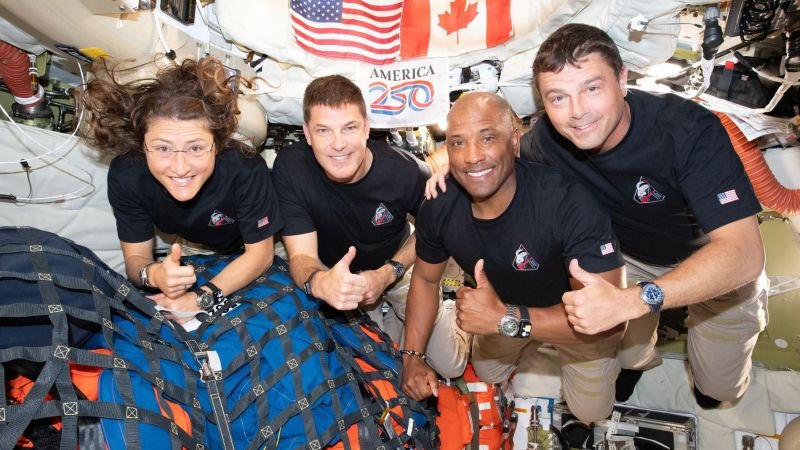
    Before four Artemis II astronauts strapped into their Orion capsule to soar toward the moon, a tiny bit of each of them was already on board.

    READ ALSO

    Supreme Court Temporarily Restores Access to Abortion Pill by Mail

    Wild parrots copy their friends when deciding whether to try new foods, study finds

    Incubated in a small triangular container stowed on the spacecraft just before launch were four USB-size “avatars,” which rode along with the history-making moon mission. But in many ways, their journey is just beginning.

    Known as organ chips, the avatar crewmates are made with bone marrow tissue derived from cells donated by their full-size counterparts — NASA’s Reid Wiseman, Victor Glover and Christina Koch, and Canadian Space Agency astronaut Jeremy Hansen — and researchers believe the experiment could soon unlock unprecedented insights about the effects of space on human health.

    The AVATAR, or A Virtual Astronaut Tissue Analog Response, study essentially allows scientists to simulate what happens to astronauts’ organs in deep space.

    The AVATAR investigation will use organ chips to study a effects of increased radiation and microgravity on human health.

    It offers a more granular look at where and when changes in the body begin, compared to traditional post-flight medical testing, according to Lisa Carnell, Director of NASA’s Biological and Physical Sciences Division. “We’ve never done this before,” she said.

    Because researchers chose to focus on bone marrow for this organ chip experiment, Carnell expects to gather data on the crew’s immune responses to traveling through the deep space and the higher-radiation levels associated with such endeavors. Those insights could lead to individualized treatments that ease the way for the astronauts to embark on longer missions — perhaps deeper into the cosmos.

    “When we send these alongside Christina, Victor, Reid, Jeremy, they all may respond different to the deep space radiation environment. Somebody may be radio resistant and will learn something new, and you know, or maybe somebody is more extremely susceptible to radiation,” Carnell said before the mission began. “Well, now we can tailor medical kits that we can make personal lives for them on their journey. They go to Mars, they go to the moon, to live for long duration. We can send the right therapeutics with them to make sure they stay healthy and that they can thrive in those environments.”

    The goal, Carnell said, is to one day be able to send up avatars of astronauts selected for deep space and long-duration missions ahead of time, so crews can prepare for potential health concerns before they become an issue far from home.

    “In the Apollo days, it was just a few days on the surface. If we’re literally going to have people on the surface for a long period of time, even 30 days or longer, I mean, we don’t have data on that at all, right?” Carnell said. “We like to say, ‘Know before we go.’ It’s that simple. Like, how do we know before we send them to ensure that we bring them back healthy and that they’re as safe as can be? And this is such a simple … eloquent way to do that.”

    As AVATAR quietly careens along in a corner of the spacecraft, the Artemis II astronauts are also actively working to collect data that could inform the future of human spaceflight — and that job doesn’t end once they splashdown.

    Space is a stressful place for the human body, said Dr. Steven Platts, chief scientist for human research at NASA’s Johnson Space Center in Houston.

    The agency has an acronym for the overarching hazards that humans face in space: RIDGE, which stands for radiation, isolation, distance from Earth, gravity (or the lack thereof) and environment (which can be hostile both inside and outside of the spacecraft), Platts said.

    The actigraphy device that select Artemis II astronauts wear on their wrists during their mission.

    Any time humans venture to space, but especially on the rare occasion that they journey beyond Earth orbit, researchers want to monitor as much as they can about the effects of the harsh environment on the body — even if it’s just for 10 days.

    There are a number of ways researchers can understand how spaceflight can impact the Artemis II astronauts’ bodies and minds as they ride onboard the Orion spacecraft – which is about the size of a campervan, compared to the International Space Station, which is the size of a six-bedroom home.
    The crew is sleeping, eating, exercising and working in the small space together.

    “I want to see how the crew respond in that much smaller vehicle,” Platts said. “So I want to see how their team dynamic is, how well are they working together? Are there stresses? And, you know, there’s always going to be stresses with a group of people, but being able to track that scientifically is really important.”

    To evaluate their mental health, the astronauts are asked a number of questions about their feelings during different parts of the mission, but there are other ways of monitoring their wellbeing, Platts said.

    The team has been wearing watch-like wrist monitors to track their movements and sleep in real-time during the mission, which can be compared with pre- and post-flight evaluations. The data, which will contain insights about cognition, behavior and sleep quality in space, could be used while planning crew support measures for future missions.

    The astronauts are also collecting their own saliva before, during and after the mission as a way to track unique biomarkers for their immune systems. Since there is no refrigeration unit aboard Orion, they are blotting their saliva on special paper kept in small booklets.

    Saliva samples can be used to measure how radiation and other stressors impact the immune system. Researchers will also analyze the samples to see if dormant viruses that cause chickenpox and shingles reactivated in space — something that has been seen in astronauts on the International Space Station.

    Artemis II also marks the first time astronauts beyond Earth orbit will participate in the Spaceflight Standard Measures study, an ongoing research project that has collected data from International Space Station astronauts and other spaceflights since 2018.

    The participating crew members began by giving blood, urine and saliva samples to provide snapshots of their nutrition, cardiovascular health and immune system starting six months ahead of launch. They also performed tests to glean insights into their balance, muscles, microbiome, vision and brain health. In space, they’ve been evaluating any motion sickness symptoms. And once they return, the crew will go through more tests to assess their head, eye and body movements.

    To measure radiation exposure, Orion contains six radiation sensors and each crewmember keeps a monitor in their pocket. The sensors can provide warnings if radiation levels rise to hazardous, which could occur if the sun releases powerful solar flares during the mission.

    After the astronauts return to Earth, they’ll go through an “obstacle course,” Platts said, which includes climbing a ladder, lifting items and doing maneuvers that may seem tricky upon experiencing our planet’s gravity again.

    The obstacle course is helpful not just for reacclimating them to Earth, but also in preparing for what astronauts might experience upon landing on the moon, where they won’t have help getting out of the lander.

    “The inner ear is a tricky thing, and we know that that’s affected by spaceflight, and it can be difficult for the crew to move around for a few days when they come back,” Platts said. “It recovers between three and five days, but for those initial days on the lunar surface, we need to know exactly how they’re going to respond.”

    Lakiesha Hawkins, acting deputy associate administrator for NASA’s Exploration Systems Development Mission Directorate, noted that the kind of human health data being captured during the Artemis II mission wasn’t collected during the Apollo program.

    “The experiments about human health are going to give us data that we need to be able to live on the moon, longer as we develop the moonbase and be able to prepare for trips like going on to Mars,” Hawkins said.

    NASA’s Artemis program is sending humans into deep space for the first time in more than five decades. Sign up for Countdown newsletter and get updates from CNN Science on out-of-this-world expeditions as they unfold.
    Source link

    Related Posts

    Supreme Court Temporarily Restores Access to Abortion Pill by Mail
    United States

    Supreme Court Temporarily Restores Access to Abortion Pill by Mail

    May 4, 2026
    Wild parrots copy their friends when deciding whether to try new foods, study finds
    United States

    Wild parrots copy their friends when deciding whether to try new foods, study finds

    May 4, 2026
    What passengers need to know about Spirit Airlines
    United States

    What passengers need to know about Spirit Airlines

    May 4, 2026
    Rubio to Visit Rome, Vatican Says, After Trump’s Feud With Pope and Meloni
    United States

    Rubio to Visit Rome, Vatican Says, After Trump’s Feud With Pope and Meloni

    May 4, 2026
    Americans Will Do Anything to Get Indian Mangoes
    United States

    Americans Will Do Anything to Get Indian Mangoes

    May 4, 2026
    How Republicans came to embrace psychedelic drugs
    United States

    How Republicans came to embrace psychedelic drugs

    May 4, 2026
    Next Post
    GB Chamber says more details need on Grand Lucayan plans | News

    GB Chamber says more details need on Grand Lucayan plans | News

    POPULAR NEWS

    Justin Bieber fans flood Coachella festival for headlining show – Entertainment

    Justin Bieber fans flood Coachella festival for headlining show – Entertainment

    April 20, 2026

    Over 600 flee homes as Army, NPA clash in Negros Occidental

    April 21, 2026

    Ex-DPWH exec recalls P800-M ‘delivery’ to Zaldy Co 

    April 20, 2026

    Former PM Paluckas suspends party membership, to waive immunity over criminal probe

    April 24, 2026
    Pres. Ali challenges CARICOM to transform into health research powerhouse

    Pres. Ali challenges CARICOM to transform into health research powerhouse

    April 23, 2026

    EDITOR'S PICK

    Prosecutors “traced” orders from Conmebol even to raid the SIB – Politics

    Prosecutors “traced” orders from Conmebol even to raid the SIB – Politics

    April 21, 2026
    Zohra Bensemra

    Zohra Bensemra

    May 1, 2026
    Political work of the Minister of Economy; A sign of transformation or a source of ambiguity?

    Political work of the Minister of Economy; A sign of transformation or a source of ambiguity?

    May 2, 2026
    “The system (of the Coprincipate) is the foundation of sovereignty, expression of history and guarantee of freedoms”

    “The system (of the Coprincipate) is the foundation of sovereignty, expression of history and guarantee of freedoms”

    May 1, 2026

    Recent Posts

    • MUP KSH Arrest in Stari Grad, a thief was caught, the police announced about 4 hours ago
    • Shakira made history: Two million people attended her concert (VIDEO)
    • The declarations of the parliamentary groups: What are the requests?
    • Slobodna Dalmacija – Split’s ‘Spiderman’ left everyone breathless again; everyone looked at him on the way to the top, this time he also had company…

      © 2026 Agentially - Navigating shifting sovereignties and global risk .

      Welcome Back!

      Login to your account below

      Forgotten Password?

      Retrieve your password

      Please enter your username or email address to reset your password.

      Log In
      No Result
      View All Result

        © 2026 Agentially - Navigating shifting sovereignties and global risk .

        This website uses cookies. By continuing to use this website you are giving consent to cookies being used. Visit our Privacy and Cookie Policy.