Madrid/The free online resource dedicated to the Island’s genealogy and demographics, Cuba Research Project, announced this week the launch of the Cuban Family Tree, a collaborative tool that allows users to build and document their family roots, connect their ancestors with records available in the archive, and find possible links to other families’ public trees.
The new tree expands the search tools that already offered the projectwhich currently brings together more than 600,000 records distributed in 30 collections. Users can consult free databases of civil and parish records, cemeteries and burials, censuses, passenger lists, naturalizations, school records and documents related to military service.
The tool allows you to build a family tree directly on the site or import an existing one using a GEDCOM file – a format used to exchange genealogical information. People added to the tree can link to records in the file, while users can also consult those that other families have decided to make public.
Among the most notable collections is a historical list of ship passengers that arrived in Cuba or left the Island, with almost 340,000 records. The oldest ones correspond to the 16th century, although the majority are from the 19th century.
The tool allows you to build and document family roots, connect ancestors with available records, and find links to other families’ public trees.
The file also includes 47,824 names from obituaries published in the newspaper Navy Diary between 1868 and 1960, compiled by Lydia E. Reyes, as well as more than 18,000 names from burial notices in the Columbus Cemetery in Havana published between 1920 and 1921.
Another collection brings together more than 15,000 records of people from the Canary Islands who emigrated to Cuba during the 19th century. The material was originally compiled from data from different town councils and the missing Emigrant Museum of Teguise, in Lanzarote.
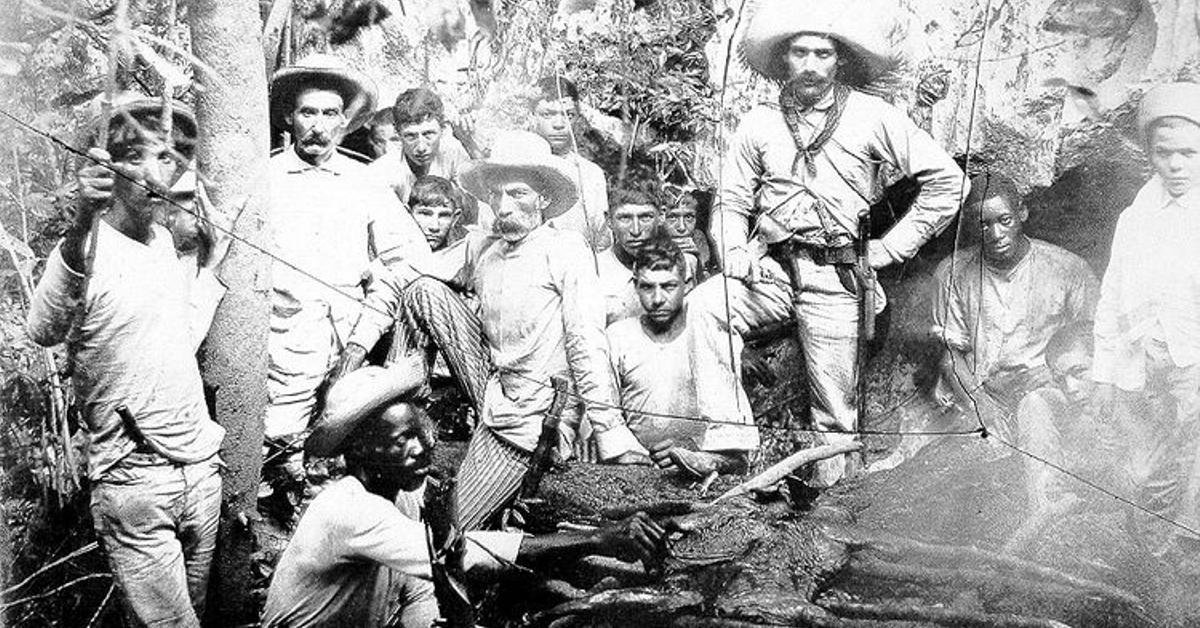
The database also includes the official registry of 74,000 Mambise combatants of the Cuban War of Independence, naturalization certificates issued between 1904 and 1939 and records of different cemeteries on the Island. Among the latter is the Centro Macabeo, in Guanabacoa, considered the oldest Jewish cemetery in Cuba, established in 1910.
The project has also incorporated reference works for family research, such as the nine volumes of History of Cuban Families, by the Count of San Juan de Jaruco, which brings together genealogical information on 841 Cuban surnames.
“If enough people do it, this will become the largest collection of Cuban genealogy ever assembled, and it will have been built by Cubans themselves.”
“Half a million registrations took us three years and dozens of volunteers working name by name,” declared the founder of the project, Richard Villalba, in a statement in which he also encouraged more people to collaborate. “Families save much more than we will ever have,” he said. “If enough people do it, this will become the largest collection of Cuban genealogy ever assembled, and it will have been built by Cubans themselves.”
The project accepts contributions of documents, photographs, parish or civil records, passenger lists and other materials that can contribute to expanding the archive. Users can also point out errors in existing records and send corrections from people’s own records. Cuba Research Project points out that its objective is to gather, preserve and index these materials to make them searchable in a single, free digital archive.