
SOMO offers unprecedented discounts on Basra crude
Proposing alternatives to pipelines that would ensure the export of Iraqi oil
Baghdad – Qusay Munther
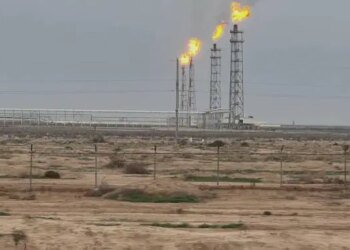
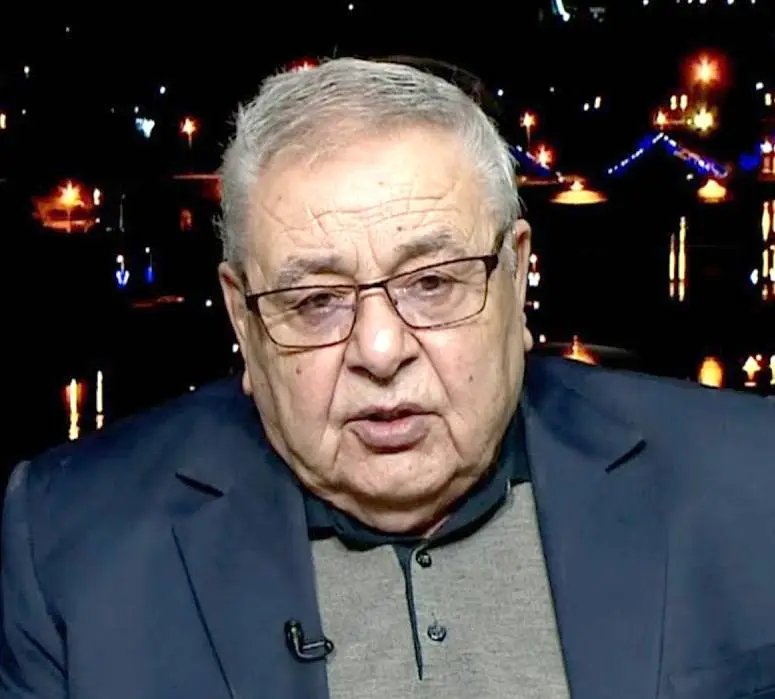
An oil expert suggested creating oil reservoirs in consuming countries with a capacity of up to one billion barrels, instead of relying on extending export pipelines through neighboring countries.
Expert Hamza Al-Jawahiri said in a statement yesterday that (the oil pipeline option, despite its importance, faces great political and security risks, the most prominent of which is that Iraq as a country is still in a relatively weak position, which makes the pipelines vulnerable to takeover or stopping in the event of political disputes with the countries that pass through its territory). Citing (the possibility of projects such as the export pipeline through Saudi Arabia being exposed to such risks). He pointed out that (the investment cost of constructing export pipelines is very high, as it may reach about 27 billion dollars, in addition to the high costs of ongoing maintenance and operation, in addition to the fees imposed by the countries hosting the pipeline routes, which may be exorbitant in the long term). Pointing out that (some countries were demanding high fees for the passage of oil through their territories). Al-Jawahiri explained, “Jordan, for example, was scheduled to receive up to $10 for every barrel exported through its territory as part of previous proposed projects.” He pointed out that (the option of establishing strategic reservoirs in consuming countries may give Iraq greater flexibility in exports, and reduce the risks of political or logistical interruptions, in addition to enhancing Iraq’s ability to manage its oil flows more stably in global markets).
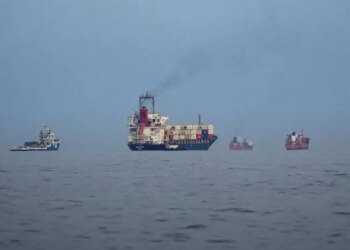
Meanwhile, the Iraqi Oil Marketing Company, SOMO, announced the offering of unprecedented discounts on Basra crude, in light of tense regional conditions and difficulties facing shipping movement through sea lanes. A report carried by Bloomberg yesterday stated that “Iraq is offering buyers of its long-term contracts significant discounts on oil shipments loaded during the current month, but oil tankers will be forced to cross the Strait of Hormuz to reach the shipments located deep in the Arabian Gulf, at a time when military tensions are escalating in the region.” The report added that (a memorandum issued by SOMO indicates that discounts of up to $33.40 per barrel are being offered compared to the official prices of Basra crude). Noting that (the document presents varying pricing levels for different periods of the month). He continued, “The Strait of Hormuz has become almost restricted in movement since the outbreak of war at the end of last February, while the escalation of violence between the United States and Iran has raised doubts about the continuation of the existing truce.” He pointed out that (Iraq was one of the first producers in the region to reduce production at the beginning of the conflict, after surplus storage capacities were filled as a result of the cessation of exports through the Gulf).
While recent data issued by the International Energy Agency indicated that global oil consumption is currently stable at a level of approximately 100 to 105 million barrels per day, with strong demand from major economies continuing, despite the slowdown in growth in some regions. A statement by the agency yesterday said: “The United States tops the list of the world’s largest consumers with about 20.3 million barrels per day, followed by China with about 16.1 million barrels per day, then India with about 5.2 million barrels per day, while Russia, Saudi Arabia and Brazil come in the next ranks with consumption ranging between 3 to 4 million barrels per day for each country.” He continued (at the global production level, America, Saudi Arabia, Russia, and Iraq are the leading producing countries, as estimates indicate that Iraq produces more than 4 million barrels per day under normal conditions, making it one of the most important oil suppliers in the global market).
In a related development, the Organization of Arab Petroleum Exporting Countries (OAPEC) revealed the UAE’s decision to withdraw from membership in the organization, a few days after the Gulf state announced its withdrawal from the Organization of the Petroleum Exporting Countries (OPEC) and the OPEC+ alliance. OAPEC said in a statement yesterday that it (the UAE Minister of Energy and Infrastructure, Suhail Mohammed Al Mazrouei, was informed of his country’s decision to withdraw from membership in the organization). He added, “The decision to withdraw the UAE, which joined the organization in 1970, entered into force on May 1.” The statement continued, “The Organization’s General Secretariat expresses its appreciation for the role played by the UAE throughout its membership period, and its effective contributions in supporting the process of joint Arab action in the petroleum and energy sector.” OAPEC, which was established in 1968, includes ten member states after the UAE’s withdrawal, namely Kuwait, Libya, Saudi Arabia, Algeria, Bahrain, Egypt, Iraq, Qatar, Syria and Tunisia.