
Listen to this article
Estimated 4 minutes
The audio version of this article is generated by AI-based technology. Mispronunciations can occur. We are working with our partners to continually review and improve the results.
Albertans will be able to start paying out-of-pocket for key preventative diagnostic tests, without a referral from a doctor, on Friday.
The new system, which has already sparked concern among doctors and some health care advocacy groups, has been in the works for months.
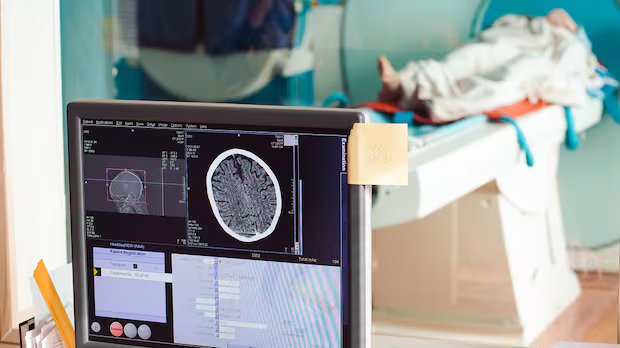
It allows Albertans to self-refer and pay for MRIs, CT scans, ultrasounds and X-rays.
“Early detection means better outcomes and healthier people. And it means more confidence and timelier answers for Albertans and their families when it matters most,” said Premier Danielle Smith at Monday’s news conference in Calgary.
Patients are expected to pay, either out-of-pocket or through private insurance, prior to receiving the test, and their results will be provided to them directly and added to their electronic health record, according to the province.
If the test leads to a new cancer diagnosis, patients will be eligible for reimbursement. They’ll have a year, from the date of diagnosis, to submit a claim, and the amount they get back will be based on publicly-funded rates.
If cancer is suspected, patients will be referred to Cancer Care Alberta.
According to the province, cancer is the leading cause of death in Alberta.
Access concerns
Bill 29 (Health Statutes Amendment Act, 2026), which received royal assent in May, paved the way for the new self-referral system.
The Alberta government insists access to diagnostic tests within the publicly funded system will not be jeopardized by the move.
“This new approach complements and strengthens Alberta’s public health care system. It won’t replace it,” said Smith.
“Albertans will continue to receive routine mammograms and prostate cancer screening as they have in the past.”
The for-pay option will be available to adults and people under the age of 18 with the consent of a parent or guardian.
Under the new system, patients will be able to refer themselves to participating accredited, private diagnostic facilities where a regulated health professional is expected to confirm if they are eligible and ensure they understand the risks.
Alberta’s Minister of Primary and Preventative Health Services Justin Wright said steps are in place to ensure medically necessary and publicly funded tests will remain a priority.
“Any clinics that are participating in this must maintain and guarantee the same access that they had prior to July 31. So any additional services that they take on are secondary, exclusively after physician-referred services,” he said.
The Alberta NDP is once again pushing back against the move.
“This is not going to reduce wait times. … This is not going to solve the problem that exists within our health care system,” said Sharif Haji, NDP critic for Primary and Preventative Health Services.
“This is going to make wait times longer, and it’s going to create a two-tier system where those who can afford … may probably get faster access, but the majority of Albertans are not going to get faster access.”
Dr. Robert Davies, president and chief medical officer at Canada Diagnostic Centres, said private providers will have to expand capacity to assess patients who self-refer to ensure the test is appropriate and to refer patients for care if there is a concerning finding.
They already perform publicly funded mammograms for women who self-refer, he noted.
Davies estimates the change could quadruple the number of private diagnostic tests performed in the province to roughly 50,000 or 60,000 a year.
“The perspective is important. This is in a system that handles seven million exams a year — total — right now,” said Davies, who is also the past-president of the Alberta Society of Radiologists.
“So the overall impact of that is relatively small, and we think is manageable.”