The Syrian President confirmed Ahmed Al-SharaaHis country’s forces will not enter Lebanon to fight”HezbollahAt the same time, he showed readiness Damascus To sit with the party at one table if the matter is in the best interest Syria And Lebanon, as he put it.
Al-Sharaa considered during an exclusive interview with Al-Mashhad channel on Sunday that “Hezbollah is violating the Lebanese state’s decision to decide peace and war, and it must find a place for itself inside Lebanon and that Lebanese interests should take precedence over any other interest,” adding that “the polarization taking place inside Lebanon has narrowed the options for reaching solutions.”
The Syrian President pointed out that “there is a major Syrian wound that is still alive now, and that Hezbollah is involved in that,” calling for “a review of what happened in the past, and a search for solutions to secure the Shiite environment inside Lebanon, not to risk it.”
While he saw that “Lebanon still has an opportunity and ideas outside the box and moving away from traditional ideas,” Al-Sharaa pointed out that “Syria is part of the solution to the Lebanese crisis and not part of the problem,” and said: “We are looking for economic lines between Lebanon and Syria, not military lines, and historically Beirut is the waterfront of Damascus, and Tripoli is the waterfront of Homs.”
US President Donald Trump spoke more than once about his push for Syrian intervention against Hezbollah, and now Trump revealed that he was close to “handing over the Hezbollah file to Syria,” expressing his intention to “give power” to the Syrian president.
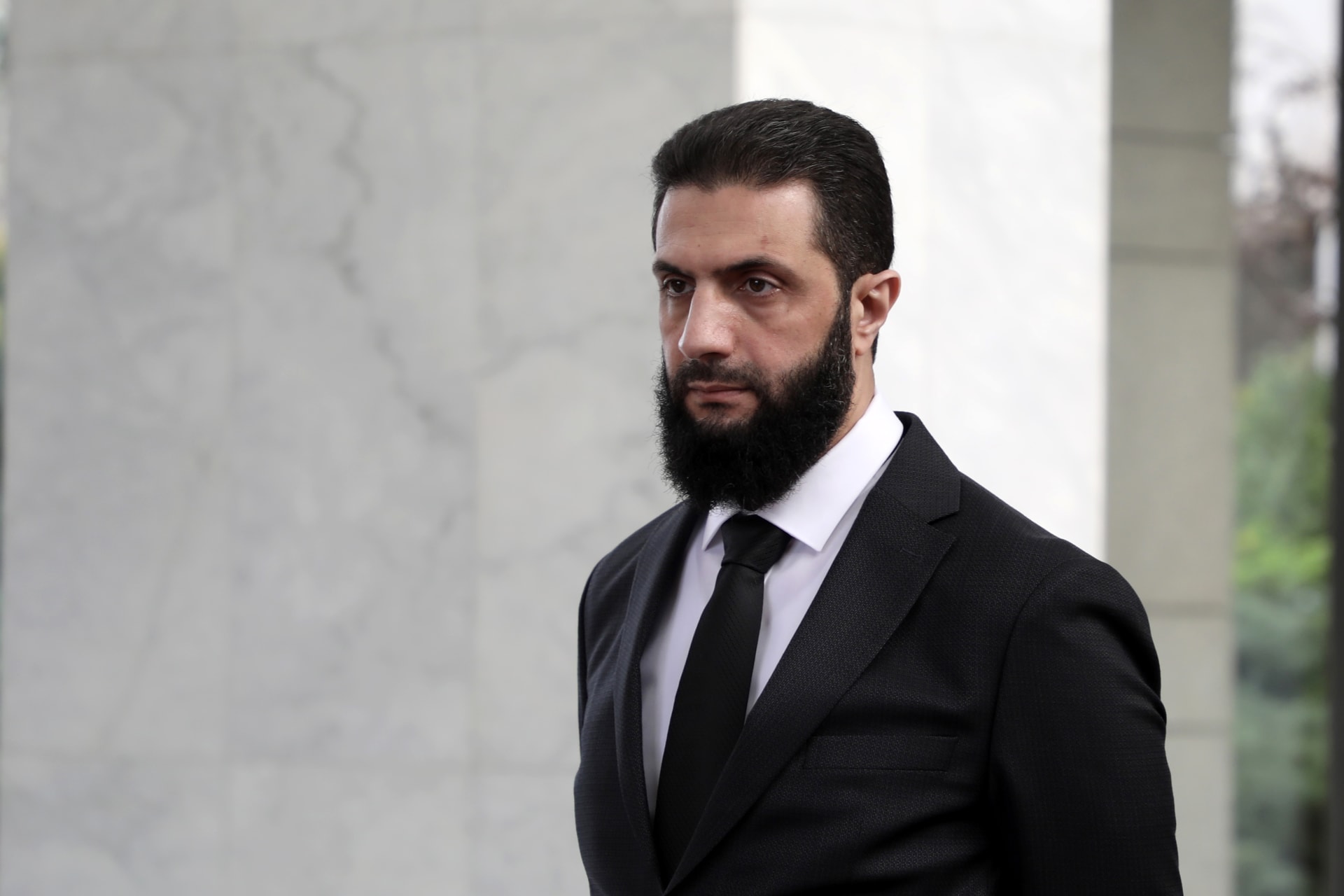
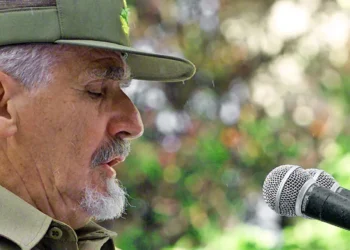
Ahmed Al-Sharaa (archive)
Offer a different approach
Al-Sharaa also stressed that “the solution in Lebanon is not achieved through war and bombing cities,” explaining that “the war in Lebanon will have major effects on Syria, and that Lebanon suffers from a lack of interest from the countries that were its allies.”
He revealed that “Syria proposed a different approach with French President Emmanuel Macron to stop the war in Lebanon, which is based on re-supporting the Lebanese state, strengthening its institutions, and searching for a solution that everyone believes in,” indicating that “the complex circumstance inside Lebanon and the lack of a strategic vision prevents finding a solution.”