Despite the profound transformations the world is witnessing with the rise of the Internet and artificial intelligence, the book still maintains its place in the conscience of Tunisian and Arab readers.
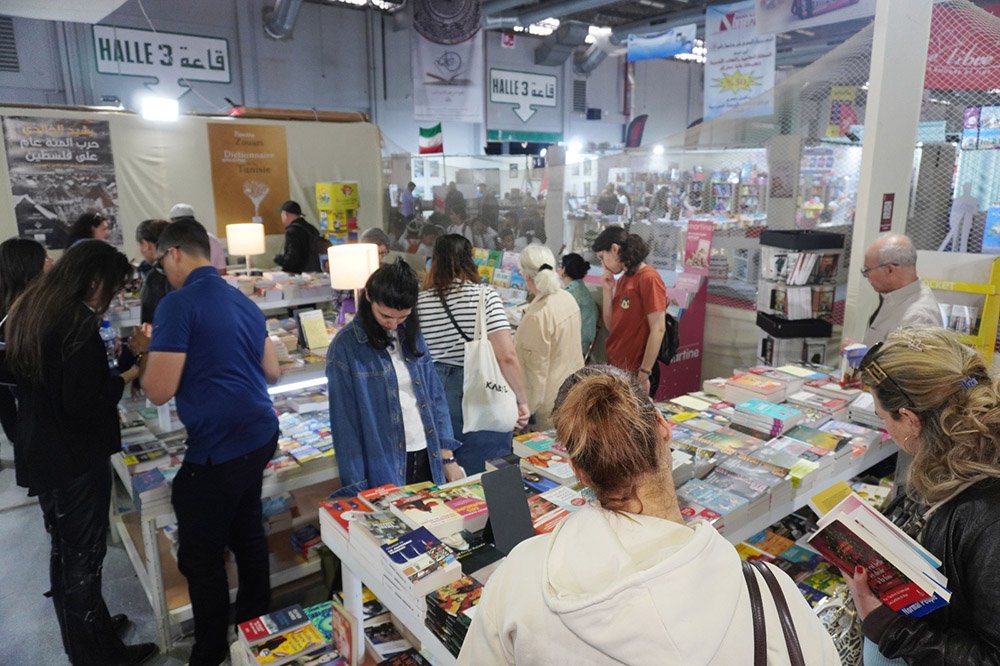
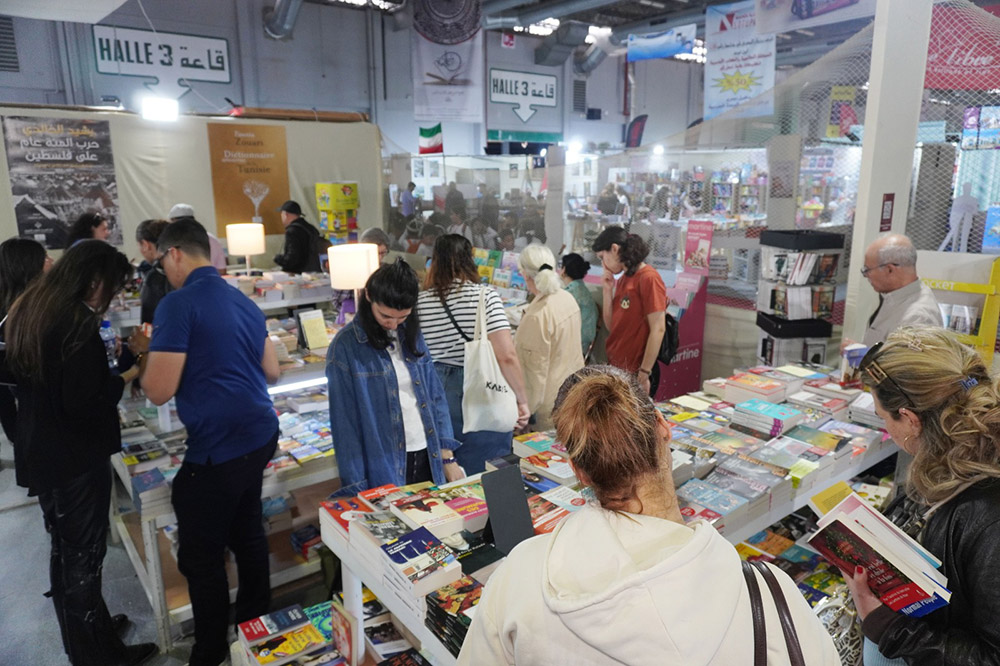
In the fortieth session of the Tunis International Book Fair, which continues until May 3, 2026, the relationship between the reader and the pages is renewed, in a scene that reflects the convergence of generations around the love of knowledge, and confirms that the book has a magic that does not fade, no matter how the media changes.
Throughout the week, visitors of all ages and nationalities flock, in a scene that embodies remarkable cultural vitality. Visitor Al-Arabi Ben Attia believes that “the book is in a state of transition today with the age of the Internet and artificial intelligence,” but he confirms in return that the demand for the exhibition remains, and even carries positive connotations. He added with a smile: “We are happy with our Indonesian brothers as the guest of honor for the session. They know a lot about our culture, more than we know about them, and this is important for the exchange of cultures and knowledge between us.”
In one of the hallways, a visitor who preferred to remain anonymous expresses her admiration for the current session, considering it “excellent” in terms of the diversity of titles and the availability of the books she was looking for. In her statement, she pointed to the large presence of children, stressing that “young people today need to realize the importance of the book in education, despite the dominance of the digital revolution… the book remains the most important.”
For her part, Libyan university professor and academic researcher Hamida Ali Al-Bousafi confirms that her visit to the exhibition revealed great richness in the various pavilions, with a remarkable presence of educational institutions, including schools and institutes. She points to the diversity of recent publications covering economic, social and psychological fields, considering that such cultural initiatives represent a fundamental pillar in developing the culture of Arab children, especially in light of the technological transformations that have kept many people away from reading.
Al-Bosavi calls on the organizers and relevant ministries to further support these demonstrations, stressing that “the book remains a companion of man and crosses continents, just like technology.”
The attendance was not limited to local visitors, as a visitor from Algeria confirmed that he came specifically to Tunisia for the exhibition to discover new publishing houses, especially in the field of children’s literature. He says that the exhibition allows him to see many productions, stressing the importance of distributing these works throughout the Maghreb. He also praises the movement within the spaces, especially with the presence of school children.
As for writer Hayat Al-Rais, she describes the exhibition as “an annual season that everyone awaits, including writers, readers, and publishers,” expressing her hope that the book will continue to flourish, because of its ability to spread joy. In her speech, she highlights the importance of the exhibition as a space for creative people to meet and exchange visits between the pavilions, in addition to being an opportunity for readers to purchase books at reduced prices, in light of their high cost outside this framework.
Manal Al-Abedi
Despite the profound transformations the world is witnessing with the rise of the Internet and artificial intelligence, the book still maintains its place in the conscience of Tunisian and Arab readers.
In the fortieth session of the Tunis International Book Fair, which continues until May 3, 2026, the relationship between the reader and the pages is renewed, in a scene that reflects the convergence of generations around the love of knowledge, and confirms that the book has a magic that does not fade, no matter how the media changes.
Throughout the week, visitors of all ages and nationalities flock, in a scene that embodies remarkable cultural vitality. Visitor Al-Arabi Ben Attia believes that “the book is in a state of transition today with the age of the Internet and artificial intelligence,” but he confirms in return that the demand for the exhibition remains, and even carries positive connotations. He added with a smile: “We are happy with our Indonesian brothers as the guest of honor for the session. They know a lot about our culture, more than we know about them, and this is important for the exchange of cultures and knowledge between us.”
In one of the hallways, a visitor who preferred to remain anonymous expresses her admiration for the current session, considering it “excellent” in terms of the diversity of titles and the availability of the books she was looking for. In her statement, she pointed to the large presence of children, stressing that “young people today need to realize the importance of the book in education, despite the dominance of the digital revolution… the book remains the most important.”
For her part, Libyan university professor and academic researcher Hamida Ali Al-Bousafi confirms that her visit to the exhibition revealed great richness in the various pavilions, with a remarkable presence of educational institutions, including schools and institutes. She points to the diversity of recent publications covering economic, social and psychological fields, considering that such cultural initiatives represent a fundamental pillar in developing the culture of Arab children, especially in light of the technological transformations that have kept many people away from reading.
Al-Bosavi calls on the organizers and relevant ministries to further support these demonstrations, stressing that “the book remains a companion of man and crosses continents, just like technology.”
The attendance was not limited to local visitors, as a visitor from Algeria confirmed that he came specifically to Tunisia for the exhibition to discover new publishing houses, especially in the field of children’s literature. He says that the exhibition allows him to see many productions, stressing the importance of distributing these works throughout the Maghreb. He also praises the movement within the spaces, especially with the presence of school children.
As for writer Hayat Al-Rais, she describes the exhibition as “an annual season that everyone awaits, including writers, readers, and publishers,” expressing her hope that the book will continue to flourish, because of its ability to spread joy. In her speech, she highlights the importance of the exhibition as a space for creative people to meet and exchange visits between the pavilions, in addition to being an opportunity for readers to purchase books at reduced prices, in light of their high cost outside this framework.
Manal Al-Abedi
Tags/article tags: