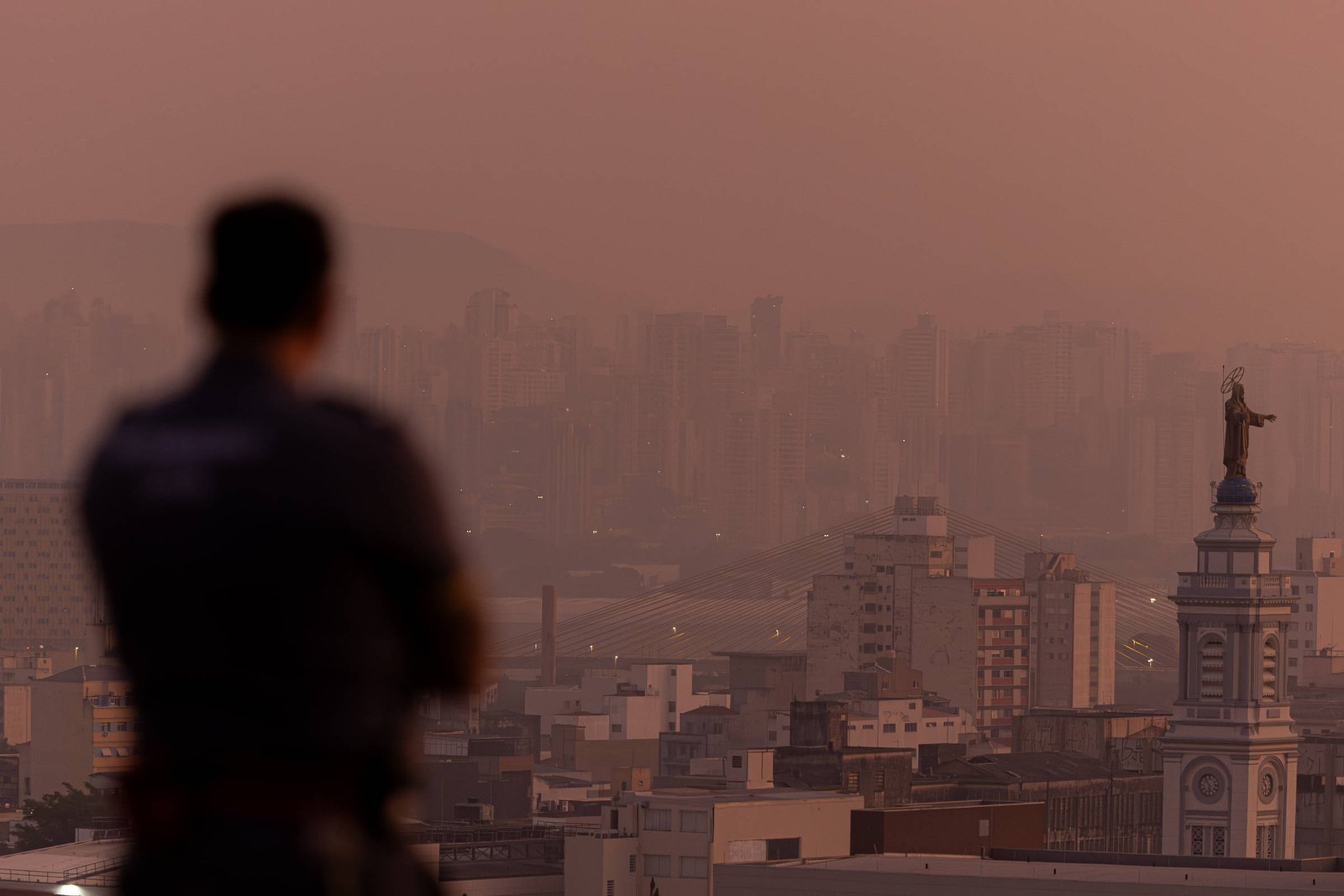
Breathe polluted air São Paulo for years can increase the risk of hospitalization for kidney disease by up to 2.5 times, according to a study published in the journal Scientific Reportsfrom the Nature group, by researchers from USP (University São Paulo) and universities in the Netherlands.
The research analyzed more than 37 thousand records of hospitalizations for kidney diseases in the capital of São Paulo between 2011 and 2021. The scientists crossed this data with the concentrations of fine inhalable particles (PM2.5), measured in eight monitoring stations of Cetesb (Environmental Company of the State of São Paulo) throughout the period.
The limit indicated by WHO (World Organization of Health) for exposure to these fine particles is 15 micrograms per cubic meter in 24 hours. In São Paulo, according to the research, measurements reach 65 micrograms per cubic meter. With prolonged exposure at this level, men between 51 and 75 years old have a 2.5 times greater risk of being hospitalized for chronic kidney disease than the unexposed population, says the study.
Despite there being a general increase in the danger of hospitalization, the risks identified in the study varied according to the level of exposure to pollution, as well as gender and age group.
The chance of developing glomerulopathy, a disease that affects the kidney filters and is immunological in nature, is five times greater for men up to 40 years of age when exposed to high concentrations of particles for long periods than for other groups.
Even small percentages of increased risk can represent hundreds or even thousands of new cases over the years in São Paulo, according to Iara da Silva, environmental engineer at UTFPR (Federal Technological University of Paraná) and first author of the study.
At the lowest concentrations analyzed, 15 micrograms per cubic meter, there was an increased risk of hospitalization for acute kidney injury for men, but not for women. This occurs, according to researchers, because kidney diseases are more frequent and more serious in males, partly due to hormonal factors, since estrogen has a protective effect on the kidneys.
“The particulates that we breathe in pollution fall into the bloodstream and can be deposited in kidney tissue”, says Lucia Andrade, a nephrologist at USP and one of the study’s authors. The kidneys are the organs responsible for filtering the blood and eliminating substances such as urea, in addition to regulating the body’s water and salt balance. Therefore, everything that circulates through the blood passes through them, including inhaled particles from polluted air.
When they are deposited in kidney tissue, says Andrade, the particles act as a foreign body and trigger an inflammatory response. “This will somehow alter proper functioning.”
Hospitalizations were more concentrated in the most urbanized regions of the city, where car traffic is more intense, according to the research. The main source of fine particles in São Paulo is the vehicle fleet, which has around 7 million units, according to Cetesb.
Living in the center of São Paulo, for example, should be considered a risk factor for kidney disease, says Silva. According to her, however, both the population and health professionals still cannot clearly understand the dangers of pollution.
“The air is not tangible. If you drink a glass of contaminated water, it tastes different. But when you breathe polluted air, your body gets used to it. It deposits in your system and you don’t notice it,” says Silva. The silent, cumulative damage, she says, makes it difficult for doctors and patients to make the connection between where they live and kidney health.
In Brazil, according to the researchers, there is a lack of monitoring and communication policies that translate air quality indices into practical alerts. In European countries, says Silva, systems already notify risk groups when pollution levels or temperatures are high. Here, the air quality index exists and is public, but the information does not reach the population adequately.
“If you go to a care unit with a crisis, they won’t associate (your condition) with air quality,” he says.
Furthermore, the researchers warn that concrete measures to reduce emissions are necessary to prevent more diseases, including heart and respiratory diseases. Brazilian legislation, however, is more permissive in terms of air pollution than WHO recommendations.
The authors emphasize that improvements in public transport and a reduction in the fleet of vehicles in circulation could improve air quality.
For Andrade, doctors need to incorporate the environmental context into the diagnosis. Living in an area with high exposure to fine particles should already be treated as a risk factor for diseases in the same way as obesity, hypertension or smoking. “We need to understand more environment where the patient lives”, says the nephrologist.
While public policies do not advance, Silva suggests paying attention to the air quality index on days of greater pollution. If you look at the sky and it is cloudy or gray, you may want to avoid outdoor exercise, spend more time at home, and even consider wearing a protective mask.