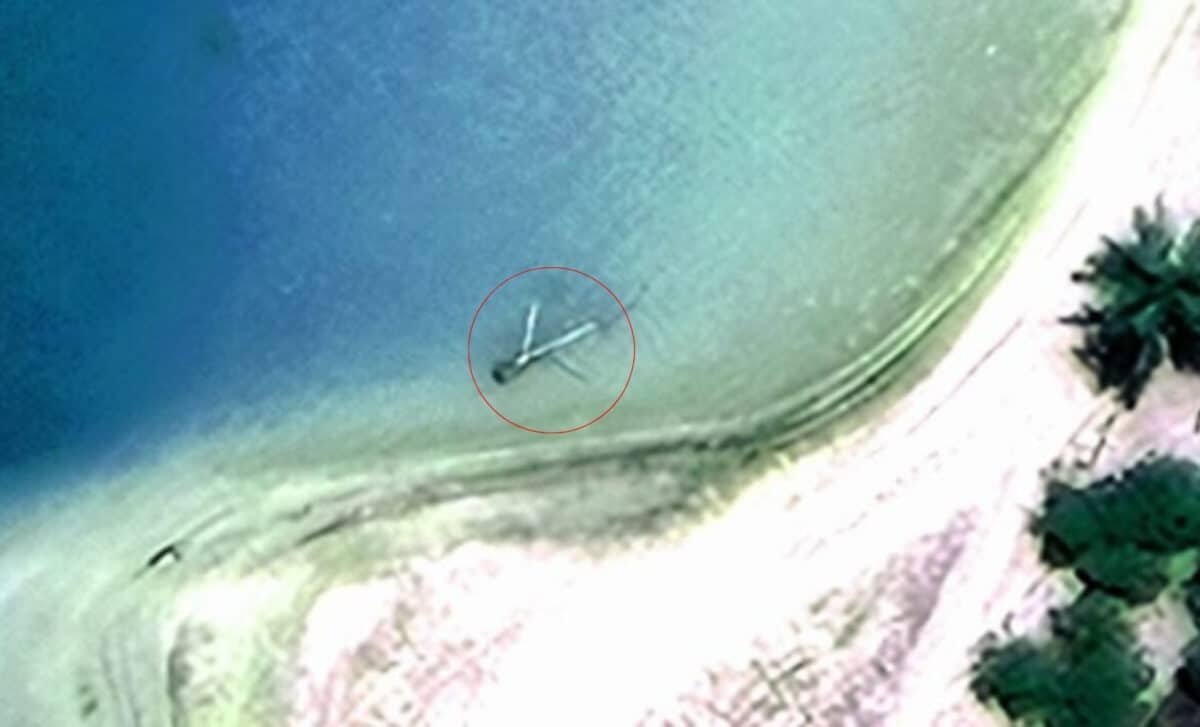
The target is Nikumaroro, a coral island in the central Pacific, and more specifically an anomaly sitting in its lagoon, the Taraia Object, which some researchers believe could be wreckage from Earhart’s Lockheed Electra 10E. If confirmed, it would answer questions that have haunted historians, aviators, and the general public since July 2, 1937, the day Earhart and her navigator Fred Noonan failed to reach Howland Island and were never seen again.
The expedition is not the first attempt to solve the mystery, and it almost certainly won’t be the last. Researchers, archaeologists, and aviation enthusiasts have descended on Nikumaroro before, repeatedly, over decades, and come back empty-handed. But organizers say the weight of evidence this time around is different. Whether the scientific and archaeological community agrees is another matter entirely.
An Expedition Delayed, Now Bound for the Marshall Islands
The plan, as reported by Popular Mechanics, originally called for a field team from the Purdue Research Foundation and the Archaeological Legacy Institute (ALI) to travel to Nikumaroro in November 2025. Clearance issues with the government of Kiribati pushed the timeline back. Organizers also flagged the South Pacific cyclone season as a reason not to press ahead too late in the year.
The revised schedule now has the team departing from Majuro in the Marshall Islands on July 28, spending five days at Nikumaroro, and returning to Majuro by August 14, before heading home on August 15. If the Taraia Object is positively identified as part of the Electra, ALI says a second field season would follow in 2027, with possible recovery of the wreckage in 2027 or 2028.

Purdue’s involvement is not incidental. The university has a direct historical connection to Earhart herself. President Edward Elliott recruited her to campus as a career counselor for women, where she also advised the aeronautical engineering department and made use of the university’s airport, at the time, the only one of its kind at a U.S. college or university. Purdue later helped fund Earhart’s round-the-world attempt through the Amelia Earhart Fund for Aeronautical Research, with trustee David Ross spearheading contributions alongside names like J.K. Lilly, Vincent Bendix, Western Electric, and the Goodrich and Goodyear companies. Earhart had planned to donate the plane to Purdue on her return.
“About nine decades ago Amelia Earhart was recruited to Purdue, and the university president later worked with her to prepare an aircraft for her historic flight around the world,” current Purdue president Mung Chiang said in a statement. “Today, as a team of experts try again to locate the plane, the Boilermaker spirit of exploration lives on.”
The Evidence Behind the Taraia Object Hypothesis
The Taraia Object was first located in 2020, and according to ALI, it has remained in the same position in the lagoon since 1938. Richard Pettigrew, ALI’s executive director, described the accumulated body of evidence in notably confident terms when the expedition was first announced. “With such a great amount of very strong evidence, we feel we have no choice but to move forward and hopefully return with proof,” he said.
According to ALI and Pettigrew, the hypothesis rests on several distinct strands of evidence. Radio bearings recorded during the disappearance by the U.S. Navy, the U.S. Coast Guard, and Pan American World Airways are said to converge on Nikumaroro. A 2017 analysis of human bones discovered on the island in 1940 concluded that Earhart’s bone lengths were more similar to the discovered bones than 99 percent of individuals. Artifacts found on the island and dating to the 1930s, a women’s shoe, a compact case, a freckle cream jar, and a medicine vial, have been cited as circumstantial material evidence.

There is also what researchers call the Bevington Object: a photographic anomaly captured just three months after the plane’s disappearance, interpreted as resembling the landing gear of an Electra on the Nikumaroro reef. The broader theory holds that Earhart and Noonan, after missing Howland Island, made it to the reef at Nikumaroro and died there after being stranded, rather than crashing directly into the open ocean.
Steven Schulz, senior vice president and general counsel of Purdue University, stated that “both Earhart and her husband and manager, George Putnam, expressed their intention to return the Electra to Purdue after her historic flight,” adding that the expedition “offers the best chance not only to solve perhaps the greatest mystery of the 20th century, but also to fulfill Amelia’s wishes and bring the Electra home.”
A Theory Contested, a Mystery Still Open
Not everyone is convinced. Ric Gillespie, executive director of the International Group for Historic Aircraft Recovery, TIGHAR, has conducted more than a dozen on-site searches at Nikumaroro over more than three decades. He broadly supports the idea that Earhart landed on the island, but he has looked at the specific site in question before and found nothing. “We’ve looked there in that spot, and there’s nothing there,” he told NBC. “I understand the desire to find a piece of Amelia Earhart’s airplane. God knows we’ve tried. But the data, the facts, do not support the hypothesis. It’s as simple as that.”
According to Newsweek, Gillespie also disputed whether the Taraia Object matches the profile of the Electra. Dorothy Cochrane of the Smithsonian’s National Air and Space Museum added a note of caution, saying the object needed more photographing before stronger claims could be made. Gillespie argued that a plane on the reef would have been buried under coral, not sand, pushing back on Pettigrew’s explanation that objects on the island shift in and out of sand coverage over time.

Meanwhile, a separate but related thread has been unfolding in government archives. Following a September 26, 2025 directive to declassify Earhart-related government records, the National Archives set up a dedicated release page and posted four tranches of documents between November 2025 and January 2026, totaling 10,155 pages. Those files have not identified the Taraia Object or resolved the Nikumaroro claim, though they may yet feed the wider historical debate.
What remains unchanged, almost 90 years on, is the basic fact that no wreckage has been conclusively identified as Earhart’s plane. The Taraia Object is, for now, still an object of interest, not confirmed evidence. The July 2026 expedition will either bring the world a step closer to an answer, or add another chapter to a mystery that has, so far, outlasted everyone who has tried to solve it.