How does one deal with personal defeats? All of you who are reading this must have had it more than once and you know that it is not a big challenge to face the fall, get up, shake off the dust, wash the wounds from your knees and palms and move on. The whole story is much more painful when you have to face the collective defeat. Well, then you really need courage, not in the act of rising from the dust you are in, but in facing the truth that admitting your personal defeat will not change reality. With and without you, reality as a generally accepted state of affairs will continue to spread in time, space and people. Until the final general fall, which is always lightning and in a bang. Sometimes you have no choice but to stand and witness it all. And that’s it. The general decline is spontaneous. Strong. He cannot be stopped. He cannot be prevented. To warn. Because sometimes in order to hear, you have to have ears. To see, one must have eyes. That’s how it’s written.
I am writing what I have said many times. For years. To some people many times. To some, inordinately much. And I have written about this. With trepidation. With the fear that all this will happen. Out of fear that we are doomed. That we will not escape from the mistakes of the past and that we will again walk the same path of rejecting our own values and painfully serving other people’s interests, as the poet said, for other people’s white yards, we will dig our own black graves. Here, I’m sorry, but it’s repeating itself. Tragic and painful. It is. There is no escaping what is written. At least I don’t mean to run away from what is written, for me. I am not giving my letter. Let it be chatty.
My dears, when we say publicly: “we will preserve the identity”, we must be aware that at that moment we are saying a platitude, an axiom, a phrase, a sentence that has no real force to carry out the action we are referring to! Why? Because identity, especially among humans and human communities known as nations, is not a common place. Identity, my dears, is not a space, a location, or even a locality. Identity in its essence is not even an event, not even a collective act in peace or war. Identity is not an abstract idea of the state of spiritual, emotional and self-conscious reality of one person, of many or of large groups or communities, and ultimately of nations. Identity, my dears, is an emanation of a specific time, a specific place in which a specific person with a specific work emanated! So, our need for identity protection cannot be fulfilled outside of the existence of one person or group of people creating specific works in a specific place and time.
Moreover, those works can be objective, in the form of a record or an artistic and visual work. But it can also be a concrete subjective work of one person or of a group of people known by name, who in a certain place and time performed a heroic act that exceeded the possibilities and abilities of other members of the community, therefore it is determined as special and those who could not do it are identified with it. And that work was then objectified as a collective consciousness and identification in specific works of art of specific authors, artists. So, let’s determine. When we say “we will preserve the identity”, ie. our distinctiveness from others close or similar to us, then we must refer to someone or some who have done so as an example of our identity.
If we have to debate this, then everything that has been said so far has been badiyala or said in vain. A seed thrown on a stone slab. My dears, when we say that our identity is threatened and that we must fight for it, it means that we must produce new places, new times, new people and new works that will affirm and confirm the identity of Macedonia and the Macedonians. Most often this is done by creating a social atmosphere, a fertile soil, a “reclaimed land” from which philosophers, writers, painters, sculptors, actors, dramatists, cinematographers, musicians and performers will be born that will create values of the spirit that emanate our identity. And ask yourself the question “what have we done” about it in the last thirty years. Do you really think that the birth of Vasil Iljoski, Anton Panov and Risto Krle was only God’s will? Do you really believe that Kosta Racin, Gjorgi Abadijev and Stale Popov were the result of the coincidence of cosmic dust? I don’t know? I don’t want to answer questions that shouldn’t even be asked! It is unworthy. And yes, these are rhetorical, unanswerable questions. Identity is not newly constructed theaters. Identity are new playwrights, actors and artists. Identity is not newly built museums and galleries. The identity is new paintings, sculptures and new authors. Identity is not archaeological sites. If they do not emanate specific spiritual events, they are just stones and slabs. Identity is not a new universal hall. The identity is new composers, musicians, singers and performers.
I know this is a lucrative and conjunctural world. I know that everything is sold and everything is bought. Spirit is for sale. Emotion is for sale. Sadness is for sale. Happiness is also for sale. Even identity is for sale. The problem with these states of the human soul is that, yes, they can all be sold – but they cannot be bought! You can buy a center forward for your soccer team. You can buy a surgeon to do open heart surgery on you.
It can even be in scarier places than the body! You can buy an architect to build you the most beautiful house in the world. But you can’t buy a spirit that will make that house different from all the others around it. You can’t buy an identity for a home if you don’t have people who don’t draw, sing, play or tell their own freedom, their own identification with that house that they’ve built, as they experience it. Like their house. Like their home. Like my home. With my boxwood gates.
I will continue to tell my story, which I told before I shared it with you. I neither know nor want to do anything else. I understand the power and strength when everything can be sold and everything can be bought. Such is the world of politics. But identity is the freedom to be free, and as we said, that cannot be bought. Freedom, my dear, is deserved. I deserved mine. Now our love is finally ideal. Almost Platonova. We owe each other nothing. We don’t expect anything from each other. Now we are free and free to be ashamed. One from the other. I from you. You from me.
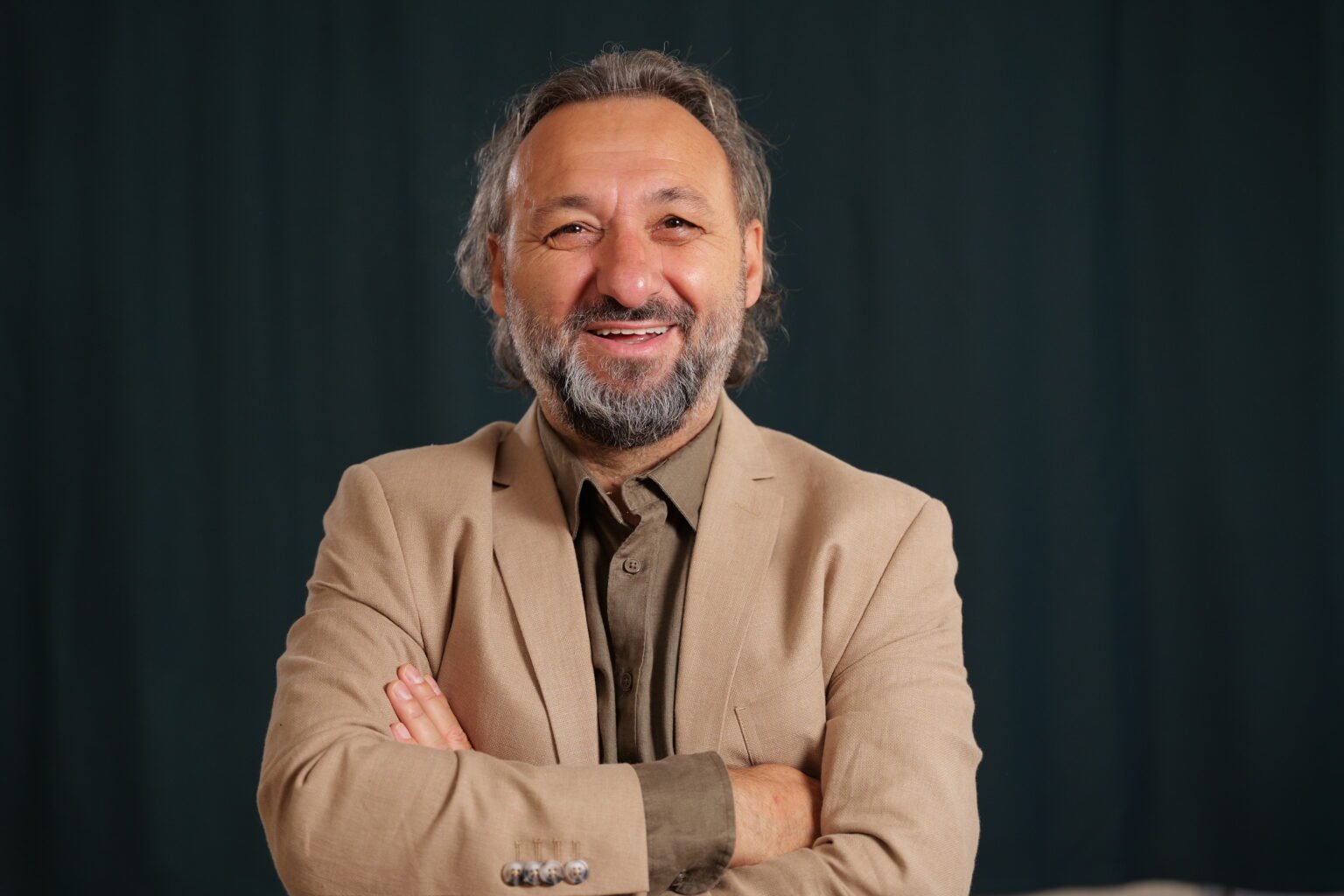
The author is a director and professor at Europa Prima University.
Jani Bojadzi