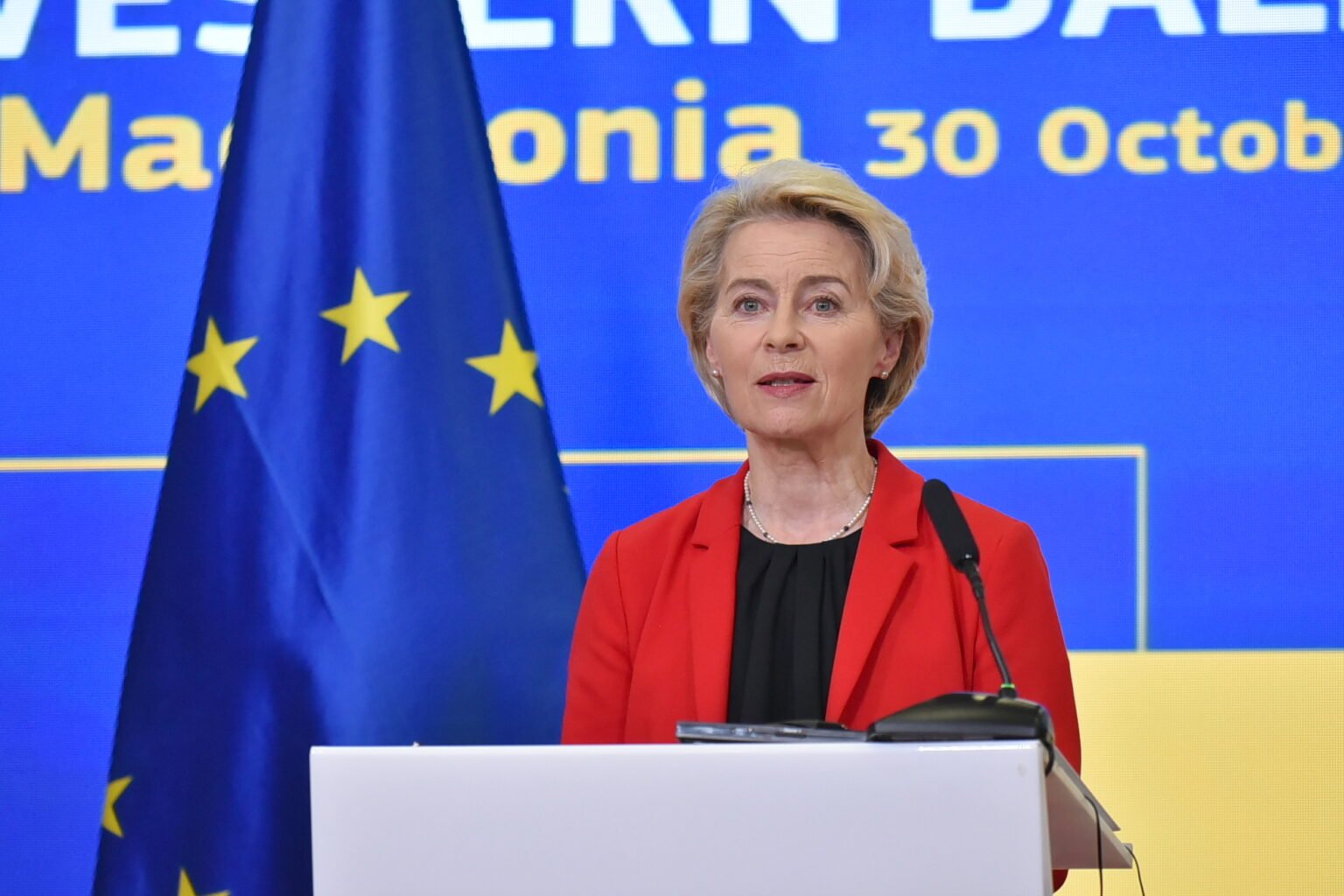
SECRET MESSAGES, INVESTIGATIONS AND MANY GROUNDS OF SUSPICION TOWARDS THE EUROPEAN COMMISSION
- Has Ursula von der Leyen turned EU transparency into her biggest weakness during her presidency? Another, new case that opens up the old dilemmas of unprincipled EU officials in Brussels
The President of the European Commission, Ursula von der Leyen, has again found herself under the scrutiny of the European institutions, this time due to suspicions that the European Commission (EC) “…unreasonably restricted the public from gaining insight into the communications she conducted with Ukrainian President Volodymyr Zelensky and several European statesmen”…
Namely, in this regard, the European Ombudsman Teresa Anginho opened a formal investigation to determine whether the European Commission violated the rules of public access to documents, after refusing to publish the messages exchanged in a private group chat.
According to media reports, in addition to von der Leyen and Zelensky, German Chancellor Friedrich Merz, French President Emmanuel Macron, Italian Prime Minister Giorgia Meloni and British Prime Minister Keir Starmer were also present in the group communication.
Beginning of the investigation
The procedure was initiated following a complaint by the Dutch research editorial “Foul d’ Money”, which requested an insight into the communication between European leaders. The European Commission rejected the request, reasoning that the possible publication of the content could disturb the international relations of the European Union with third countries. In her letter, Ombudsman Teresa Anginho states that she will investigate “whether the European Commission correctly applied the European rules on access to documents and whether it justifiably restricted the public.”
According to announcements, representatives of the European Commission and the Office of the Ombudsman should meet during July, and the investigation could last several months.
A string of controversial cases following Von der Leyen
This is not the first time that the president of the European Commission has found herself at the center of a debate about transparency. On the contrary, the new procedure follows a series of controversies that in the past years have raised questions about the way the European Commission conducts official communication and whether the highest officials adhere to the same standards they require from member states.
As a reminder, the most famous case is the one publicly named “Pfizergate”, which refers to the text messages exchanged between Ursula von der Leyen and the CEO of the company “Pfizer”, Albert Burla, during the negotiations on the multibillion contracts for the supply of vaccines against covid-19. When the US newspaper “New York Times” asked to see those messages, the European Commission claimed that they could not be found or that they did not constitute official documents. But the General Court of the European Union judged that the Commission did not provide a sufficiently convincing explanation for its decision and that it did not act in accordance with the rules for access to documents, inflicting a serious blow on the institution’s credibility. Although the verdict did not find von der Leyen personally guilty, it raised questions about the way in which the communications of top European officials are managed and archived.
Manipulations with several “deleted messages” of the EU-Mercosur relationship
Just weeks before the opening of the latest investigation, the European ombudsman again criticized the European Commission over a missing text message related to French President Emmanuel Macron and talks about the trade deal between the European Union and Mercosur. According to the ombudsman’s assessment, the message should not have been deleted because it was part of the official communication that must be preserved. In his recommendations, the ombudsman called on the European Commission to significantly improve the procedures for archiving official communications, including text messages sent via mobile applications.
A question of “trampled principles” of the president of the European government
All of these cases raise a broader question that has long gone beyond the fate of individual messages or electronic correspondence. In its foreign policy, the European Union constantly highlights the principles of accountability, rule of law and institutional transparency, demanding their respect from member states and candidate countries. That’s why every new dispute related to access to documents in the European Commission further reinforces the impression that the institution faces a challenge to apply the same standards to its own leadership.
There are no verdicts, but doubts remain
Ursula von der Leyen has not been found guilty of illegal conduct in any of the cases so far. However, the repetition of investigations, court proceedings and criticism from European supervisory institutions creates the impression that transparency issues are not an isolated incident, but a recurring problem. While the European Commission insists that all its decisions were made in accordance with legal exceptions allowed by European law, critics warn that the refusal to release the communications, their failure to find them or their deletion undermines confidence in the institution that is supposed to be a symbol of European accountability. The new investigation by the European Ombudsman will show whether it is a justified call to protect sensitive diplomatic communications or another case that will deepen doubts about the transparency and principled leadership of the European Commission. PR