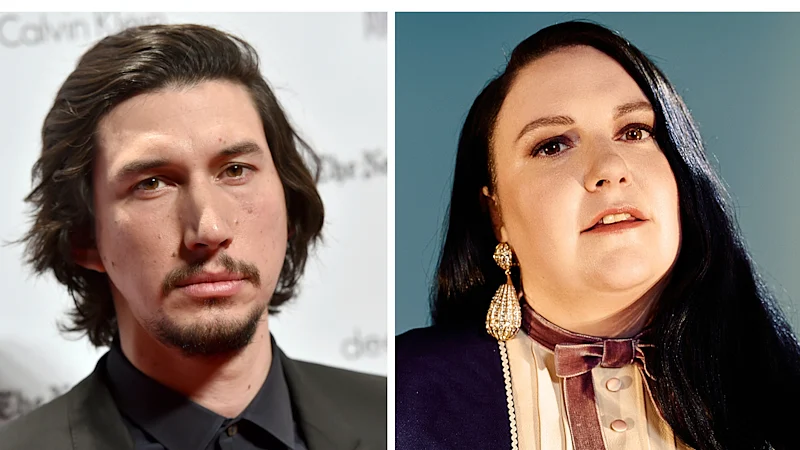
During her decade and a half of fame, 39-year-old Lena Dunham has probably been “cancelled” more times than her entire generation of actors put together. Ever since she wrote, directed and starred in HBO’s cultural juggernaut Girls, about a group of liberal twenty-somethings trying to make it in New York City during the recession, Dunham has been offending, apologising, disappearing and re-offending like a malfunctioning Jack-in-the-box. Her controversies have, for a long time, threatened to overshadow her deserved status as what her Girls clone Hannah pompously declares in the first episode “the voice of her generation”.
And her apologies to her various offences – from defending a man accused of sexual assault to being accused of sexually abusing her own sibling – also seem to wreak more havoc than the original incident. In 2016, Newsweek even published a story headlined “everything Lena Dunham apologised for in 2016”, while Dunham herself wrote an essay titled “My Apology Addiction”.
With her wryly compelling though indulgent new memoir, Famesick, Dunham attempts to make sense of, as she writes, “my combative dynamic with my own public avatar”. Using texts, emails, script notes, press clippings and memorised conversations with family, friends and collaborators – from Nora Ephron and Judd Apatow to her parents and ex-boyfriend, Jack Antonoff – she narrates her life and career in forensic detail.

Ultimately, the memoir is about chronic pain: Dunham suffers from the debilitating Ehlers-Danlos Syndrome (EDS), which affects muscles, joints, and which, misdiagnosed for much of her life, has derailed her career and relationships. And yet her fame has trailed around like a secondary sickness that has proved even more difficult to diagnose or gain sympathy for. As she writes in her prologue: “Unlike being sick, when you’re famous, nobody feels sorry for you. Fame is viewed, largely, as a condition of privilege that you’ve brought upon yourself.”
Calls Adam Driver ‘a violent, feral beast’
The former US Marine was doing bit parts in theatre before he auditioned for the role of Dunham’s oddball lover on Girls in 2011 and became Hollywood’s favourite unconventional leading man. Dunham remembers the audition vividly: “Given my demand for a Tim Riggins lookalike, when Adam Driver walked into the room – all ears and nose, gangly and pigeon-toed, lurching toward the audition chair like a reanimated corpse in a silent film – I was … confused. I tried to shake his hand, and he only grunted.”
She goes on to describe Driver as “something feral … half-man, half-beast”, claiming that when the script called for a hug, he “bit my shoulder instead”. He was cast immediately, but was difficult to work with. When Dunham tried to plan a birthday surprise, with a cake and candles, Driver “exited through a back door” and Dunham later received a “stern” bit of advice from his agent: “Never try and surprise him again.” When Dunham first showed him the Girls pilot, he got up and left “slamming the door behind him” and didn’t answer her calls for the next three weeks. She says he once punched a hole through his trailer wall because he hated his new haircut.
When it came to sex scenes, Dunham recalls that Driver was disturbingly unpredictable. These were the days before intimacy co-ordinators, says Dunham, but she still wanted to ensure there was a “safe” environment. Yet her “careful blocking went out of the window” as Driver “hurled me this way and that”. She writes: “Part of me was afraid that when I turned around, I would find I was suddenly in a full-penetration 1970s porno. But after a few mimed thrusts, I called cut.”
The reaction on set was “delighted, aghast, confused, and thrilled by seeing something on screen that felt uncharted”. And so Dunham made a “silent agreement” with Driver, in which “he trusted me to write scenes that weren’t gratuitous” and she trusted him “to try things, knowing that certain lines wouldn’t be crossed and others would be, but for the sake of the work”.

She alleges that a certain line was crossed, however, when Driver threw a chair at Dunham while practising lines in her trailer ahead of season one. Dunham, at the start of her physical unravelling from undiagnosed endometriosis which included symptoms of extreme anxiety and dissociation, had drawn a mind-blank.
She knew her lines, she writes, “but when I opened my mouth, all that came out was a stammer – until finally, Adam screamed, ‘F—ING SAY SOMETHING’ and hurled a chair at the wall next to me. ‘WAKE THE F— UP,’ he told me. ‘I’M SICK OF WATCHING YOU JUST STARE.’ Dunham says she “didn’t tell anyone” about the alleged incident because she was used to violence from the man who had inspired Driver’s Girls character.
That former partner had punched her in the clavicle, slapped her around the face, gagged her with her own tights and run a serrated blade across her leg. She writes: “I didn’t know it yet, but what I wanted was to be degraded, humiliated, punished just for the desire to be wanted.”
When Driver wrapped his final scene for Girls, at the end of season six in 2016, he told her “I hope you know I’ll always love you.” Then, writes Dunham, “I never heard from him again.”
Admits to cheating on Antonoff
In Famesick, Dunham recounts how she met her boyfriend Jack Antonoff – super-producer to Taylor Swift and now husband to Margaret Qualley – in 2012, after having been introduced by his sister Rachel, a fashion designer. On their first date, Dunham writes, “he told me he’d watched the first episode of Girls. ‘You’re like a modern Woody Allen, which is the nicest thing I can say to a person’.” They were together for six years, living together, with plans to get married and have children.
But, Dunham says, he became impatient with her chronic pain, which seemed to resist every diagnosis and ruined everything from their intimacy to holidays. Two weeks after her hysterectomy, they had the “worst fight” of their relationship when Dunham tried to tell him about her increasing reliance on pain medication.

His response, she writes, “was to go to the bathroom and angrily flush all my pills down the toilet, which necessitated a call to the doctor and a late-night trip to the pharmacy to get more so that I wouldn’t go into withdrawal – from any one of the drugs – overnight”. She then details how “he spoke to me in ways in which I had never been spoken to”, prompting such a desire to “to be wanted” that she texted an old school friend to meet her. They slept together that evening.
Dunham, describing herself as “an adulteress”, reasons that Antonoff may have also strayed: “I wasn’t paying attention, but the internet sure was.” She reveals, for instance, that she had once been sent an in-depth PowerPoint by someone on the internet convinced he was having an affair – a PowerPoint “so convincing they had me rethinking events that I myself had been present for”. Though Dunham doesn’t specify, some Googling reveals that said 29-page PowerPoint, which remains publicly accessible online, speculated about Antonoff and musician Lorde. (Both Antonoff and Lorde denied the rumours, with Antonoff saying that he resented the “dumb” gossip.)
‘Doesn’t remember’ writing her defence of Murray Miller
In November 2017, Dunham published a joint statement with her Girls co-showrunner and writer Jenni Konner, defending Girls actor and producer Murray Miller from an allegation of sexual assault. Actor Aurora Perrineau alleged that Miller assaulted her in 2012 when she was 17, which Miller denied as “outrageous”, and for which he was never charged because of the expiry of the statute of limitations and “inconsistencies and the delay in reporting”. Dunham and Konner’s statement described Perrineau’s allegation as part of “the three per cent of assault cases that are misreported every year”.
The backlash against Dunham, who had until then been celebrated as a feminist figure for her writing on Girls, and had, just the month prior, written an op-ed in The New York Times titled “Harvey Weinstein and the silence of men”, was swift and explosive. Plenty also pointed out that Dunham herself had asked to be believed when she wrote of her own experience of sexual assault in her 2014 memoir Not that Kind of Girl. Dunham’s old Tweets were excavated, including the one that read: “Things women do lie about: what they ate for lunch. Things women don’t lie about: rape.”
A few months later, Dunham wrote a full-page apology in The Hollywood Reporter, titled “My Apology to Aurora”. She revealed that she and Konner “didn’t have the ‘insider information’” they’d claimed in their statement, and instead had reacted out of “blind faith”. The apology – which blamed the fact Dunham had “internalised the dominant male agenda” and went on to list all the times Dunham herself had been sexually violated – was in turn criticised for being tone-deaf.

In Famesick, Dunham admits this to be the “one thing in my career, in my life, about which I felt – feel, still – genuine shame”. She tries to explain things from a different angle: amnesia. She was recovering from a total hysterectomy and had spent days high on drugs before writing the statement that, she says, “I don’t remember writing”. Receiving texts in response to her and Konner’s statement, she says, was like “waking from a dream back into life”.
In the aftermath, Dunham writes that “I did not decide to kill myself, but I did think it was time to die. That distinction may not make sense to everyone, but it will make sense to a lot of people. I was not going to take the decisive action to end my life. But I was going to cease fighting to survive by avoiding food, by drinking almost no water, through the carelessness of mixing pills and by acting – for all intents and purposes – like I was dead already.”
Throughout Famesick, Konner is presented as domineering, aggressive and emotionally abusive. Eventually, after a co-therapy session that Konner walks out of within the first 10 minutes, Dunham announces that their friendship has reached the end of the road. The reason this memoir took seven years, writes Dunham, is that Konner’s “one request” was that she didn’t write about her immediately. “I know how you work, and that you will. But please, just not right away.”
Calls claims she sexually assaulted sibling ‘wilful misperception’
Another storm from her first memoir was prompted by the admission that, aged seven, “curiosity got the best” of her and she “opened” her then-one-year-old sister’s vagina to see if it was similar to hers. Later, she recalls bribing her sister with sweets for kisses, touching herself while the duo shared a bed, and comparing herself to a “sexual predator”. Ben Shapiro’s right-wing publication Truth Revolt then ran the headline: “Lena Dunham Describes Sexually Abusing Her Little Sister.” Crucially, the article included a typo, which changed Dunham’s age from seven to 17, adding a completely different hue to the story.
At the time, Dunham wrote a statement in Time Magazine apologising for minimising sexual abuse with the flippant use of the words “sexual predator” and expressing “dismay” for how some readers had interpreted the memoir.
In Famesick, she is notably less conciliatory. “I was already a right-wing punching bag for my work with Planned Parenthood and the Obama campaign,” she writes. “But if I ever wanted a lesson in the way that a wilful misperception can escalate and become a fun-house mirror for people’s sense of their own righteousness, for their unbridled rage, this was it.”
She argues that children are “inherently innocent, and yet their imaginations are endless and deranged”, and explains that writing about her then-sister’s anatomy was prompted by the fact that they had always presented as male as very young (Cyrus later wrote about his gender reassignment, becoming Lena’s brother, in 2019).
“What I was trying to capture when I wrote about him was what a mystery he had always been to me. It was ironic that as a six-year-old, I’d wondered if he had a vagina, when what I didn’t understand for the entirety of our shared childhood was that he wasn’t my sister.”
Out of all the apologies she has ever written, it is her extensive apology to Cyrus across multiple chapters in Famesick, for how his “whole life had been defined by the gelatinous way in which I took up space”, that feels the most genuine.
Scott Rudin threatened her with a lawsuit
Dunham’s ascent to fame started with the release of her short film Tiny Furniture, inspired by her abusive boyfriend, which won the Narrative Jury prize at the South by South West film festival, and prompted a flurry of job offers from Hollywood. Among them was producer Scott Rudin, who wanted her to adapt a young adult novel about teens falling in love at Christmas. But the production of Girls proved all-consuming, and Dunham, who had not yet signed a contract with Rudin, quit.

“Within minutes, I had received a torrent of emails I can still quote from memory but won’t, because I don’t want you to be as traumatised as I was,” she writes. She claims that Rudin averaged around 70 emails to Dunham a day, and threatened to sue her. Such was her anxiety that she accidentally exploded her eardrum with a long wooden Q-tip, prompting blood to pour from her ear and mouth.
The one to soothe her, writes Dunham, was her friend Nora Ephron, who had invited Dunham to lunch after watching Tiny Furniture and telling her she “laughed out loud – which is rare”. Over dessert, Dunham told her about Rudin, wondering how he had presented as “so charming at the beginning”. Ephron, who also helped Dunham redecorate her entire apartment, laughed and replied: “Honey, if Scott was a straight man, we’d all have f—ed him and then wondered why we’d done it.”
Driver, Rudin and Konner do not appear to have responded to the claims in Dunham’s memoir.
Says she was told to ‘gain weight’ for Girls
Dunham claims that she had no intention of playing the character most inspired by her own life, Hannah, until her mentor and Girls executive producer Judd Apatow suggested she should. But after the camera test, Dunham claims that Konner pulled her aside to say that there was an issue. “I think the issue is that you’re too thin. And the thing is, it’s not funny if you’re too thin, it’s just Sex and the City all over again. What made your movie special was that you weren’t that. If we lose it, we don’t have a clear voice.”
Dunham says that, for the rest of the summer, “I ate like my job depended on it. Cupcakes. Cheeseburgers. Bagels, peanut butter and bananas, dozens of oatmeal cookies in my bed.” Interestingly, Dunham later reveals that despite regular accusations of fat-shaming, Anna Wintour – who chose Dunham for the cover of Vogue in 2014 – was among the nicest people to work with. “By the way, this is the time to note that Anna is, let the record show, lovely and very funny and has given me less grief than all the chubby women in Hollywood combined.”
Famesick is out in Australia on April 28.
The Telegraph, London
The Booklist is a weekly newsletter for book lovers from Jason Steger. Get it delivered every Friday.