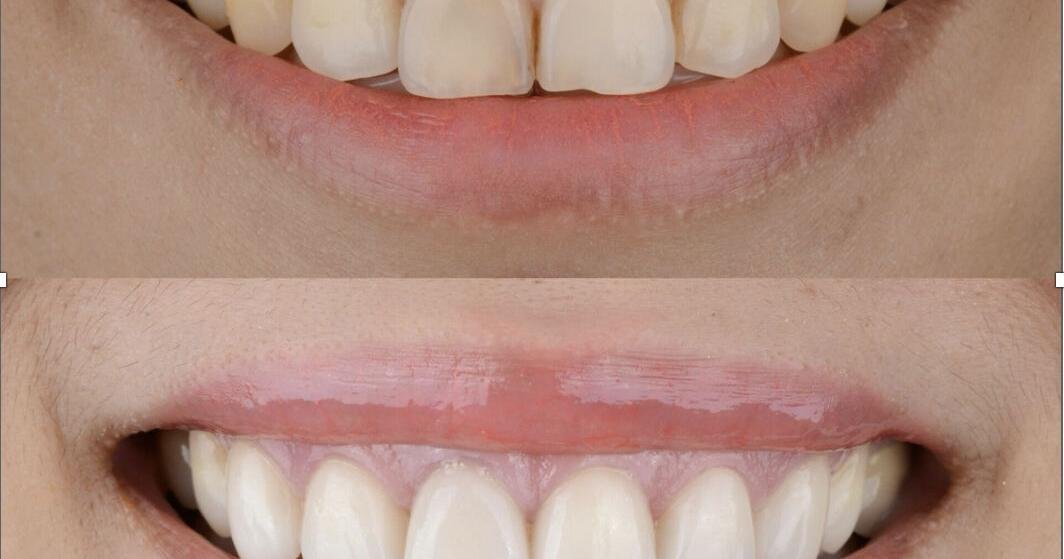
A beautiful smile is often seen as a sign of health, confidence, and vitality. But for many individuals, an excessive display of gum tissue — commonly called a “gummy smile” — can be a source of concern. What many do not realize is that this condition is often linked to a seemingly harmless habit: mouth breathing.
Mouth breathing occurs when a person habitually breathes through the mouth instead of the nose. While it may seem insignificant, especially during sleep, chronic mouth breathing can have profound effects on facial development, oral health, and esthetics.
The primary cause of mouth breathing is airway obstruction. This may result from enlarged adenoids or tonsils, chronic nasal congestion, allergies, a deviated nasal septum, or sinus issues. In children, prolonged mouth breathing can influence how the face and jaws develop. Instead of growing forward and outward, the upper jaw (maxilla) may grow downward and narrow, creating what is often referred to as “long face syndrome.”
A gummy smile is typically defined as showing more than three-to-four millimeters of gum tissue when smiling. Mouth breathing contributes to this in several ways. First, it alters muscle function — particularly the lips and cheeks — leading to an inability to maintain a proper lip seal. Over time, this imbalance can cause excessive vertical growth of the upper jaw. As a result, more gum tissue becomes visible when smiling.
Additionally, mouth breathing often leads to dry mouth, which affects the health of the gums. Saliva plays a critical role in protecting oral tissues. Without adequate moisture, inflammation, gingivitis, and even periodontal disease can develop, further exaggerating the appearance of the gums.
Mouth breathing is frequently associated with snoring, poor sleep quality, and even sleep-disordered breathing such as obstructive sleep apnea. In children, it may contribute to poor concentration, behavioral issues, and reduced academic performance. Dentally, it is linked to malocclusion (misaligned teeth), narrow dental arches, and increased risk of cavities and gum disease.
The first step in treatment is identifying and addressing the underlying cause. This may involve referral to an ear, nose, and throat (ENT) specialist to evaluate airway obstruction. Allergies may need medical management, and structural issues like a deviated septum may require surgical correction.
From a dental perspective, early intervention is key — especially in children. Orthodontic treatments such as palatal expansion can help widen the upper jaw and improve airflow.
For adults concerned about a gummy smile, several cosmetic and surgical options exist. These include laser gum contouring (gingivectomy), Botox to relax the upper lip, or orthognathic surgery in more severe skeletal cases.
Prevention begins with awareness. Parents should observe their children for signs of mouth breathing, such as sleeping with the mouth open, snoring, or dry lips. Encouraging nasal breathing, maintaining good nasal hygiene, and seeking early professional evaluation can make a significant difference.
Ultimately, the mouth is not just for eating and speaking — it plays a vital role in breathing and overall health. If your smile shows more gum than you would like, it may not just be cosmetic, it could be a sign that your airway and breathing patterns need attention. A healthy smile begins with healthy breathing.
- Dr. Kendal V. O. Major is the founder and CEO of Center for Specialized Dentistry, which is a comprehensive family dental practice operating in Nassau and Freeport. He is the first Bahamian specialist in gum diseases and dental implants since 1989. He is also a certified Fastbraces provider. His practice is located at 89 Collins Avenue, Nassau at (242)325-5165 or kmajor@csddentistry.com.