Closure exists on paper but not in practice.
The Pan American University (UPAM) continues to operate, despite the fact that it has been more than a month and a half Ministry of Education (Meduca) ordered the cancellation of its operating permit due to “serious and persistent offenses.”
The scenario not only points to possible contempt, but also exposes weaknesses in the supervision of the university system.
On the electronic portal of the Technical Commission for Academic Development (CTDA) There is no resolution, decree or administrative act that suspends or reverses the decision adopted in Executive Decree No. 5 of 2026 of Meduca, which ordered UPAM to suspend operations.
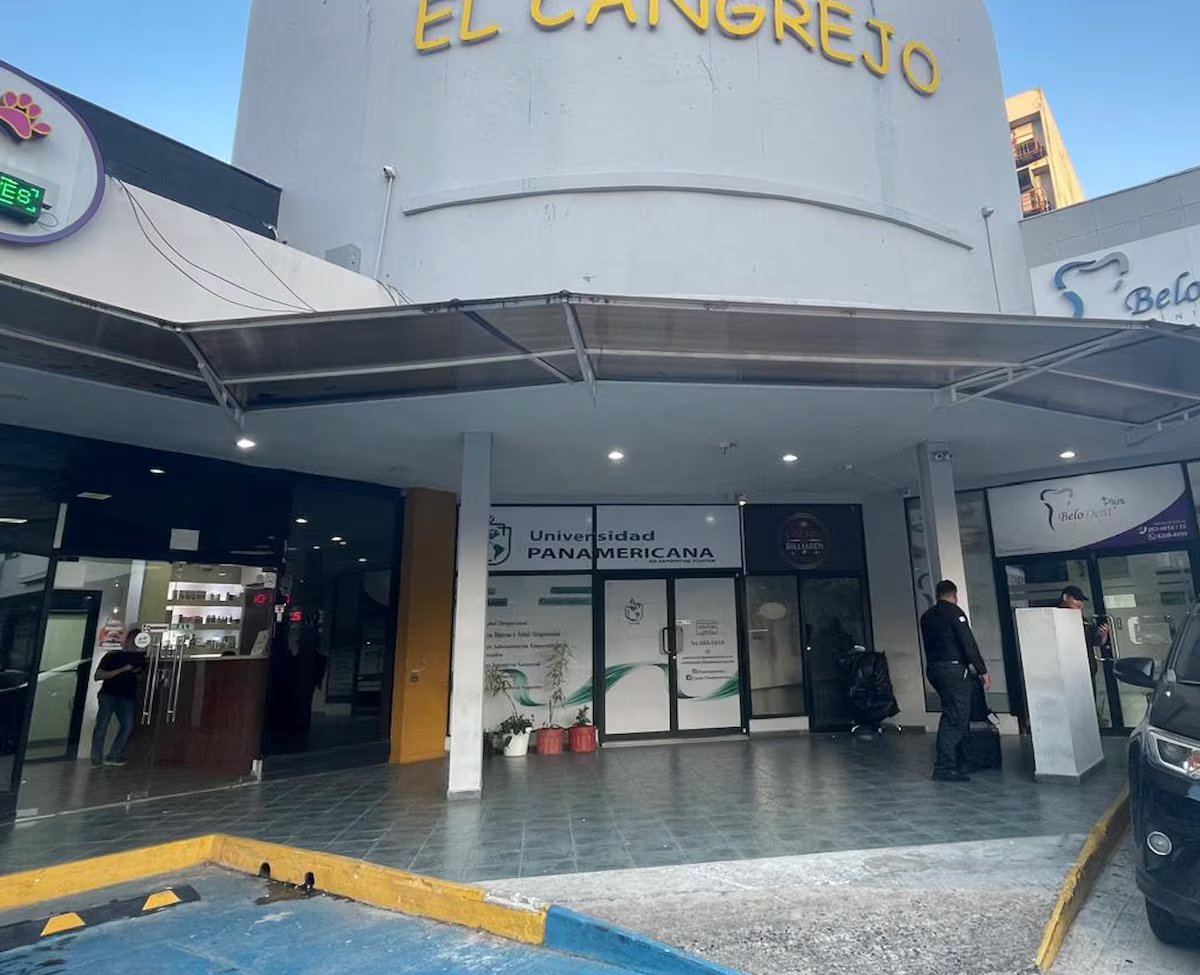
However, a visit by a journalistic team from The Press to the educational center confirmed that it keeps its doors open, without there being – at least visibly in its facilities – documentation that supports its operational continuity.

Added to this is that, on the website of the National Council for University Evaluation and Accreditation of Panama (Coneaupa)UPAM appears as an institution “without operations, after the denial of accreditation in the years 2013, 2021 and 2024.”

Executive Decree No. 5, published in the Official Gazette on February 26, which cancels the operation – signed by the president José Raúl Mulino and the minister Lucy Molinar—, also orders UPAM to deliver its “contingency plan and all academic and administrative documentation under inventory” to the Special Academic Secretariat of the CTDA.
An attempt was made to find out why this provision – in force since its promulgation – has not been complied with and whether the UPAM obtained any extension to continue operating. Your rector, Damaris Candanedowho was in the center when he arrived The Press Last Thursday, he did not agree to an interview. He promised to offer statements that same day, but at the time of writing this note there was no response.
The problem of controls and supervision of private universities, such as UPAM, came to light last Wednesday. National Assemblywhen the technical secretary of the CTDA, Myrna McLaughlinappeared before the legislative commission on Education, Culture and Sports.
There he answered a questionnaire focused on the regulation of higher education, including the issuance of resolutions, existing controls and possible gaps in supervision.
The proponent of the summons, the deputy of the Other Path Movement, José Pérez Barboniassured that the intervention left more doubts than answers about inconsistencies in the application of criteria and weaknesses in inspection.
A closure on paper
During his appearance, McLaughlin defended that the CTDA acted in accordance with the law when it issued, in 2021, a favorable report—a prerequisite for accreditation—in favor of UPAM. However, this was later revoked when “erroneous information” provided by the university was detected, which prevented it from complying with one of the key steps before Coneaupa.
Although the regulations require having an approved headquarters and at least four current courses to begin the accreditation process, UPAM received a favorable report in 2021 with only one active course, according to information provided by McLaughlin. The CTDA maintains that there was a functioning headquarters, although its formal approval took place years later, in May 2025.
Furthermore, official records show that the CTDA continued to approve courses for UPAM until May 23, 2025, even amid questions about its infrastructure and administrative status. According to the entity, these processes were already under evaluation before previous sanctions and were reactivated after the lifting of a temporary suspension.
Diplomas under the magnifying glass
Another critical point is the validity of the titles issued. The official indicated that the diplomas must correspond to courses approved in operational locations, at least until the issuance of the closure decree in February 2026.
However, the legal framework establishes as a serious offense teaching programs in unauthorized venues, which leaves open the question about the legality of some titles issued before the closure.
A repeating pattern
The UPAM case would not be isolated.
During the session in the legislative commission, inconsistencies were also exposed in other educational centers, such as the American University, where courses were approved—even in sensitive areas such as health sciences—in locations under observation.
Another file analyzed was that of the Universidad Vanguardista Publies Educa (UVPE) project, which obtained a favorable report despite deficiencies in infrastructure and outdated academic programs. However, the CTDA defended its decision, arguing that it was a university project and that it met the minimum requirements of the law.
Extensions and gaps in control
An additional element exposed at the hearing was the use of resolutions to allow courses that are under evaluation to be taught, extending or renewing temporary permits.
These extensions have been implemented since 2018, when the CTDA authorized extensions for academic programs in the process of being updated, McLaughlin highlighted.

Between 2024 and 2025, 441 career designs under evaluation were registered, of which 154 received extension of validity. Of these, 45.5% have a favorable resolution, while 48.7% remain pending a report and 5.8% do not even have an evaluation.
These data reflect a high proportion of programs that continue to operate under extensions, without a final decision.
The CTDA’s explanations are supported by technical interpretations of Law 52 of 2015 and Executive Decree 539 of 2018.
Meanwhile, hundreds of students remain in academic limbo, attending classes at an institution whose legal status remains unclear publicly.