Christian leaders are pushing back at the Free National Movement’s (FNM) pledge to introduce a national lottery if the party wins the May 12 general election.
On Sunday night, as the FNM unveiled its manifesto, party leader Michael Pintard announced plans to implement a lottery to generate funding to support the advancement of education, sports, youth development, social intervention and culture.
He said the lottery would offer prizes worth hundreds of thousands and even millions of dollars, and the proceeds would not go into the Consolidated Fund, but instead into a legal structure to be governed by a board.
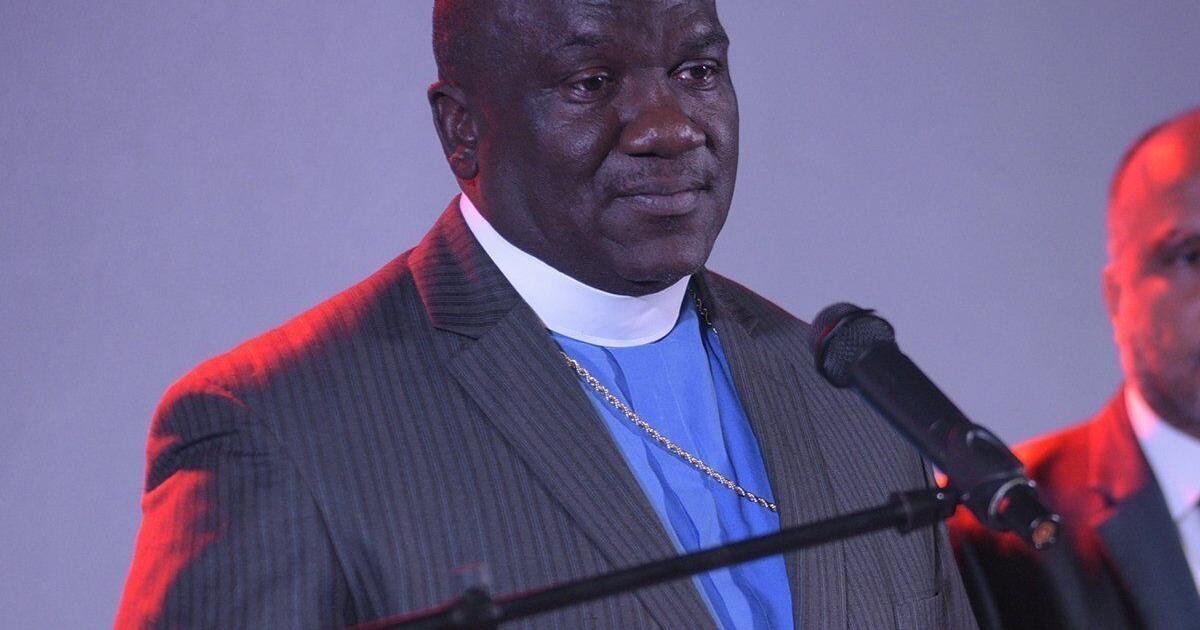
Speaking to The Nassau Guardian yesterday, President of the Bahamas Christian Council Bishop Delton Fernander said the church’s anti-gambling position is unchanged.
“It’s on the backs of the poor that the gaming industry makes its money,” Fernander said.
“Why would you want to further take advantage of the poor to say help us to become better in our education, [and] athletics?
“We’ve got to find a better way in governments to come up with better ideas for the country’s development.”
He said, “I’m saying no to the whole lottery idea.”
Talks surrounding the implementation of a national lottery are longstanding.
In 2013, Bahamians overwhelmingly voted in a referendum against the regularization and taxation of web shops and the establishment of a national lottery.
However, the Christie administration ignored the will of the people and passed legislation to legalize web shops.
Fernander lamented the decision.
“Not only did Christie implement it, but they went ahead and privatized it,” Fernander said.
In a statement yesterday, President of The Bahamas College of Bishops Bishop Walter Hanchell vehemently opposed the FNM’s plan.
“Members of the Bahamas College of Bishops and the wider Christian community do not support the Free National Movement’s plans to establish a national lottery in The Bahamas,” Hanchell said.
“We opposed and voted against the legalization of the number houses and the lottery during the gambling referendum a few years ago, which the ‘NO’ vote won.
“Yet, former prime minister, Perry Christie, went ahead and legalized it, contrary to the wishes of the Bahamian people, after saying that he had no horse in the race.”
Hanchell said consequences the church warned would come to pass following the move have materialized.
He said the poor and the middle class are the prime targets of gambling, as he pointed out the high number of web shops now spread across New Providence, especially the inner city.
“Gambling addicts have increased while people continue to lose their mortgage, rent and food money every day to the number bosses,” Hanchell said.
“This is all wrong. Presently, multiple number houses with many branches are spread all over New Providence and throughout the Family Islands and they are siphoning millions of dollars every month from those who can ill afford to lose the little that they have.”
He continued, “We have become a nation of gambling addicts, many of whom end up in poverty and not able to take care of their children and financial responsibilities.”
Hanchell encouraged political parties to explore other avenues to increase cultural development.
“We do not support any form of gambling,” he said.
“[We] encourage whatever political party that wins the upcoming general election and forms the next government, to focus on training, empowerment of the masses, small business development and more intentional resources made available to care for the poor, elderly, mentally challenged, homeless and the underprivileged in The Bahamas.”
Pintard said the lottery could coexist with private operators, and pointed to other countries that have been successful in carrying out regulated public lotteries.
He listed the Dominican Republic, Curacao, Saint Martin and Ghana as examples.
“We will follow a similar model,” Pintard said.
“And we will do so responsibly, transparently, and with the public interest always at the center of our considerations.”