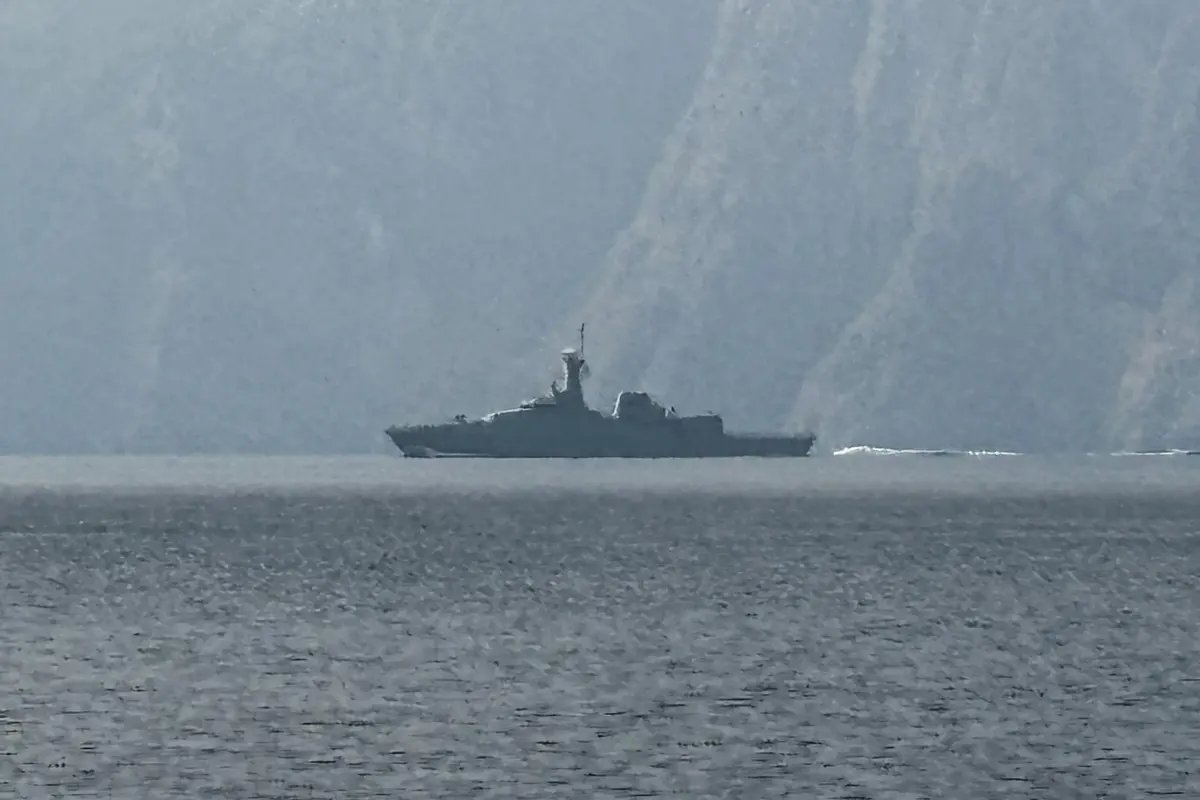
Donald Trump’s government activated this Monday, April 13 the blockade of Iran’s ports in the strategic Strait of Hormuzin a decision that raises tension in the Middle East and increases the risk of a military escalation in the region.
The measure came into force at 10:00 local time (14:00 GMT) and establishes restrictions on ships entering or leaving Iranian ports, following the failure of negotiations held in Pakistan to stop the conflict.
Shortly after its entry into force, Trump issued a new warning: he threatened to “delete immediately” to Iranian ships that try to defy the blockadein a sign of hardening Washington’s stance.
According to the UK Maritime Trade Operations Center (UKMTO), the restrictions affect Iranian ports, oil terminals and coastal areas in the Persian Gulf, Gulf of Oman and Arabian Sea.
However, transit through the Strait of Hormuz to non-Iranian destinations continues to be allowed, although under surveillance and possible inspections.
In addition, a limited grace period was established for neutral ships in Iranian ports, while British authorities recommended sailors take extreme precautions in the face of the growing military presence in the area.
Iran reacts immediately
The Armed Forces described the blockade as an act “illegal” and of “piracy”and warned that security in Gulf ports “is for everyone or no one.”
Iranian military spokesman Ebrahim Zolfaqari said that if the security of Iranian ports is threatened, no port in the Persian Gulf or Gulf of Oman will be safe, raising the tone of warnings of retaliation.
The announcement has also generated international criticism
The Minister of Defense of Spain, Margarita Robles, described the measure as “meaningless”while China asked to restore free navigation and avoid escalation.
France and the United Kingdom, for their part, are preparing diplomatic initiatives to guarantee security in the area.
In parallel, Russia has offered to guard Iranian enriched uranium as part of an eventual agreement, in an attempt to open a new diplomatic path.
On another front, fighting continues in Lebanon. The Hezbollah group claimed to have launched rockets into Israeli territory, while attacks in the south of the country left new victims. Delegations from Lebanon and Israel are scheduled to meet in Washington to try to reduce tensions.
The scenario remains highly volatile, with growing fears that the blockade marks the beginning of a broader phase of the conflict in the Middle East.