
He Colombian energy system faces a scenario of greater pressure in the face of a growing deficit in energy supply and the combination of a possible El Niño phenomenon. The alert intensifies after the United States National Oceanic and Atmospheric Administration (NOAA) confirmed that current conditions are neutral, but with high probability of transition to El Niño in the coming months.
READ ALSO

According to the latest report from the Climate Prediction Centerfrom last April 9, the ENSO-neutral conditions They would remain between April and June 2026 with a probability of 80%. However, between May and July increase the chances of El Niño developing, with 61%and that this extends until the end of the year. This behavior coincides with models that warn of a progressive increase in the intensity of the phenomenon towards the second semester.
Added to these projections is the analysis of Sergio Cabralesprofessor at the University of Los Andes and expert in mining and energy issueswho warns that the probability of occurrence of the phenomenon is 92%while the possibility of reaching a strong or very strong intensity reaches 51%. As he explained, the subsurface warming of the ocean is already showing signs of strengthening, a condition that is usually anticipated intense El Niño events.
He climate outlook crosses signs weakening of the electrical system capacity. The most recent XM reportpresented to the National Operation Center (CNO) in January 2026, shows a deterioration in energy balances compared to what is projected in 2025.
The El Niño phenomenon would have effects on inflation. Photo:Archive El Tiempo/iStock
Energy deficit
XM updated its projections and raised the energy deficit by 2026 at 2.7%compared to the 1.6% previously estimated. For 2027, the shortfall is 4.4% and for 2028 at 2.5%, while for 2029 a deficit of 4.8% is projected. These figures reflect a reduction in firm energy availabilitywhich corresponds to the maximum generation capacity in critical conditions like droughts.
The decrease in this capacity is associated, in part, with a 2.5% drop in Firm Energy for Reliability Charge (ENFICC)explained mainly by variations in the performance of thermal plants. This setting means that, in low hydrology scenarios, the system would have less support to meet the demand.
In a context of drought associated with El Niñothe system could face a deficit close to 272 megawatts of firm powerequivalent to the consumption of a city like Bucaramanga. This scenario becomes more relevant if we take into account that near the 62% of electricity generation in Colombia depends on hydroelectric sources.
The Reduction in rainfall directly impacts reservoir levelswhich limits water generation and forces a greater participation of thermal plantswhich operate with gas, coal or liquid fuels.
Thermal Photo:Andeg
He El Niño phenomenon is characterized by the sustained increase in Pacific Ocean temperature. As explained by Natalia Gutiérrez, president of the Colombian Association of Electric Power Generators, Acolgen, it occurs when that temperature exceeds its average by at least 0.5 degrees Celsius for three consecutive months, which alters the behavior of the climate.
“In it electrical sectorthe El Niño Phenomenon translates into lower levels in reservoirs for the rain reduction“, he noted. This condition directly impacts the water generationwhich is the basis of Colombian energy system.
Gutiérrez explained that the country has achieved face at least eight El Niño episodes in more than three decades, in part thanks to the electrical system design after the blackout of 1992-1993. This model allows, when hydroelectric generation decreases, increase the participation of thermal plantswhich operate with natural gas and liquid fuels.
“We have a system in which, when the hydroelectric plants generate less energyenter the thermal energy to support and it guarantees the provision of the service“, he indicated. However, this balance depends on the fuel availability and the operational capacity of the plants.
In drought scenariosthe hydroelectric plants must reduce their generation for preserve reservoir levelswhile the thermals assume a greater load. This process requires a advance water management and the system as a whole.
This is what the San Rafael reservoir looked like a year ago. Photo:SERGIO ACERO YATE / EL TIEMPO
To the climate pressure they add up delays in the entry of new generation projects. By 2025, the incorporation of 3,517 megawattsbut only 380 megawatts came into operationequivalent to 10.8% of what was planned.
Furthermore, the system faced the output of 647 megawatts from solar plants that did not pass technical tests, which generated a net decrease of 372 megawatts in total capacity. This result limited the growth of energy supply in a moment of increase in demand.
According to estimates, for In 2026, the entry of 5,304 megawatts is projectedbut at the end of 2025 less than 14% of these projects had started procedureswhile the 21% were in the testing phase. Of that total, it is estimated that 1,834 megawatts have a high probability to enter into operation.
The rest of the projects face uncertaintyin line with the low execution rate observed in recent years. This lag adds to a context in which the system must respond to most demanding climatic conditions.
Climate forecast according to ECMWF predictions in August 2026. Photo:ECMWF
Cabrales warned that strong El Niño events generate simultaneous crashes in sectors such as energy and food. “These episodes are characterized by significant anomalies in the temperature of the Pacific, which intensifies the droughts, heat waves, rainfall deficits and fires”he explained.
On the energy front, this implies a reduction of water input and one greater dependence on thermal generation. In turn, this change pressures demand for natural gas and coalin a system that already faces structural restrictions on gas supply.
“Added to the structural tightness of the natural gas system in Colombia and the potential supply shortfallsincreases the risk of gas or electricity shortage”, he noted.
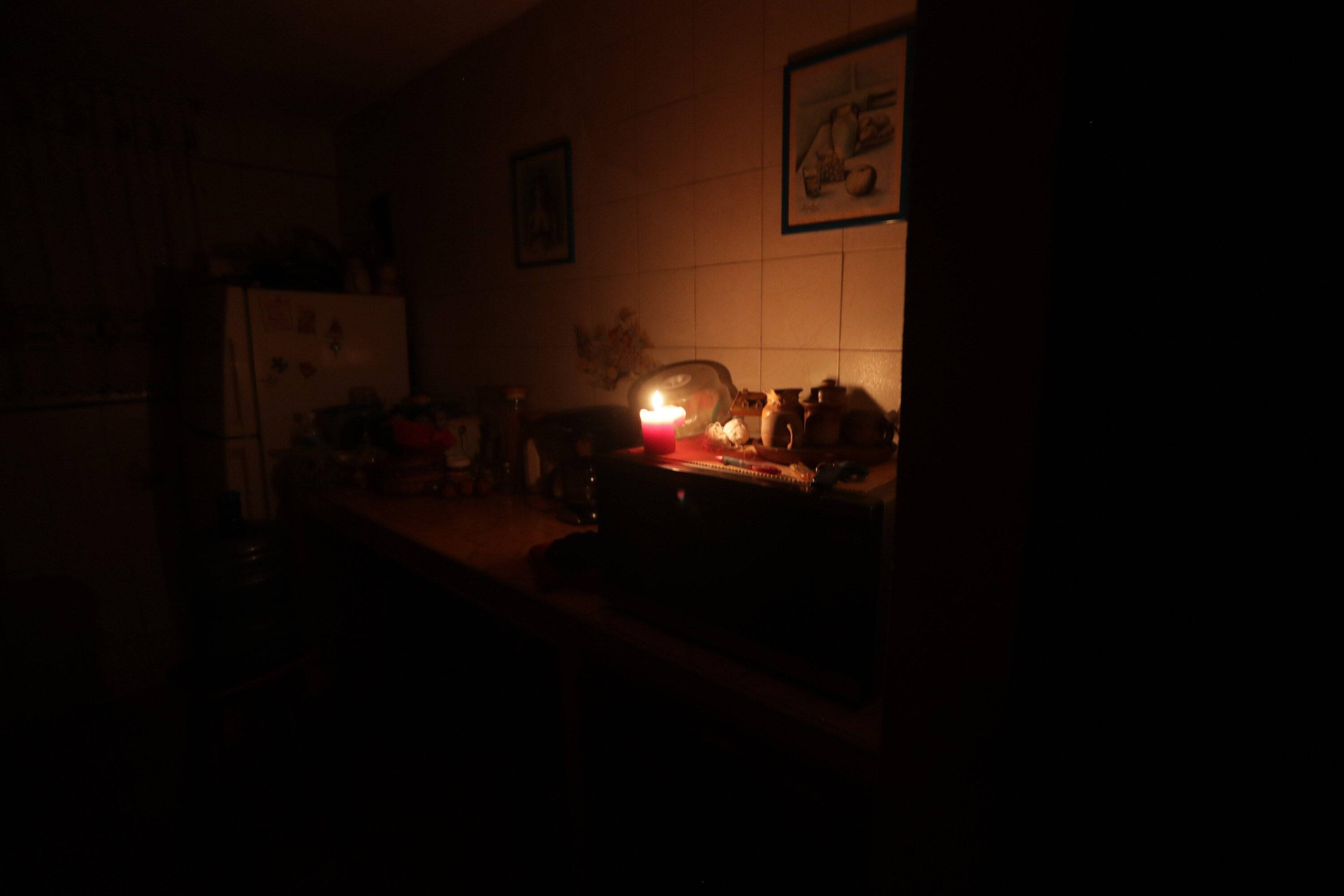
A woman cooks in her home in the dark this Friday due to a blackout, in Maracaibo (Venezuela). Photo:EFE
The analysis coincides with the XM warnings on the need to guarantee the fuel availability and flexibility to sustain the thermal generation. In the absence of these resources, the system could face difficulties in meeting demand.
In parallel, the effects of the phenomenon are also transferred to the economic front. The reduction in water supply and the impact on agricultural production can generate upward pressures on energy and food prices.
READ ALSO
READ ALSO