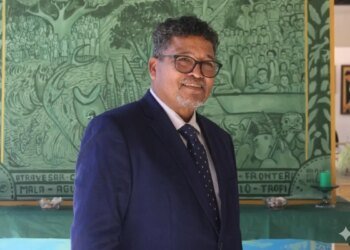
During the closing ceremony of the 14th edition of the Panama International Film Festival (IFF) 2026, the Panamanian documentary ‘Paraíso Tropical’, directed by Abner Benaim and produced by Malu Zayon, won the “Audience Award” statuette for best Copa Airlines film. Benaim received applause and ovations from the audience present at the National Theater when he received the statuette from Copa Airlines and the director of the IFF Panama, Karla Quintero.
The documentary gave something to talk about during the four days of the festival and had screenings in the City of Arts. During the opening gala, Benaim told this newspaper that his vision for the documentary was “more personal than any other project” and took from himself as director “and subject of the film as well.”
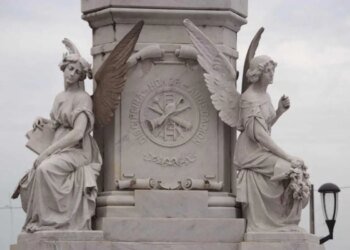
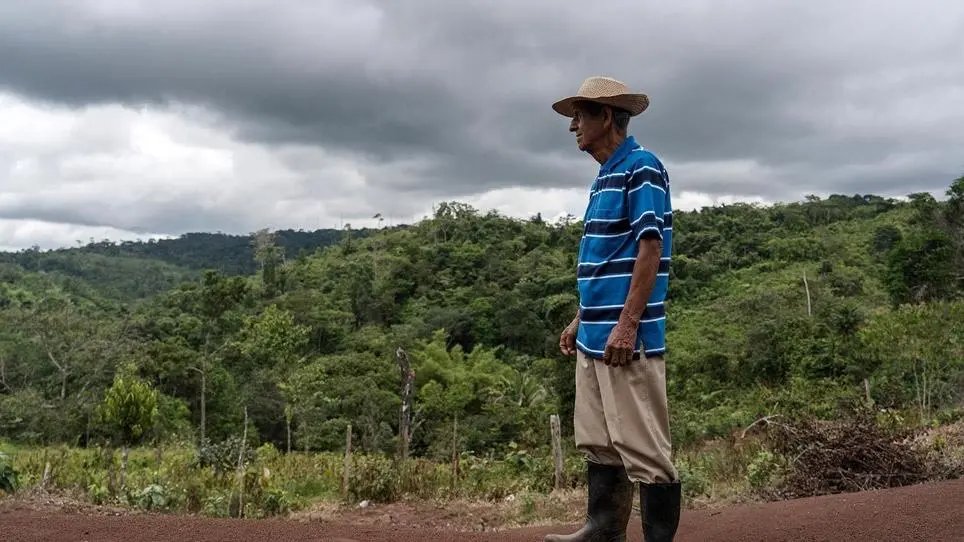
In his story, Benaim guides us through an attack in Panama in 1994 that claimed the lives of 21 passengers, 12 of whom were Jewish, in a small plane that exploded in the air and crashed in a rural area of Panama. One of his victims was his uncle Saúl. “I was the only one in the family who saw him alive for the last time,” said Benaim, “this creative documentary, beyond the investigation of an unsolved terrorist attack, is a personal project.”
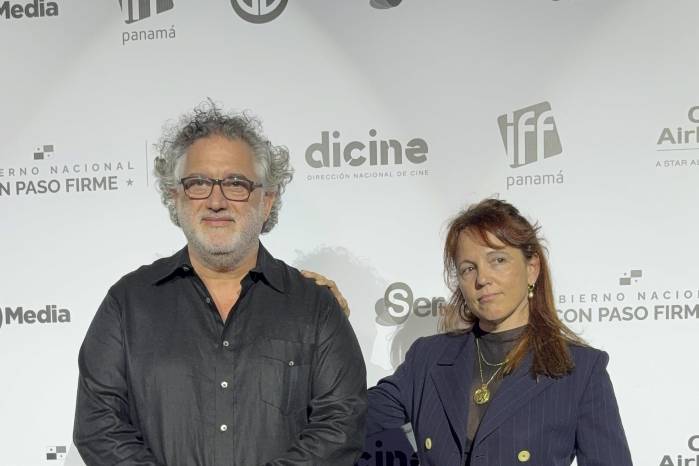
Abner won the statuette for “The Audience Award” from Copa Airlines at the National Theater.
The transformation of pain, collective memory and personal experiences are part of Benaim’s cinematographic identity, who adds ‘Paraíso Tropical’ to his catalog as his sixth feature film.
With an extensive and deep journalistic investigation as a basis for the filming of the documentary, and also having the death of his uncle as a starting point, Benaim takes us into the lives of the families who lost their loved ones in this attack and how the passage of time leaves traces in a mystery that no political administration has been able to decipher. In a publication in the Spanish newspaper El País dated July 20, 1994 – one day after the explosion – the attack on Panamanian soil was explained as a “calculated accident,” quoting the then president of Panama, Ernesto Pérez Balladares, who stated: “According to the objective information we have, it appears that it was not an accident, but rather the placing of a bomb inside the plane.”
“In my documentary I spoke with the families of the victims and I joined them in an emotional process that I have sustained all my life as a filmmaker and as a person,” he told this newspaper, “it is for an audience that not only comes expecting to see a film, but also understands the subject, being also a universal facet of loss, trauma and healing.”
The film shows testimonies from forensic experts, national political figures, and international justice agents who comment on the depth of this attack on the historical identity of Panama and how it is linked to other attempts of a similar nature in Latin America during the 1990s, being proof that it goes beyond a single person, but rather a current of thought very characteristic of the Panama of yesteryear.
Now, 30 years after the attack that marked multiple lives in the country, an Interpol alert issued by Panama led to the capture of a person of interest linked to the case in Venezuela.
The documentary by Panamanian filmmaker Abner Benaim stands like a fingerprint in national cinematography that seeks to provide answers in the way we connect with our memories, the wounds that seek healing and the collective traumas that lead us to evolve as a population and continue testing how far we would go to obtain the truth.