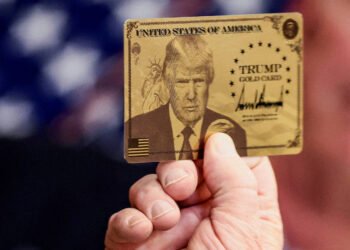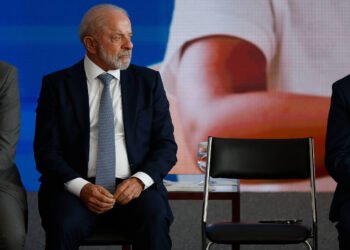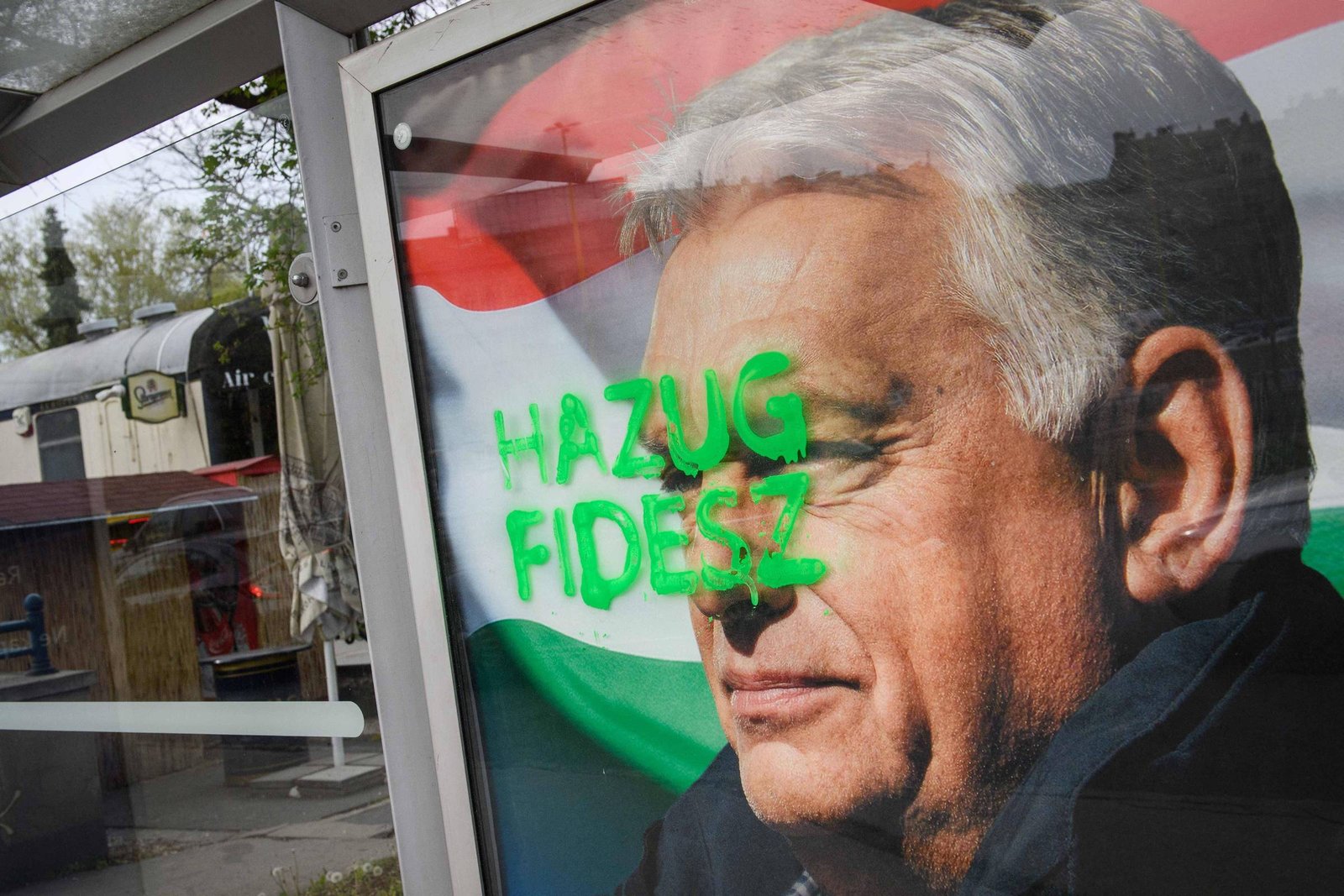
With the defeat of Prime Minister Viktor Orbán in Hungary This Sunday (12), the history of the American donald trump cold-blooded in global elections — with the exception of Latin America.
Candidates and parties aligned with Trump lost elections in Canadain Australiain Romania and in Hungary since the Republican took office in January 2025. The only candidate supported by Trump who won was the current president of PolandKarol Nawrocki, in August last year.
The counterpoint was Latin America, where politicians and parties more aligned with Trumpism won in the Argentinain Chilein Honduras and in Bolivia.
Peru, Colombia and Brazil will be the next tests of the Donroe Doctrine in the region. Peru’s elections, also held on Sunday, must advance to a second round on June 7. Vote counting is still ongoing, and conservative Keiko Fujimori leads with a narrow margin. The Colombian election, in which he is competing a left-wing candidate supported by Gustavo Petrotakes place on May 31st, and the one in Brazil, in October.
The washed-out victory of Péter Magyar’s Tisza party in Hungary it also calls into question the efficiency of Trump’s overt attempts to interfere in other countries’ elections — a hallmark of the Republican’s foreign policy.
Even with polls indicating the mediocre performance of Orbán’s party at the polls, Trump spared no effort to support his ally. The American vice president, JD Vance, was in the country five days before the election and conveyed vows of love from Trump to Orbán.
“No foreign country can interfere in Hungarian elections. This is our country,” Magyar wrote in X, asserting that Hungarian history “is not written in Washington, Moscow or Brussels.”
In Canada and Australia, candidates aligned with Trumpism were favorites, but ended up losing to centrists. The Canadian Liberal Party rebounded in the polls after Trump launched his trade war against Ottawa and threaten to annex the country. Mark Carney became Prime Minister.
In Australia, “Maga” candidate Peter Dutton was defeated, and the Labor Party won a majority.
In Romania, the centrist presidential candidate Nicusor Dan defeated, in May 2025, the candidate aligned with Trumpism, the radical George Simion, who was the favorite. Simion challenged the result in court, which rejected the appeal.
The outlier was the conservative candidate for President of Poland, Karol Nawrocki, who won the election. He was received by Trump at the White House during the campaign and as president. The then US Secretary of Homeland Security, Kristi Noem, urged Poles to vote for Nawrocki, in a speech at CPAC, the largest conservative conference in the world, in Poland.
In Latin America, the history was very positive for the Americans. In Honduras late last year, Trump openly supported the ultra-right candidate, Nasry “Tito” Asfura. The country’s former president, the leftist Xiomara Castro, even stated that there had been an “electoral coup” because of “interference by the president of the United States“.
Before the election, Trump stated that the government candidate, Rixi Moncada, was a communist and that her victory would hand over the country to the Venezuelan dictator, Nicolás Maduro, and his “narco-terrorists”. He also said that he would not cooperate with the country’s new leader if Asfura did not win the election. He won.
In last year’s Argentine legislative election, Trump conditioned the granting of a US$20 billion financial aid package to the country on a good performance by Javier Milei’s party in the election — a result that was confirmed.
The Brazilian government monitored the Hungarian election to assess the effectiveness of possible interference of the USA in the presidential election in October.
At the end of March, Senator Flavio Bolsonaro (PL-RS), pre-candidate for Presidentgave a speech at CPAC in Texas asking the US to “monitor the freedom of expression” of the Brazilian people and “apply diplomatic pressure so that institutions function properly”. He stated that he would be chosen for president as long as there was “free and fair elections”.
In the case of Hungary, the assessment is that, although Magyar used Russian and US interference attempts as a campaign theme, they were not decisive in the result. Analysts do not see a pro-sovereignty vote in Magyar — a vote that was also pursued by Orbán, who sold himself as the anti-intervention candidate of the European Union and warned to an imaginary threat from Ukraine.
But the fact is that, despite American efforts to boost Orbán, the vast majority of the Hungarian electorate was guided by dissatisfaction with the direction of the country’s economy and cases of corruption — and the Trumpist ally, an icon of the ultra-right, lost by a wide margin.