100 days have passed since two unprecedented events in the history of Venezuela occurred on January 3: the first, the extraction of Nicolás Maduro and Cilia Flores from the territory by US military personnel; the second, a ruling from the Supreme Court of Justice (TSJ) in which a new category of presidential absence was created that is not contemplated in the Constitution: “forced” absence.
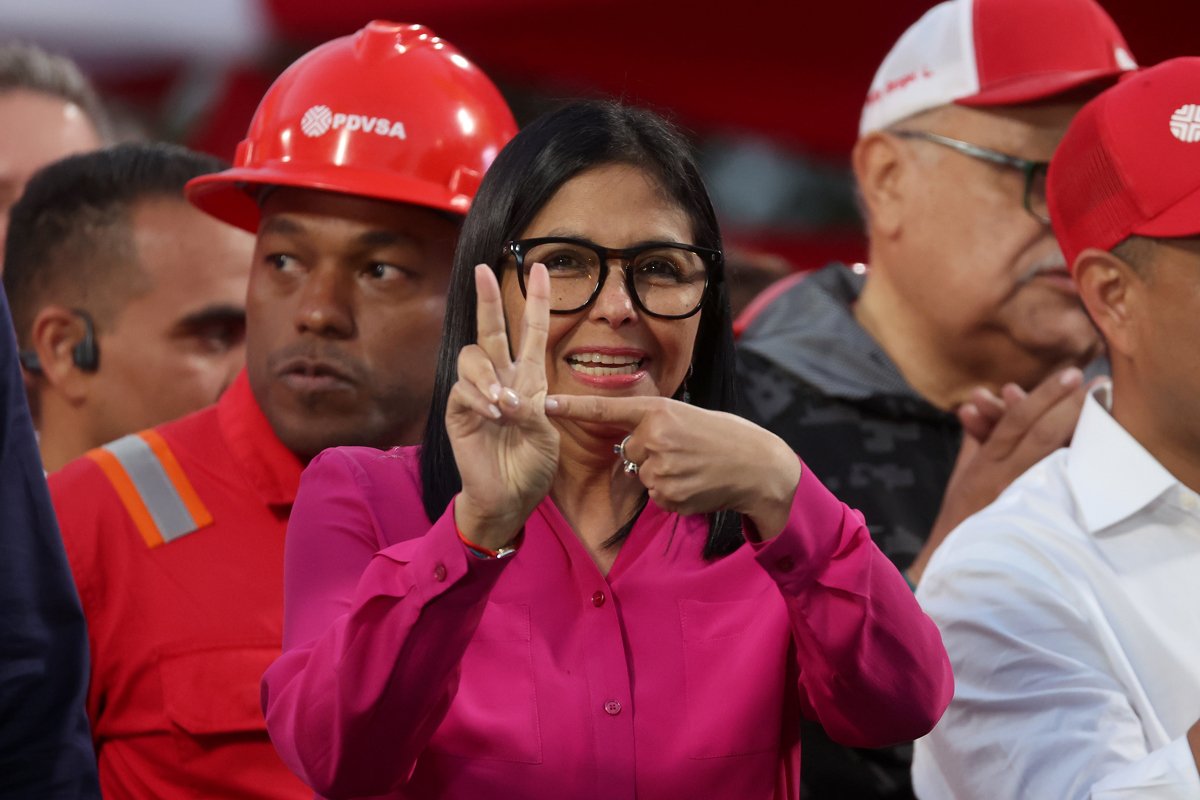
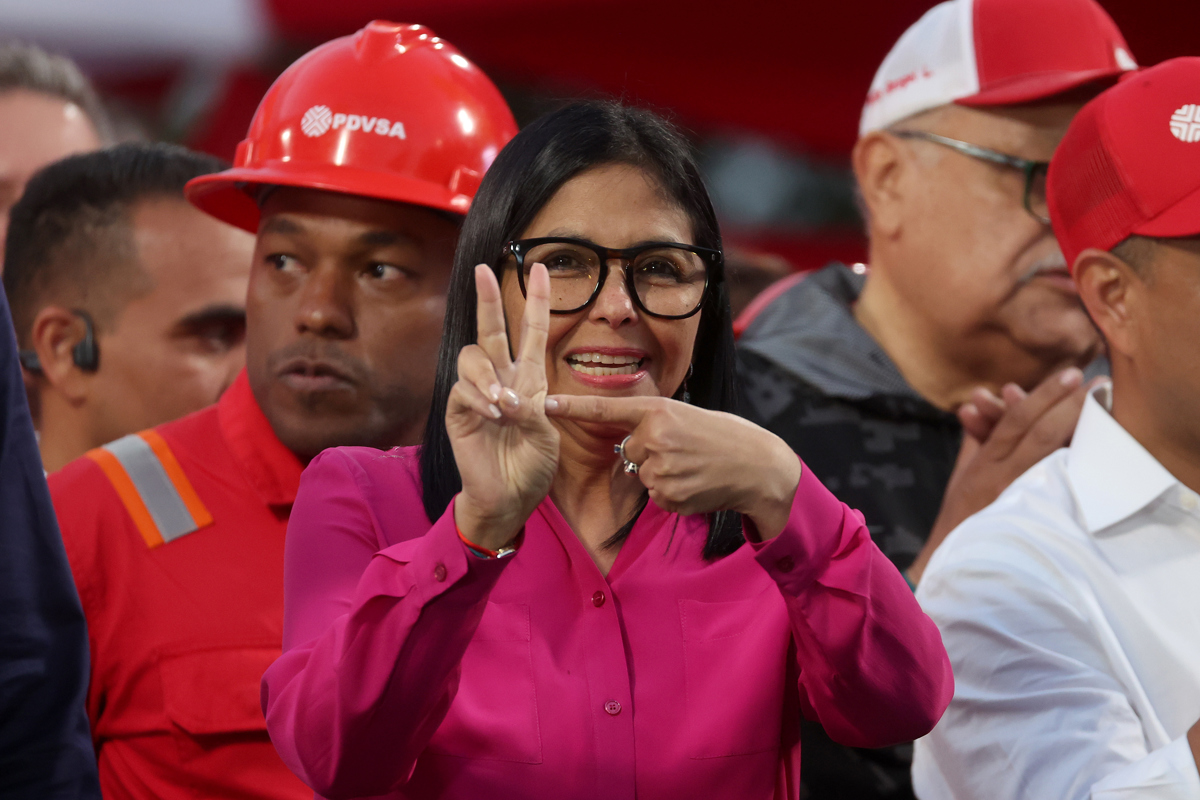
Since these events occurred, Delcy Rodríguez assumed the presidency in charge of the country by order of the court; This without anyone having voted for her for the position and without clear certainty of how long she would occupy that position.
In the opinion of the former president of the Supreme Court of Justice and also a doctor in Legal Sciences, Cecilia Sosa Gómez, the scenario that was generated after that event has been one of constitutional crisis that must be resolved through a single path: the election of a new president of the Republic.
Sosa argues that, in effect, it was Delcy Rodríguez, the one who had to assume the presidency in charge after Maduro’s departure, but points out that this should have been done from the premise of the absolute lack contemplated in article 233 of the Constitution, or from the temporary one contemplated in article 234. The first gives a period of 30 days for a new presidential election and the second a period of 90 days (extendable by 90 more). Regardless, it is a situation that, for her, should be resolved with an electoral process.
In that sense, he commented that neither the TSJ nor the National Assembly should avoid the responsibility of decreeing the absence of Nicolás Maduro from the position of presidency, regardless of the situation and legitimacy (or lack thereof) with which he held the position, or whether it is an absolute or temporary absence.
“There must be presidential elections set for July 3, which is when the term of the incumbent president expires,” Sosa commented, describing a scenario that did not occur regarding the role of Parliament, which did not declare Maduro’s temporary absence or extend Rodríguez’s mandate on April 3 for an additional 90 days. “If it is considered an absolute absence, what corresponds is to call elections within 30 days.” For Sosa, this situation is the “most urgent” institutional problem facing the country: “We have a person outside the country who cannot serve and the National Assembly has the obligation to call elections.”
The “forced absence” trap
In the opinion of the constitutional lawyer and dean of the Faculty of Legal and Political Sciences of the Central University of Venezuela, Juan Carlos Apitz, the ruling issued by the TSJ on the night of January 3 – which he described as “cowardly” – sought to “evade” decreeing the president’s failure to “not start the countdown for an election.”
“I would say that the ‘forced absence’ that the TSJ spoke of, inventing an absence that is not regulated by the Constitution, is about evading the possibilities of subsuming it into absolute or temporary ones. They evaded a qualification and it is up to the interpreter to say: ‘if it is not absolute, because the absolute ones are described in 233, then it is a temporary one’. This is what any interpreter of the Constitution would infer about what is happening,” he said.
Apitz, like Sosa, explained that in if it is an absolute fault elections would have been due on February 3, and if temporary, elections on April 3 or, in the case of an additional 90-day extension, on July 3.
In that sense, regarding the situation in which Delcy Rodríguez finds herself, Apitz commented that she is “on the margins of the Constitution”, which makes her a de facto president. Even more critical, according to the lawyer, is that since the sentence does not define a time limit, it is not known how long she could remain in the presidency.
“They have their backs to the Constitution. Delcy Rodríguez’s permanence is not constitutional. They invented forced absence to leave her there as long as they want. She could be there for 20 years. Why 180 days and not 180 years? The sentence does not set limits,” he criticized.
What should be done
Regarding what in theory should be a roadmap to resolve this situation of unconstitutionality, Apitz said that the first step would be to go to the Constitutional Chamber of the TSJ to request clarification on the January 3 ruling. However, in practice, he commented that this would surely not give any kind of result. “It would be a waste of time. They are not there to do justice but to please the government. To illustrate: the ruling of January 3 is the greatest example of a complacent TSJ.”
The lawyer believes that, in view of what happened, the ideal would be to return to the constitutional text, specifically article 5, which states that sovereignty resides in the people, which is why he recommended consulting the population about the current situation.
“Faced with what is happening, if we look at article 5 of the Constitution, what remains is to consult the National Assembly because the popular will of the country is represented there. It is either that or call elections which, logically, is the other way that exists to consult the will of the Venezuelan people.”