WASHINGTON.- In the midst of threats crossed by a naval operation that raised the tension in the Middle EastUnited States forces began this Monday the blockade of ports and coastal areas of Iran announced by Donald Trumpwith which the president seeks to force the regime to resume diplomatic negotiations after the Islamabad summit failure that paralyzed maritime traffic in the Strategic Strait of Hormuz.
The North American president, who unleashed a strong dispute with the Vatican by attack Pope Leo XIV for his positions on the warstated that Tehran contacted Washington this Monday to start a new round of dialogue. Pakistani Prime Minister Shehbaz Sharif also noted that efforts were still underway to refocus a rapprochement between the two sides.
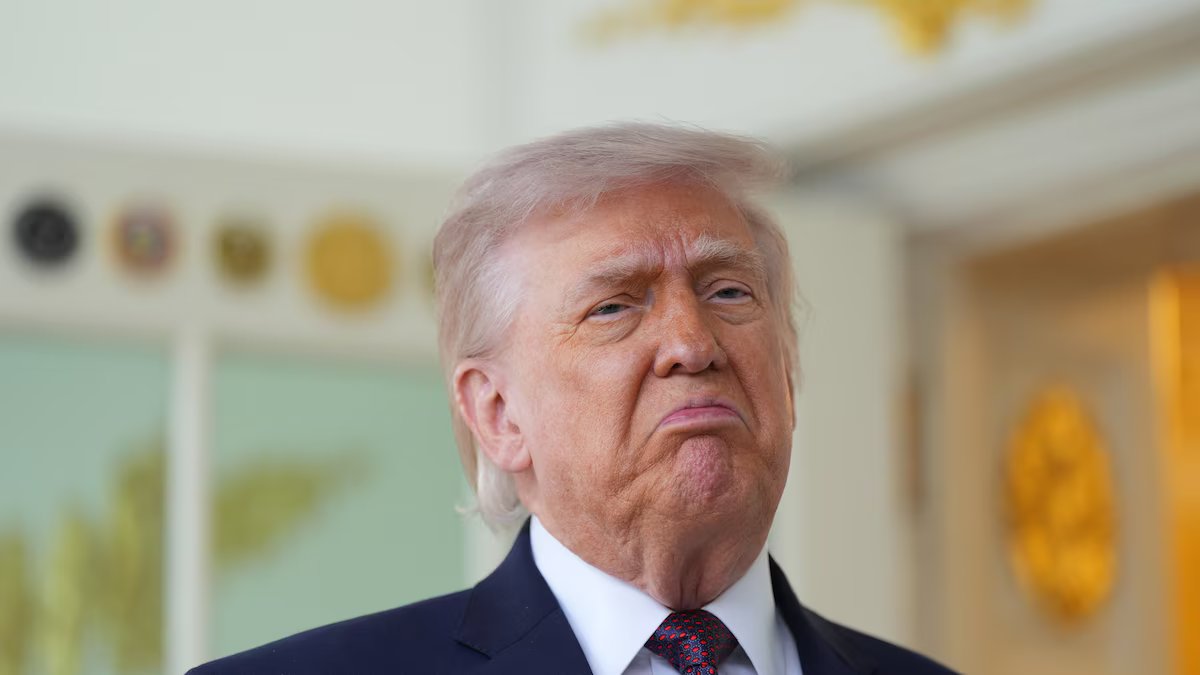
“We received a call this morning from the right people and they want to reach an agreement”Trump said at the White House, without offering details about who had participated in the conversation. He also insisted that his main objective is to prevent the Islamic Republic from obtaining a nuclear weapon, declared that he was “confident” that it will finally abandon its ambitions and warned that he will not allow the regime of the ayatollahs “blackmail or extort” to the rest of the world.
There were no indications from Iran of a new rapprochement after the failed 21-hour dialogue in Islamabad last weekend, which on the North American side was led by Vice President JD Vance.
Trump’s statements at the White House occurred a few hours after the US Central Command (Centcom) began, by order of the president, the operation to restrict maritime access and egress to Iranian ports along the Persian Gulf, the Gulf of Oman and parts of the Arabian Seaan action that exacerbates tensions in the midst of the global energy crisis due to the increase in the price of oil.
At least 15 warships of the North American Navy are deployed to support the operation in the Middle East, senior officials reported. Washington clarified that it will allow ships to transit between non-Iranian destinations through the strait.
According to authorities cited by The Wall Street Journalplacing resources and warships near the coast of Iran could leave US assets exposed to attacks, which is why this type of operation was decided on.
Any warship can approach a tanker suspected of violating the blockadethe officials told the North American newspaper. However, if the ship did not comply with the order to allow boarding, specialized trained Marines and special operations forces—such as Navy SEALs—would be necessary to carry out a boarding.
The blockade aims to increase pressure on Iran, which has continued to export oil despite the war, in many cases through informal circuits that evade international sanctions. In addition, the White House is also seeking weaken Tehran’s control over the Strait of Hormuzbecome a central axis of the war.
While the blockade was already developing, Trump warned that any Iranian fast attack vessel would be attacked using the same “kill system” that North American forces used “against drug traffickers in vessels on the high seas” in the Caribbean.
Before, Iran had warned that no port in the Persian Gulf or the Sea of Oman would be safe if its own maritime terminals were threatened by the United States. Brigadier General Reza Talaei-Nik, spokesman for Iran’s Defense Ministry, warned that foreign military efforts to patrol the area would aggravate the crisis and instability global energy.
“The security of the region’s ports is either for everyone or for no one,” The Iranian Armed Forces warned in a statement published by state media, and described the United States blockade as “an act of piracy.” They also reiterated their plans to maintain permanent control of the strait even after the war, which has been going on for 45 days, ends.
Meanwhile, the United States’ allies in NATO – including Britain and France, critics of Trump – affirmed that they would not be dragged into the conflict by participating in the naval blockade, and stressed the need to reopen the strait.
The renewed tension in the Middle East impacted oil prices, which once again approached the 100 dollars per barrelwithout any indication of a prompt reopening of the Strait of Hormuz that alleviates the supply crisis through the route through which a fifth of global crude oil production travels.
On Sunday morning in Islamabad, Vance’s announcement that the United States and Iran had not reached a peace deal had an immediate impact across the strait. According to reports from companies that monitor it, the reduced flow of ships and cargo ships in Hormuz, which had begun to slowly recover after the ceasefire announced with great fanfare by Trump last Tuesday, slowed down again.
In a post, Trump had tried to downplay global concerns about a new shock to energy markets, saying that 34 ships had transited the Strait of Hormuz on Sunday. “It is by far the highest number since this senseless closure began”wrote.
The current blockade imposed by Trump leaves the fragile two-week truce that he announced last week, and which failed to be promoted by the negotiations in Islamabad, on the brink of collapse. The measure also raises the tensions between the United States and Chinawhich buys a large amount of Iran’s oil production.
While Beijing has urged an immediate ceasefire, warning that the blockade threatens global trade, Trump indicated Monday that he had not yet heard from the president. Xi Jinping regarding the conflict. “He would also like to see this finished,” the tycoon said.
For their part, the Pakistani authorities, who have mediated the conflict, are determined to maintain dialogue between the parties. During a cabinet meeting on Monday, Sharif said “all possible efforts” were being made to end the war.
“I don’t think communication through unofficial channels will stop. I think it will continue. Maybe not right now, but I have been assured that it will not stop,” said Pakistani diplomat Maleeha Lodhi, who has served as ambassador to the United States, Great Britain and the United Nations.