At 1,600 meters above sea levelin the cold April of Mérida, Julieta Velásquez (41) is looked at in amazement by her neighbors every time she prepare a matehe puts the bulb in his mouth and looks absolutely happy as his esophagus warms up. He returned to Venezuela just four months ago—after seven years residing in Uruguay—and the grass is running out. Not so his desire to continue with that habit he acquired in Montevideo, where his son lived more than half of his current years.
The innocent question of the little boy who has just started high school, and whom his classmates call “El Uruguayo”, makes Julieta tender and always gives her the same answer:
Julieta got the idiom ta. Another acquisition since this graduate in Modern Languages decided to move to Uruguay after the shortage that Venezuela was going through. First she went to Colombia and other relatives who were in Montevideo convinced her to take the trip she considered then (and says she still considers now). “the best option among Latin American countries”.
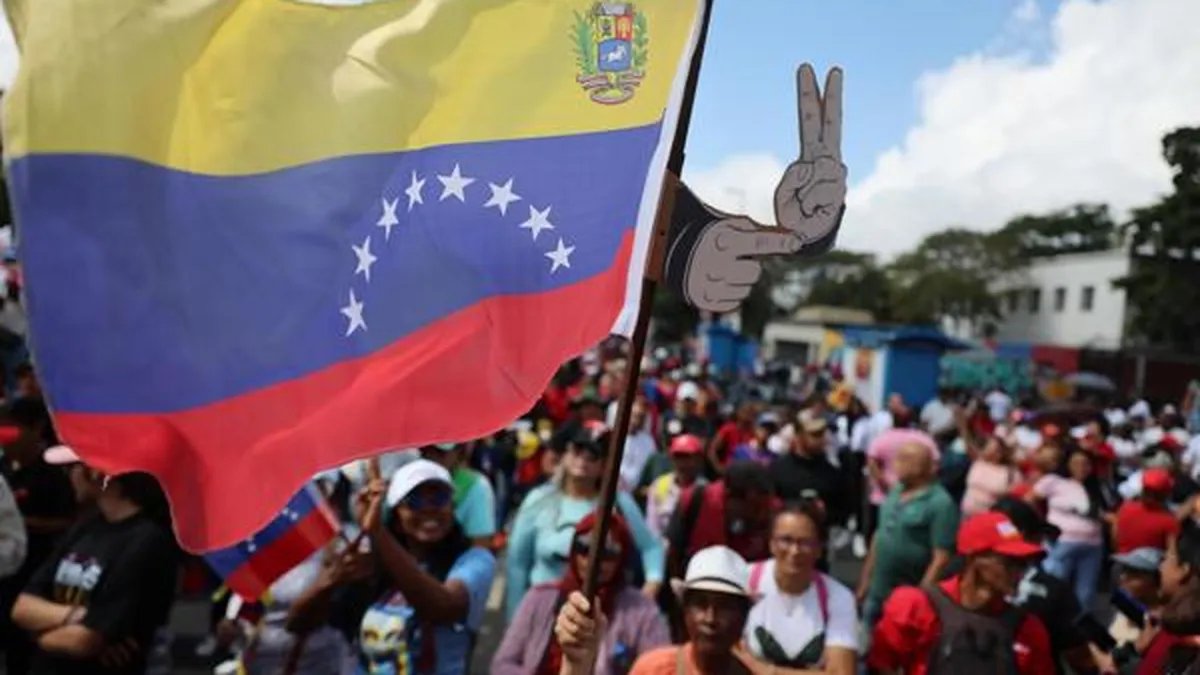
Despite the size of his affection, on December 9, 2025, as soon as his son finished sixth grade of school and There was almost a month left until Nicolás Maduro was captured, He chose to return to Méridain the middle of the Venezuelan Andes.
She wasn’t the only one. Last year, for the first time since the start of mass exodus of Venezuelansmore people of that nationality left Uruguay than entered.
Embed

Julieta had her reasons.
Why return to Venezuela?
Juliet doesn’t complain. He was never able to revalidate his university degree in Uruguay because he had left Venezuela when the chaos was such that it prevented him from obtaining all the papers and stamps. But his knowledge of English allowed him to work in offices for American companies and his salary was higher than the average of his other compatriots who care for the sick, the elderly or do delivery despite, in many cases, being overqualified for the task.
In Uruguay I was comfortable. His son had adapted well to school, he made a group of friends with whom he still talks from a distance today, he did not suffer any xenophobia as happened to his acquaintances in other countries and The Uruguayans seemed to him (and seem) “great beings, incredible people.”
But Julieta’s mother, who was jumping through different countries where her children were scattered, returned to Venezuela. That lack was noticeable.
—My son was already in the sixth grade of school, at that age in which parents seek the child’s gradual independence, and I felt like I was working all day and could barely keep up with his daily life. I spent 11 hours or more outside my house.
With Julieta “not very present” and the lack of support from the grandmother who had returned, “El Uruguayo” (to continue with the boy’s nickname) began to become distressed, to express certain insecurities.
“On top of that, I suffered an ulcer and there the lack of company, of the closest affections, was felt more than ever,” says Julieta, trying to explain her decision until she reaches the trigger: the economy.
In 2025 Venezuela improved a littlefood was available in supermarkets, internal tourism increased and, above all, they could stop paying rent (one of the most frequent complications for recent immigrants) to return to their home. own house.
He didn’t give it any more thought, he got the necessary papers and flew to Mérida. He immediately enrolled “El Uruguayo” in secondary education, because the school year there had started in September, and, as proof that he successfully saved, his son entered formal education.
Did Maduro’s capture change the situation?
In the early hours of January 2nd to 3rd, Julieta jumped out of bed with a tremendous fright. It was half past two at night when his cell phone rang. It was a call from his sister from the United States.
—Did you see what’s happening? Did you see it? Tell me you saw it.
The United States had intervened in Caracas and captured Maduro. Julieta didn’t know, she was just sleeping.
The hours and first days that followed were filled with mixed and contained emotions. Julieta measures the words until she finds a term: “What changed was the mood”. There were those who dared to go out into the streets more. But at the same time there was the uncertainty of what was or will happen. Would there be military retaliation? Is there a risk of manifesting itself with joy or, on the contrary, misfortune? “You could notice it in their faces, but without saying too much.”
Since then Julieta has received dozens of queries about the same thing: “Is it time to return to Venezuela?”.
Your response is unanswerable. “Fear still exists, the dollar rises, the minimum wage is worthless, there was no economic change since then or that the arrival of foreign companies is demonstrating an increase in employment that allows maintaining a quality of life. People always think about politics, and beyond the fact that Chavismo is still in power here, above all, there is no economic change, which is what allows many of those who emigrated to return to their homes that they left abandoned,” says Julieta before moving on to a concrete and familiar example.
His brother is a doctor and lives in Uruguay. “No way is it crazy to go back to Venezuela now if it has triumphed in Uruguay.”“He works with what he studied, he has his entire family there, a good life, a country where it is not even necessary to discuss freedoms.”
In the reports from the Venezuelan population monitoring platform (R4V) in Uruguay, nine out of ten respondents had said in recent years (and prior to Maduro’s capture) that “some member of The family would suffer a risk if they returned to Venezuela”.
Although the refined data on the entries and exits of Venezuelans to Uruguay are not closed, sources from the National Immigration Directorate announced that A sudden change in the migratory trend or a massive return is not expected in the short term..